

How One Doc Paid Off $200,000 in Student Loans in 4 years
One of the hot topics on this blog and among young professionals has been student loan debt. If you attended professional school, chances are you accrued some debt along the way. I was really excited meet our guest, Dr. Rania Habib via Instagram and learned that she repaid her six-figure student loan debt in a short amount time and is now financially independent. In this post she tells us how she did it.
One of the hot topics on this blog and among young professionals has been student loan debt. If you attended professional school, chances are you accrued some debt along the way. However, it is a stark reality that this debt has to be repaid. A known debate for many of us is whether or not to pay down debt aggressively and get rid of it quickly or to pay the minimums as designated by your loan servicer and have the rest forgiven after 20-25 years. I personally have had this debate and have gone back and forth on the two options, which why I was really excited meet our guest, Dr. Rania Habib via Instagram and learned that she repaid her six-figure student loan debt in a short amount time and is now financially independent. I reached out to her to find out just how she did it and she was happy to answer all my questions. I am hoping this will inspire you as it has inspired me.

Q: Thank you for agreeing to answer some questions on your journey to financial independence. Please, tell us a bit about yourself
A: Hi. My name is Rania A Habib and I am a board certified oral and maxillofacial surgeon (OMFS). I was born In Texas and raised in Minnesota. I obtained my BS in microbiology and completed dental school at the University of Minnesota. I then went on to complete a 6 year joint OMFS/MD program at University of Maryland in Baltimore. I worked in a busy private practice in the Maryland area while living in DC for two years. I then completed a one year fellowship in Pediatric Craniofacial Surgery at the University of Florida, Jacksonville. I love to teach and mentor students, so I found my calling in academic medicine
Q: You are an Oral & Maxillofacial Surgeon with a specialty in Pediatric Cleft & Craniofacial Surgery. Please tell us what your specialty entails.
A: Oral & Maxillofacial Surgery is a unique surgical specialty that crosses the realm of both dentistry and medicine. We specialize in the treatment of all conditions in the oral cavity, face, head and neck. In addition to performing dentoalveoalar surgery and treating oral benign pathology, there are several fellowships that include cosmetic facial surgery, craniomaxillofacial trauma, pediatric cleft & craniofacial surgery, head and neck oncology, microvascular reconstruction, temporomandibular joint deformities, orthognathic surgery, dental anesthesia and implantology. I am passionate about treating patients with congenital or acquired deformities in the craniofacial region with an emphasis on the pediatric population.
Q: What made you interested in that field and how long did it take?
A: I loved surgery from the moment I was exposed to it as an American Heart Association scholar in my senior year of high school. I was initially a pre-medicine student, but decided that dentistry offered the unique ability to combine artistry, surgery and engineering. While in dental school, I fell in love with oral and maxillofacial surgery. I completed my undergraduate degree in three years, dental school in 4 years, combined OMFS/MD in 6 years and one year of fellowship. My training took a total of 15 years post high school.
Q: Did you have student loans? And if you don’t mind, please tell us how much. Was this from undergrad as well as dental school?
A: I had student loans from my 4 years of dental school and my two years of medical school. For my undergraduate degree and first 2 years of dental school, I had in-state tuition that was offset by academic scholarships. My parents saved for my education, so I was fortunate that I did not have to take out loans for my undergraduate degree. I took out partial loans for my first 2 years of dental school and full loans my final two years of dental school and medical school to cover both tuition and board. My total debt was just under $200,000
Q: Did you get paid in residency?
A: Yes, 4/6 years.
Q: What was your strategy for tackling student loan debt?
A: For peace of mind, I wanted to eliminate my student loan debt as soon as possible. I opted to take a lucrative job in private practice to facilitate this goal prior to pursuing fellowship. After 10 years of straight post-high school training, I needed a break from the chaos of training. I hired a financial advisor to oversee my finances. He managed my malpractice insurance, disability insurance and helped me establish a budget based off of my salary and spending. We carefully documented my rent, utilities, car payments, car insurance, disability insurance, malpractice insurance, cell phone, groceries, gas, travel and fun. Based off that budget, I established an emergency savings fund to cover three months of living prior to aggressively paying off any student loans. When I first finished residency, I only paid my loans off according to the amount due until I was able to accumulate my emergency fund savings. Once I was done saving the emergency fund, I then began to aggressively pay off my student loans.
I did not live ultraconservative, but I did not overspend my means. I lived in a nice apartment with good amenities. I did not upgrade my car. It was paid off during residency, so keeping that car saved me a ton of money. As a coffee lover, I invested in a Nespresso machine, so that I was not paying $4-6 for coffee every day. I limited eating out at restaurants to only once a week. I am a big advocate for meal prep, so I usually prepared my own breakfast, lunch and dinner. Eating out is extremely expensive, so learning to cook will save you a ton of money. I did not deprive myself of anything, but I was extremely practical about my spending. I still enjoyed my money, but I eliminated consistent extravagance.
Q: Did you have other debt and what was your mindset towards those?
A: I was lucky in that I did not have any other debt. I did not buy a home, nor did I upgrade my car.
Q: In a nutshell, how did you achieve financial independence?
A: I set my long-term financial goals, hired a financial advisor and lived according to a budget that we designed as a team. I did not overspend my means.
Q: What is your approach to spending and your psychology about money?
A: I am a strong believer that you should do what makes you happy. I enjoy experiences over extravagant items. I would rather pay for a beautiful trip around the world then regularly spend a $1000 on a pair of shoes. That being said, I still enjoy finer things. When my loans were paid off, I opted to finally lease a luxury car. Every once in a while, I will buy a nice pair of shoes, a tailored suit, an expensive purse or jewelry. I just do not find myself drawn to spending my liquid income on expensive, luxury items on a regular basis. I enjoy spending my extra income on family, charities and people in need.
Q: What advice would you give to other health professionals/ health profession students on handling debt and student loans?
A: I would recommend that you invest in a financial advisor who has adequate experience with student debt from the medical/dental profession. These are different than the average financial advisor. They will understand how to incorporate your malpractice and disability insurance in addition to investing. It is not a bad idea to have a financial advisor to handle malpractice and disability and a second financial advisor to invest. Your financial advisor needs to devise a plan that includes a spending budget, an emergency fund, retirement, and your end goals. When you finish school/training, you will have the option to pay off your existing school loan interest as a lump sum. If you have the financial ability to pay that lump sum, then do it! If you do not, you will accumulate interest on that interest. Depending on your interest rate, you may be eligible to consolidate your loans and pay them off more aggressively in a shorter time frame by applying for an outside loan agency geared towards medical professionals. If paying off your loans is a financial goal, consider these companies to help you pay them off in a shorter time, at a lower interest rate. Always consider your own financial picture before making these decisions. If you have other sources of debt such as a home mortgage or car loan, you may not be able to pay off student loans as aggressively as I did. Utilize your financial advisor to help make these decisions based on your personal goals and what makes the most financial sense for your situation and lifestyle.

Dr. Rania Habib attended the University of Minnesota for undergraduate and dental school and the University of Maryland for medical school, General Surgery internship and Oral & Maxillofacial Surgery (OMFS) residency. She worked in a busy OMFS private practice for 2 years, then completed a full scope Pediatric Cleft and Craniofacial Surgery Fellowship at University of Florida, Jacksonville. She became the first female attending surgeon in the Department of Oral & Maxillofacial Surgery at LSU, NOLA where she was appointed as an Assistant Professor with a primary focus in Pediatric Cleft and CranioMaxillofacial Surgery. Her main surgical interests include pediatric/adult OMFS, cleft, craniofacial, orthognathic, facial trauma, obstructive sleep apnea, benign head/neck pathology and facial reconstructive surgery. She is now full time faculty at University of Pennsylvania. She is an active volunteer with Smiles International and the Global Smile Foundation where she provides cleft and craniofacial surgical care internationally. In her spare time, Dr. Habib enjoys traveling, rock climbing, biking, cooking, attending live music/art events, volunteering, reading and spending time with her family and friends. She is a master level SCUBA diver who is also a fitness fanatic.
You can find Dr. Rania on Instagram @raniahabib.md.dds




How I Grew My Side Hustle By 300% During The Pandemic
Discipline, consistency and strategy are important to maintaining and growing your side hustle but, those are not the only things needed to be successful. I was able to grow my business 300% by following a very straight forward set of principles.
A little Progress Everyday Adds Up to Big Results
If you know anything about me, you know that I always preach about passive income or having multiple streams of income. That coupled with my love for creating divinely scented candles kickstarted my desire to officially start my Candle Co. - UnOrthoDoc Candle Co.
I launched my candle company in June of 2018 and it has been a satisfying journey ever since. I am appreciative that people trust me enough to spend their resources purchasing my products and grateful to loyal customers who continuously show support through purchase or by spreading the word about my candles. What started as a passion project grew into a passive income stream.
I remember at the end of 2018 doing the income report and generating our profit & loss statement . It was a start but definitely not anything to call home about. I also remember my accountant mentioning that the income generated wasn’t enough to be called a business but more of a passion project, ouch. I took that as fuel to do better. In 2019 I doubled my efforts and spread the word about my candles more. I remember sending many free candles to dental offices and anyone I knew, just so they would have it in their hands, use it and hopefully see it’s value. I dabbled with the idea of attending fairs, festivals and symposiums but those ideas weren’t necessarily in line with the vision I had for my company. The vision for my candles are to become a fixture in homes and offices and become a mainstay in boutique dental offices around the country. Gotta think big!
With my efforts in 2019 also came the busyness of life - leadership roles at work, a very long daily commute, planning a wedding and life in general consumed a lot of my time. However, by the end of 2019 when doing our reports we had doubled our profits from the previous year, a whopping 100% growth.
Since 2020 began I decided to put even more focus on this business and worked on my marketing. Thanks to Skillshare, I was able to take courses that helped me to be more proficient in this area. I became more present on social media (Instagram, Facebook and Pinterest), utilized email marketing and word of mouth. By the end of Q1 of 2020 I made more from my side business than I did in all of 2019. The goal is to quadruple our 2019 profits by the end of this year.
All of this is possible with a little discipline, consistency and some strategy. If you have a desire to start a business or a side hustle you definitely can and should do it.

Here is How I Grew My Side Hustle:
Identifying Ideal Clients & Customers - Who is your target audience or Ideal customer? Who does your product serve? Answer these questions and you will have won half the battle. I started out thinking my ideal customer was going to be the 18-34 year old female that loves all things social media and self care so in the very beginning stages I spent most of my resources marketing to them. However, they weren’t the ones purchasing my products. It turns out that my ideal customer is the 30-60 year old female who values relationships, a personal touch and great customer service - many of which are not on popular social media channels like Instagram but favor Facebook, email or text message and thus my marketing shifted.
Being Consistent & Staying Fresh - There are so many things vying for our attention these days that not showing up is simply not an option. If you’re not present, showing up and being consistent for your customers they will not remember you. As the popular saying goes, “Out of sight, Out of mind.” I used to think posting consistently on social media, sending emails and reaching out to people to update them on products and sales were annoying. But I have come to realize that it is crucial. I am not saying inundate people with your content, but set up a system whereby you consistently show up. Perhaps that looks like posting to your social channels three times per week or sending out a weekly newsletter or monthly emails. Either way, you want to ensure that you are consistent. You also want to keep things fresh and not push the same exact thing, in the same way over and over. For my candle company it meant periodically revamping our fragrances, adding accessories to our store, introducing seasonal fragrances ( a scent for every season or occasion), adding pops of color to our normally classic white candles and offering discounts and free items to show appreciation.
Blogging - By creating content around your side hustle you are able to attract clients or customers who may also be interested in the product or service you are offering. For example, I have a blog where I often times speak on having a side hustle. I also offer my readers a Side Hustle Guide that can be downloaded for free, which comes with Side Hustle Ideas and 5 weekly emails that help the reader go from point A to point B in their side hustle journey. Throughout these posts and guides I make reference to my own journey with my Candle Company. My readers have not only gained valuable information on how to start a side hustle but have also become customers.
Collaboration - It is amazing the results that you get when you collaborate. Many people believe a collab has to be with “influencers,” or a large company backed by a PR group. Nothing could be further from the truth. Are there people you follow on social media who’s content, personality, product or service you love? Reach out to them and just ask the question. Collaboration comes in many forms and It’s a lot easier than you think.
Customer Service is KEY - It goes without saying, be kind, courteous and swift to respond to customer inquiries. I spend a fair amount of time responding to customer questions and reviews. If there is a question about a particular product, accessory or how to care for their candles we respond promptly and/ or direct them to resources accordingly. Every now and then we get customer requests for special orders which we try to accommodate. Our customers are why we are here and we earnestly thank them for their purchases and support.
If you are looking to start your own Side Hustle Journey, Grab The Side Hustle Guide Below.
When you sign up for the guide, you will receive:
10 page Side Hustle Guide
Side Hustle ideas
Side Hustle Workbook
5 weekly emails to Guide You
If you are new here, check out our collection and sign up below to receive updates from The Candle Shop.
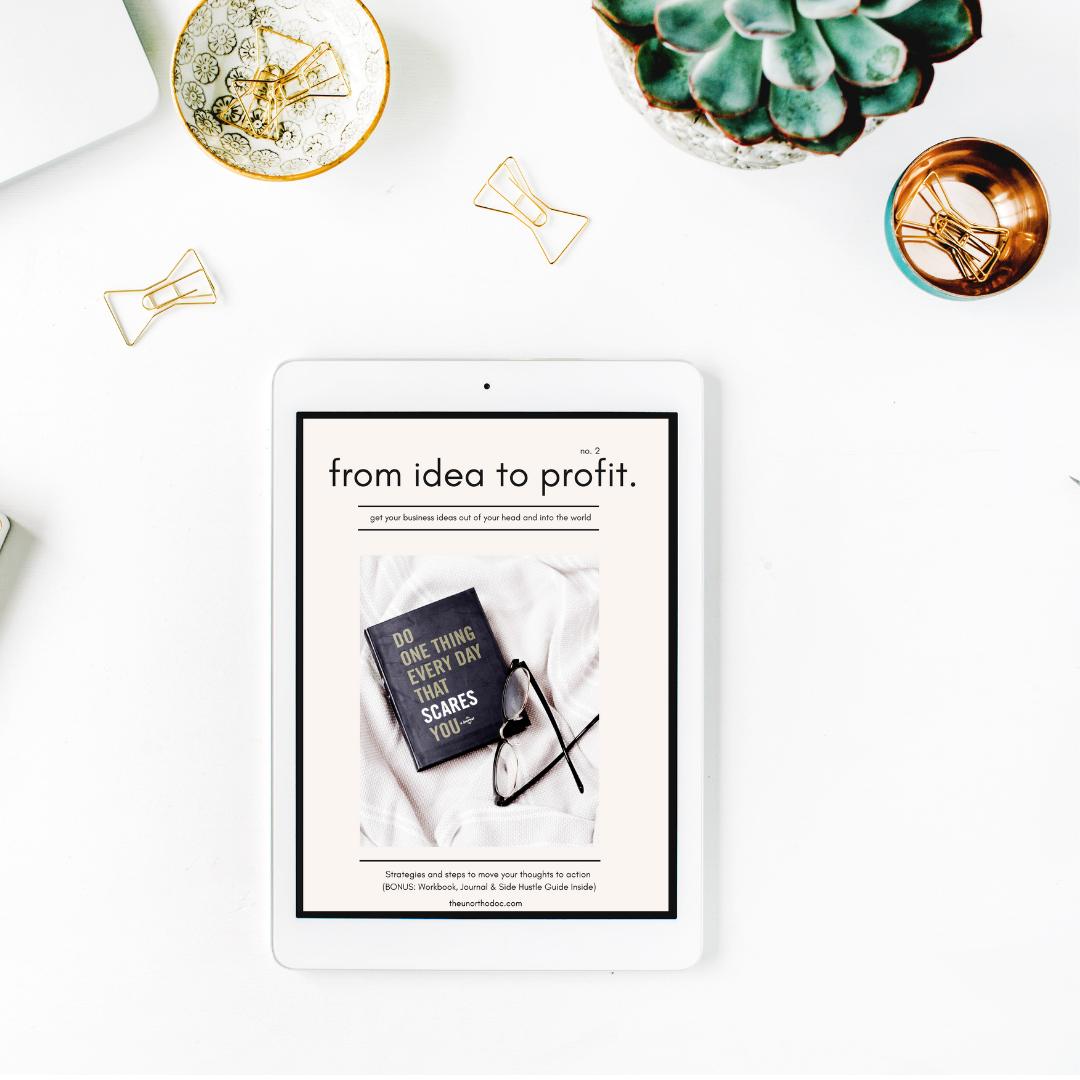
This e-book is written for those who want to get their business ideas out of their heads and into the world. It includes action packed steps to move you from thought to action in as little as 1 week.
Bonus: FREE side hustle guide, side hustle workbook and journal with this purchase






My First Podcast Experience
It was an honor being a guest on The Dental Diaries Podcast with Dr. Jessica Emery and a great way to experience my first podcast interview. In the episode we discussed my multi-passionate nature which includes Philanthropic projects, Candle Making, Blogging and Orthodontics - lending to the name The UnorthoDoc.
Last year I considered starting a podcast after getting several requests from readers to implement an audio version of my posts so they could listen on their commute to work or while at the gym. The requests came with a lot of excitement because it was proof that people were reading my blog posts and found them valuable enough to want to listen. I showed the emails to my husband and like the supportive person he is, he immediately took to the internet to research and compare podcasting equipment. Within a week I was fully equipped with a microphone and headset along with a wealth of knowledge about podcasting platforms. I even subscribed to a few newsletters that offered information on starting and building a podcast. We recorded my first episode and I remember disliking the sound of my voice. Feeling discouraged I decided not to publish the recording and instead took a break with hopes of picking it back up later. As we know, time goes by quickly and I realized almost a year had passed.
It would be February 2020 before the idea of podcasting came up again. I had a format, a layout of topics to discuss and a short list of initial guests. After realizing how much work was required I once again put it down and expressed to my husband that my desire was to just be a guest on others’ podcast rather than have my own.

As the Universe would have it, about two months later I was contacted by Dr. Jessica Emery. If you’ve never heard of her, she is the owner of two 7-figure dental practices in Chicago (Sugar Fix Dental Loft and WhiteHaute) and is the creative genius of Dental Soiree, a Boutique Digital Dental Marketing Agency where she helps other dental professionals brand and market their businesses. She is literally a Jill of all trades and one of the very few people that I truly admire and thinks of as #goals.
During our conversation she mentioned she had been watching me on social media and was impressed with my endeavors and wanted us to chat. She then mentioned that she would be airing our conversation on The Dental Diaries, her podcast . This would be my first podcast appearance.
It was an honor to chat with her and a great way to experience my first podcast interview. In the episode we discussed my multi-passionate nature which includes Philanthropic projects, Candle Making, Blogging and Orthodontics - lending to the name The UnorthoDoc.
Click below to listen to the episode or search for The Dental Diaries on Apple podcast, Spotify or other podcasting platforms.







5 Natural Cycles of A Career
Everything in life has a natural life cycle, including our careers. We do not have to follow and worship the ones who push so hard, we can slow down and enjoy each cycle as we go through it.
I was listening to a Podcast that made me pause and reflect on the different cycles in a person’s career and in life generally. It gave me pause as I consider and reflect on my own career life cycle.
It mentioned that, it’s natural to want to continuously push yourself to be better. As doctors we are competitive by nature. We are always striving to be the best. As business owners we aim to make in profits more than we did the previous year, to have a larger practice than the next person, etc. But, the podcaster urged listeners to slow down and realize that life happens in cycles and to often times pause and appreciate those cycles. Our relationships with each other whether friends or spouses change over time as we change and grow; the first date will be very different from the twenty first date, the first year of marriage will be different from the fifth year and so on. If we are speaking in terms of our businesses and practices, one that has been open for 6 months is going to be different from one that has been open for 6 years and 16 years.

Here are the cycles, with the analogy of an actor’s career:
Who is this Brad Pitt? - This is when you are young and just starting out in your career. You are trying to build a following/reputation or trying to get patients to trust you, but they don’t know you yet.
Get me Brad Pitt - You build a following or a patient base and become very successful.
Get me someone like Brad Pitt - You become even more successful, but people now aren’t able to afford you.
Get me a Young Brad Pitt - You are still very successful but you’ve gotten older and are being replaced by younger talent.
Who’s Brad Pitt? - Another generation has come about and you are no longer the household name. Someone else has taken your place.
Everything has a natural life cycle. We do not have to follow and worship the ones who push so hard, we can slow down and enjoy each cycle as we go through it. In practice, enjoy the quiet times and work on systems instead of growth . Seek Peace, not the rush.

Keeping Our Well-Being In Check
Wellness is more than being free of illness. It’s being in total balance with your outer and inner world. This matters because everything we do and every emotion we feel relates to our well-being. In turn, our well-being directly affects our actions and emotions
Exhausted. That’s the word that came to mind as I sat to write this blog post. It’s been a little over a month since we’ve been ordered to either quarantine or practice social distancing.
When the shut down first happened I was energized - doing all the things I normally wouldn’t have time to do, I was very productive. I also had a more optimistic and positive outlook. I deeply believed through cooperation and discipline we would identify a solution and develop a level headed plan of action since “we’re all in this together.” The last couple days have been disappointing, disheartening and just sad - Here are a few things we have witnessed the past few weeks 1)protests against the stay at home order 2)hatred towards health care professionals sacrificing their lives for the greater good 3)colleagues in my profession caring more about lining their pockets than the health and safety of their fellow citizens 4)destruction of many small businesses(slowly watching as they lose all they have worked for) 5) For some having to deal with the loss of a relative or friend from the virus. The never ending barrage of inconsistent news information creates moments of optimism and despair.
It’s been tiring. But every dark cloud has a silver lining. This entire process has driven me inward toward my true self. The roller coaster of emotions created a need for release which led me to journaling more. When I needed a pick me up I made playlists and had all out jam sessions, I read more and listened to books that were positive and uplifting and began incorporating effective ways to cope with stress. This period also gave rise to the wellness section of this blog - which I have been meaning to add but never seemed to find time to introduce.

Wellness is more than being free of illness. It’s being in total balance with your outer and inner world. This matters because everything we do and every emotion we feel relates to our well-being. In turn, our well-being directly affects our actions and emotions. Therefore, it is important for us to achieve optimal wellness in order to alleviate stress, reduce the risk of illness and ensure positive interactions.
Here Are The Eight Dimensions of Wellness:
Emotional - Understanding our feelings and coping with stress.
Financial - The process of learning how to successfully manage finances, as money (or lack thereof) plays a critical role in anxiety, stress and the ability for us to care for ourselves.
Environmental - Inspires a lifestyle that is respectful to our surroundings and promotes interaction with nature on a personal level.
Intellectual - Involves open mindedness and the continuation to expand our knowledge. It encourages active participation in scholastic, cultural and community activities.
Physical - Maintaining a healthy body through eating well, resting and exercise.
Occupational - Is about enjoying occupational endeavors and encourages satisfaction and enrichment in one’s life through work.
Spiritual - Allows us to develop values that help us seek meaning and purpose.
Social - Encourages networking with peers and cultivating relationships (both intimate and platonic).
It’s no wonder most of us are out of balance, the inability to work either by quarantining or the loss of a job can affect our occupational, intellectual and even social wellness. The suspension of work creates a change in our financial wellness which causes stress and in turn affects our emotional wellness. The addition of lives being lost can also have us question our beliefs and negatively impact our spiritual wellness.
By now we have seen a myriad of guides, tips and how-to’s for getting through this quarantine period. While our occupational wellness might be off kilter there are still several ways we can maintain some semblance of balance. When I published the blog posts titled Guide to Social Distancing & Quarantine ,Coping with Stress and Balancing Productivity and Self Care, I made sure to tout practical ways to keep our health and well-being in check - such as keeping a routine, taking online courses, journaling and exercising. These all feed different aspects or dimensions of our well being that shouldn’t be ignored.
I truly hope all of you, my readers, are doing well during these tough times. Stay encouraged and find solace in knowing that we really are in this together - although it may look different for us all. We will all come out on the other side, and in some ways better than before. For words of love or encouragement,feel free to reach out below in the comments, on IG or via email.

Student Loan Relief During Coronavirus (COVID-19)
Most of us are facing reduced or slashed income due to the coronavirus. Keeping up with bills may become increasingly challenging especially for those of us with federal student loans, like healthcare professionals who have some of the highest student loan debt in the workforce. Recent legislation via the Coronavirus Aid, Relief and Economic Security Act (CARES) passed by the federal government is offering support and some relief for borrowers.
*Updated on December 9, 2020
On August 8, 2020 The US President signed an executive order suspending student loan payments until the end of the year! This is a pretty big deal. During the height of the pandemic this was especially helpful to many of us since income was decreased and unemployment rose. If you follow me on social media (Instagram), you may have seen my most recent IG Live with Millenial Money Coach Jolene Stahn (She paid off $200K Student loans in 3 years) to speak on all things student loans. I briefly spoke about what I did with my money this year that would have gone towards student loans and how I plan to tackle it once repayment resumes. In a nutshell, I suggested taking advantage of this time of no payments and no accrued interest by putting the money you would have paid towards your student loans in a high yield savings account where your money would grow over the next several months. I also suggested putting money into a short term investment vehicle where more aggressive growth can be achieved. This way, once you’re required to start paying again you can put lump sums of money down and really put a dent in your loans.
Here are the details of the executive order:
Most of us are facing reduced or slashed income due to the coronavirus. Keeping up with bills may become increasingly challenging especially for those of us with federal student loans. Recent legislation via the Coronavirus Aid, Relief and Economic Security (CARES) Act passed by the federal government is offering support and some relief for borrowers.
1.Payments on Federal Student Loans are Suspended Through December 31, 2020 (was September 30, 2020)
Payments on most federal student loans have been halted until December 31, 2020. Interest does not accrue during this time, and not making payments will not hurt your credit. Each suspended payment will be reported to the credit bureaus “as if it were a regularly scheduled payment,” according to the text of the bill.
The following types of federal student loans qualify for payment suspension.
Direct Unsubsidized Loans
Direct Subsidized Loans
Direct PLUS Loans
Direct Consolidation Loans
Federal Family Education Loans (FFEL) held by the federal government
Federal Perkins loans

2. Some Private Student Loan Lenders Are Offering Relief
Unfortunately, the CARES Act doesn’t cover private student loans, including any federal student loans you refinanced through a private lender like Earnest, SoFi, Laurel Road, CommonBond, etc .
If you are not able to make payments on your private student loans, contact your lender as they may be willing to work with you by offering a forbearance, which will temporarily suspend your payments, prevent your loans from defaulting, and protect your credit.
Check out other student loan refinance options here.
3. Suspended Student Loan Payment Count Towards Forgiveness
Under the CARES Act, months in which payments on qualifying federal student loans are suspended will count toward loan forgiveness for borrowers who are pursuing it.
Federal student loan borrowers may be eligible for loan forgiveness through one of two programs:
Public Service Loan Forgiveness (PSLF) promises to erase (tax-free) the remaining balance on federal Direct loans after you make 120 qualifying monthly payments while working for the government or a qualifying nonprofit.
Income-driven repayment plans, of which there are four, cap monthly payments at 10%, 15%, or 20% of your discretionary income. They also stretch your repayment timeline from 10 years to 20 or 25 years. If you have a balance remaining after this extended repayment period, the rest is forgiven (but it’s taxed as income).
4. Student Loan Collection & Garnishing Tactics Have Been Suspended
If your federal student loans are in default, that is if you’re 270 days (or more) behind on your payments, the government can no longer garnish your wages, tax refund, Social Security checks, or other federal benefits in order to collect what you owe. Additionally, the Department of Education instructed private collection agencies to stop contacting borrowers by phone or mail.
5. Employers are Incentivized To Help Pay Student Loan Debt
The CARES Act allows employers to make tax-free payments of up to $5,250 in 2020 toward employees’ student loan payments. Employers can make these payments to employees or directly to their lenders.
PS: The above information is accurate as of August 12, 2020 (was April 3, 2020). As the COVID-19 Pandemic is a rapidly changing situation, it is important to stay current on updated government regulations. The federal government has an FAQ page for students, borrowers and parents that is continues to be updated.
Although the above solutions offer temporary relief from your student loan obligations, you will need to get back on track after December 31st. If you need help figuring out steps to tackle your student loan debt, I highly recommend Travis Hornsby of Student Loan Planner. Being a healthcare professional and having gone through specialty training, I have a lot of student debt. Travis has helped me figure out a strategy to get rid of student debt in a specified amount of time and is saving me thousands of dollars! Schedule a call with him to analyze your situation and and get clarity so you can devise a plan of action to get rid of student loan debt once and for all.


Balancing Productivity and Self Care During Quarantine
It’s easy to separate your work life from your home life. But finding and maintaining a balance between the two can get difficult. While it may seem counterintuitive, taking breaks while working can increase productivity and creativity. It allows your mind to refresh itself after the stress and exhaustion of being “on” for hours.
As we continue to quarantine/practice social distancing and adjust to the new normal of being at home I aim to be as productive as possible. With all this newfound “free time” and not being able to work as an Orthodontist, it seemed like an appropriate time to occupy my days with things that under normal circumstances I wouldn’t have time for. Most of my time has been spent blogging, working on things behind the scenes of this platform, and taking courses on Coursera and Skillshare on a variety of topics ranging from epidemiology, entrepreneurship, and digital marketing/branding. I have also been catching up on continuing education classes, joining zoom conference meetings, working tirelessly in the candle shop (which surprisingly has gotten a lot busier since the shut down), updating (and engaging) on my social media platforms and helping to home school my niece. It has all been tiring and I found myself drained this week.

I shared this on my Candle Company’s Instagram yesterday because this is how I felt. I needed to check in with myself.
It’s easy to separate your work life from your home life. But finding and maintaining a balance between the two can get difficult. With the COVID-19 outbreak, a lot of us are working from home - which means the line between work and home has been blurred. A healthy work-life balance is important to address any stress or anxiety you may have.
I am not a parent but with the experience I have with home schooling my niece, I feel for the parents who have to balance working from home and educating their kid(s). Shortly after making my niece breakfast and getting her settled in to start her school work, my first zoom meeting began but she still required quite a bit of help. I found myself multitasking - helping her with school while trying to pay attention in my meeting. During this time her teacher called (as she does everyday) to recap the morning lesson for the day. The first zoom meeting ended and another one started just as we were scheduled to begin her science session. After my meetings, I fulfilled about a dozen orders from my candle company, ran the packages to the post office, returned home and made lunch(whew!). I was so exhausted afterwards that I ended up taking a 2 hour nap.
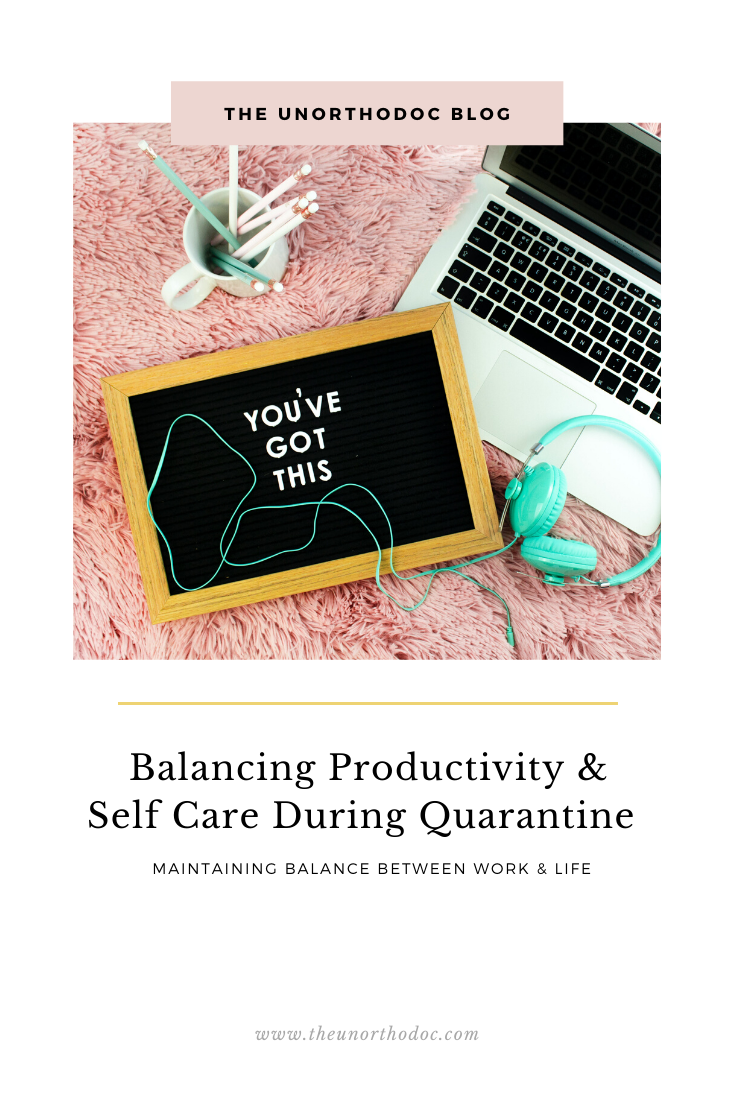
While it may seem counterintuitive, taking breaks while working can increase productivity and creativity. It allows your mind to refresh itself after the stress and exhaustion of being “on” for hours. Similarly, taking time away from your desk can shape you into a more well-rounded professional.
With everything going on because of the coronavirus crisis – working from home, finding new routines, and a staying up to date with all that is happening – it’s difficult not to feel overwhelmed. But that doesn’t mean we can’t handle it. Think of this as an opportunity to take control of your stress. While it may impact us all differently, it is important to manage and reduce stress to live a happier and healthier life. Stress is not limited to work, school or family. It is all-encompassing and can be both positive and negative. The best thing to do is to identify the stressors in your life and address them.

I shared this on my Instagram yesterday. At the end of the day, I was happy to have completed my tasks ,even if they weren’t done to perfection.
While accuracy and precision are crucial, perfection cannot be an expectation. Mistakes can happen and should not be something you dwell on. Instead, you should take those situations and turn them into lessons.
Today I am finding balance. I am still being productive but also keeping stress at a minimum.
These are the ways I am balancing Productivity + Self-Care:
I am taking classes on Skillshare - This is an online community of educational tools to spark creativity. Learn new skills like photography, digital marketing, calligraphy, etc. You will get your first 2 months free by using this link. Use your computer or download the app to your phone.
I am taking courses on Coursera - This is an online learning platform where you can build skills by learning from Top Universities including Yale, Harvard, Michigan, UPenn, etc. Sign up using this link. Access courses using your computer or download the app.
I like to cuddle up and relax with a great book. I am currently reading two books, The Upside of Being Down, which seems to be quite fitting for the current atmosphere, and Jessica Simpson’s Open Book which is surprisingly very good!
Taking naps - I am listening to my body and shutting it down when I feel it’s time to take a break. Besides, taking naps increases energy, helps you to be more productive and can fuel creativity.
I don’t always make it outside for a run but I try to stay active with the FitOn app. Some days I do hard core cardio and HITT and other days I take it easy and only manage to do a yoga session.
Affirmations and quotes get me through tough times. I am a big fan of Lalah Delia and currently reading her book and using affirmation cards from Starlight + Love.
Warm bubble baths and candles - At least once or twice per week, I draw a warm bath, light a candle and relax. Candle light elicits calm is soothing and has the ability to help in reducing stress (depending on the fragrance). The warm bath helps muscles to relax and stimulates blood flow.
While it may seem that there is no point in planning, I know there is a light at the end of this tunnel and so I continue to plan. I also keep myself organized by planning my daily activities: blogging, scheduling posts, meeting and conference calls.
In the spirit of transparency: This post may contain affiliate links.

The Great Escape to Cartagena, Colombia
When a colleague of mine invited me on a ladies trip to Cartagena I, without hesitation, said yes! If I haven’t mentioned it before, I love to travel! Any opportunity to experience a new place and culture is always a go in my book. We spent a long weekend in beautiful Cartagena, exploring the city, submerging ourselves in the culture, enjoying the amazing cuisine and even found time time to participate in a community service project.
When a colleague of mine invited me on a ladies trip to Cartagena, Colombia, I without hesitation said yes! As I mentioned before, I love to travel! Any opportunity to experience a new place and culture is always a go in my book. We spent four days in beautiful Cartagena, exploring the city, submerging ourselves in the culture, enjoying the amazing cuisine and even finding time to participate in a community service project. The entire experience was amazing and I can’t wait to visit again with my husband in tow.
I have to admit, I almost didn’t make it on this trip. Our itinerary was set 6 months prior but just as we were scheduled to leave, the Coronavirus (COVID-19) was made a pandemic by the World Health Organization (WHO). I made the conscious decision to proceed with the trip despite family recommendations. The airline that had a 7 hour wait to cancel flights so by the time anyone answered we would have been half way to Colombia. In hindsight, I am glad I didn’t cancel because it was such an amazing experience.

Weekend Cartagena Itinerary
Thursday
We arrived at the Rafael Nunez International Airport in Cartagena (CTG) around noon where there was about a 45 minute wait to get through customs, but one of the ladies on our trip mentioned that it is usually a breeze to get through and the delay may have been due to coronavirus precautions. We were then taken to our hotel via private transport.
Where We Stayed:
We booked our stay at Allure Chocolat hotel by Karisma, a beautiful four-pearl boutique hotel set in the heart of Cartagena within walking distance to the historic walled city center and Getsemani. When we arrived however the manager informed us their computer system crashed and the reservations were cancelled. They instead had us stay at their sister property Allure Bon Bon hotel by Karisma, a short four minute walk away. The Bon Bon was a smaller hotel but just as amazing and we were able to enjoy the amenities of both hotels including all meals (free of charge) in addition to being refunded a night’s stay - Win! We enjoyed an amazing lunch at Allure Chocolat’s Restaurante Red Knife before freshening up and heading out for an incredible horse drawn carriage ride tour of the walled city and a scrumptious seafood dinner at El Santisimo.
Restaurante Red Knife - This is the restaurant of our main hotel where we enjoyed lunch everyday. They have 4.5 star rating on trip advisor and the food is amazing. If you end up here, try the grilled sea bass or salmon.

Restaurante Red Knife

The Bread was amazing

Sea bass with creamy yuca & casserole jus - divine!
Horse Drawn Carriage Ride/Tour - We booked our horse drawn carriage tour of the walled city through Panamericana. Our bus picked us up at our hotel around 7pm and took us to the meeting point to board our carriages. Our tour took us through the walled city where we enjoyed street vendors and the well lit night scenery. We window shopped all the boutiques and shops from our carriage and were even entertained and serenaded by local artists. Our english speaking tour guide was amazing even though it was challenging to hear him over the horse trotting.


El Santisimo Restaurante - This is where the tour ended and where we had dinner. It is rated 4 stars on trip advisor but I could easily give it 5 stars. We enjoyed various seafood dishes that were all very fresh and seasoned to perfection. The restaurant also carries chicken and beef dishes to suit any palate. An inviting atmosphere with excellent service - the food was the best I’ve had in ages.
I do not remember the names of these dishes but they were all delicious! The menu on their website has not been updated so I can’t recommend the dishes by name, but rest assured they were all delicious.





Friday
This day was filled with exploration and adventure. The great thing about Cartagena is that almost anywhere is accessible by foot. We explored the neighborhood of Getsemani - the hip new community for soaking up local culture. Pizzerias and casual bistros serving up Colombian staples line the streets, which are well known for their vivid murals. Local artists and residents decorate the streets to bring an exquisite experience. Brewpubs, cocktail bars, and Salsa bars keep the party vibe going.



I really loved the colorful doors throughout Cartagena and learned about the significance of the door knockers. “A tal casa tal aldaba,” or “To each house its door knocker” refers to the practice of displaying a resident’s social status or profession on their front door through the design of its knocker. A knocker shaped as a fish or other sea creature meant the owner of the house was a member of the sea merchant community, or some other trade related to the sea. Lion head door knockers represented members of the army, militia leaders, and other protectors of the city. The clergy, meanwhile, marked their homes with knockers in the shape of hands. A home with a lizard-shaped knocker were those of high society members, typically with some kind of royal connection. In all cases, the size and quality of the door knocker was also demonstrative of the resident’s social status: If you wanted to show off your credentials to passersby, only a finely crafted big brass knocker would do.




When you walk through this close knit community you’re greeted by vibrant depictions of Caribbean life displayed on the crumbling stucco walls of authentic Spanish Colonial buildings. Almost every street is lined with Getsemani Graffiti with bright murals showcasing culturally significant images from the historic to the modern.


Actual mural of this Getsemani local painted by a Getsemani local artist.


As afternoon approached we headed back in the direction of our hotel to freshen up and get ready for our community service project - but not before having another delicious meal at Restaurante Red Knife.


After lunch we got ourselves freshened up and packed our luggage filled with dental supplies including toothpaste, toothbrushes, mouth rinses and floss. In addition we had school supplies including book bags, pencils, erasers, sharpeners, crayons, folder pages, puzzles etc to give to orphans of the orphanage located in La Boquilla. It was a deeply satisfying experience. It was the first time this orphanage had ever been visited from the outside and the first time that they’d ever received donations. The pastor was so thankful and grateful. This is easily one of the most memorable moments of the trip.


The experience of visiting the orphanage and giving back to the local community touched us all so deeply that we decided all of our travels together will have some purpose to it and bear a humanitarian side. Our travel group is now called Travel On Purpose (TOP).
After our community service project we took a historical walking tour where we learned all about the history of Cartagena and shopped for emeralds, coffee and chocolate.

Did you know that Colombia mines and produces the most emeralds for the global market. It is estimated that Colombia accounts for 70-90% of the world's emerald market. The more you know!

Saturday
This was an early day, as we took a break from the busy city life to venture out to Rosario Islands. Our day started at 7:30am - our bus picked us up at our hotel and took us to the coastal town of Barú where we were whisked away by speedboat to the beautiful and picturesque Rosario Islands where we swam, snorkeled, sun bathed and enjoyed the local cuisine.


The boat ride going to Rosario Islands was smooth but the return was treacherous! The ocean was really rough and I acquired some bruises from holding on for dear life. Tip: If you do venture out to Rosario Islands, go very early and leave before 2pm. If you leave any later the seas may be too rough for you to return to Cartagena resulting in you spending the night on the Island.
Sunday
This was our last day in Colombia, it was bittersweet but we woke up early so that we could enjoy our last beautiful sunrise and delicious breakfast at Allure Chocolat. After breakfast we lounged around a bit before we were picked up and taken to the airport.

Entrance to the walled City. I sure will miss this view.
The next day Colombia closed their borders and travel in and out of the country was banned in light of the Coronavirus. We got out just in time.
Overall, I am very happy that I didn’t cancel this trip to Cartagena. I would go back in a heart beat! I am also happy to report that we have been back from our trip for 17 days and are all symptom and virus free. My husband and I are already planning to visit once the borders have re-opened.






Healthy Ways to Cope During Times of Stress
The COVID-19 global pandemic has affected everyone tremendously in some way or another. The seriousness of the virus has always been known but it’s very different when it hits close to home, and even though focus has been given to the physical effects (and rightfully so, with the death toll rising by the day), it goes far beyond that. This period has been very heavy - mentally, financially, physically and especially emotionally.
The COVID-19 global pandemic has affected everyone tremendously in some way or another. A close friend of my mother recently passed from the virus and it has since sent ripples through our families. The seriousness of the virus has always been known but it’s very different when it hits close to home, and even though focus has been given to the physical effects (and rightfully so, with the death toll rising by the day), it goes far beyond that. This period has been very heavy - mentally, financially, physically and especially emotionally.
In what seems like a flash, our lives have changed drastically. We have all been ordered to quarantine and/or practice social distancing, but what does this truly mean? Daily life as we know it has come to a screeching halt and we all have been trying to adjust to this new normal. Many small businesses have closed their doors, seeing years of hard work dwindle with much uncertainty of whether they will recover from this financially. The employees of said businesses have been laid off, and while the government has put together a stimulus package that will offer some temporary relief in the future,the idea of job security is no longer in place. Mothers and caregivers have had to adjust to this new normal of home schooling their children since schools are closed for the remainder of the school year - this is quite an adjustment for any child. Many children will struggle to find an equal footing in the current educational system, as the ability to have access to the internet or a computer will greatly determine which children learn and which do not.
There is growing anxiety as we try to keep our loved ones safe by taking every precaution to not contract the virus and spread it; wash the hands (frequently), clean the countertops and high touch surfaces, quarantine, social distance but don’t confuse them with self isolation (see the quarantine guide here). Going to the grocery store is nerve wracking and every cough or sneeze gives us pause. We inhale and hold our breaths and check for signs of chest pains and sit in saunas because we’re told heat/steam has an effect on the virus. All this has been unsettling and the impact has us all feeling a bit less than our normal selves.

In spite of it all, we must first find ways to cope and manage the stress of our situations. Here are a few things that I’ve been implementing that helps:
Develop and keep a routine to establish some semblance of normalcy.
Keep a Journal: Spend time with yourself and write about how you’re feeling. It’s normal to feel worried about your health, safety and that of your loved ones - If this is triggering anxiety, put it down on paper. Also practice gratitude - you are safe, healthy with a roof over your head and food to eat. Consider yourself fortunate.
Read a book or listen to music : Do things that help you to relax, this is great for your mental health. Zoning out with your favorite book or listening to your favorite podcast or music playlist will make the time go faster and help with easing anxiety.
Minimize social media and news intake: Be fair and honest with yourself about your feelings. Also, let facts inform your reactions and feelings (not fear). If the news and social media is causing anxiety or depression, consider unplugging for a day or two. If you consider that extreme, try limiting your access to credible news websites that you check once or twice per day.
Keep in touch and spend time with people you love and care about: This is important more than ever, Don’t isolate. In an effort to stay connected, you can use FaceTime to interact with family and friends or even reach out and engage to your people on social media. You can have Instagram lives, google hangouts or even start a book club.
Exercise: Keep moving. Go for a 15-20 minute walk or run outside and fill up on fresh air. When you’re inside stretch, do yoga or participate in virtual workouts.
Fill your mind with positive resources and stories to keep yourself upbeat: Daily affirmations are a good place to start. I use starlight and love affirmation cards and daily readings from Lalah Delia.
Try to keep fear and anxiety at bay and develop coping skills to manage and get through these tough times. We are all in this together. May we come out of this evolved and stronger than ever.
This article may contain affiliate links.

Managing Job/Career in light of the Coronavirus
We are all feeling the impact of this virus in some way or another. Some are being laid off from their jobs and businesses are shutting their doors without certainty of when they will be able to re-open after the quarantine period. Those individuals who have been released from their jobs are taking to job boards to send out applications for new positions. .
On March 11, 2020 the Coronavirus (COVID-19) was declared a global pandemic by the World Health Organization (WHO). The entire country (and world) was put on lockdown and instructed to quarantine and/or practice social distancing to avoid further spread of the virus.
We are all feeling the impact of this virus in some way or another. Some are being laid off from their jobs and businesses are shutting their doors without certainty of when they will be able to re-open after the quarantine period. Dental offices in particular are being told by state boards to remain closed for a period of 3 weeks to 3 months.
Those individuals who have been released from their jobs are taking to job boards to send out applications for new positions. Sending out job applications online now may be very challenging because most companies have instituted a hiring freeze resulting in wasted time and energy.
If you’re experiencing frustration surrounding your career, I want you to pause. Now is the perfect time to start reflecting and going inward.

Ask yourself: Are you passionate about your job/career? You may be a software engineer,a lawyer or even a dentist by trade but is this what you really want to do? Does this bring you joy? Are you clear on your vision and the impact you want to make in the world? If the answer is not a resounding YES, take this time to evaluate your current position. While at home we have an opportunity to reflect on our purpose and strategize so that any career or job change efforts are made with clarity and intention.
Things To Get Clear On:
Who you are and what you want.
Your values and what you stand for
Your strengths AND how you want to leverage them in the next job.
Your weaknesses and blind spots so that you can speak to them authentically and tackle them with intention.
The impact you want to make in the world.
Managing Stress
At this time you may be feeling pressure to change jobs or career, especially if you’ve been laid off or if you feel the industry you are in will be slow to recover. If you are one of the lucky ones you have stored away a 3-6 months emergency fund to buy you some time to figure things out. We must first figure ways to cope and manage the stress of our situations. Here are a few tips.
Keep a Journal: Spend time with yourself and write about how you’re feeling. It’s normal to be worried about your health, safety and that of your loved - If this is triggering anxiety, put it down on paper.
Read a book or listen to music : Do things that help you to relax, this is great for your mental health. Zoning out with your favorite book or listening to your favorite podcast or music playlist will make the time go faster and help with easing anxiety.
Minimize social media and news intake: Be fair and honest with yourself about your feelings. Also, let facts inform your reactions and feelings (not fear). If the news and social media is causing anxiety or depression, consider unplugging for a day or two. If you consider that extreme, try limiting your access to credible news websites that you check once or twice per day.
Exercise: Keep moving. Go for a 15-20 minute walk or run outside and fill up on fresh air. When you’re inside stretch, do yoga or participate in virtual workouts.
Fill your mind with positive resources and stories to keep yourself upbeat: Daily affirmations are a good place to start. I use starlight and love.
Continue To Build Connections
Building authentic connections is one of the best ways to make a job/career change. You can spend less time applying to random jobs online and find opportunities through people you trust and connect with. Although it may seem difficult to “network” physically right now there are other ways to connect. Utilize platforms like LinkedIn, Facebook and even Instagram through online communities. Start with your immediate network of friends and colleagues. Scheduling time to connect with others and openly sharing your career struggles and goals is something that will keep you productive and heading in the right direction – even when it seems like things are at a complete standstill.
These are difficult times and many of the circumstances are out of your control. I repeat – the circumstances are out of your control. The only thing you can control here is your mindset and how you respond to the circumstances.
Do what you can to stay healthy - physically, emotionally and mentally. A job/career change during uncertain times can be challenging but don’t give up. Keep doing the work that’s required to get you there.

Oral Care Tools Every Invisalign Wearer Needs for a Healthy Smile
When wearing Invisalign, or any other clear aligner for that matter, it is required that patients not only wear their aligners all day and night (at least 20-22 hours per day) but the treatment plan also necessitates impeccable oral hygiene. So may patients struggle to stay on top of this task, so I have gathered some oral care tools every clear aligner patient needs.
When wearing Invisalign, or any other clear aligner for that matter, it is required that patients not only wear their aligners all day and night (at least 20-22 hours per day) but the treatment plan also necessitates impeccable oral hygiene. So may patients struggle to stay on top of this task, so I have gathered some oral care tools every clear aligner patient needs.

1. Toothpaste – There are so many products to choose from! The typical Colgate and Crest products are always great! Recently some of my patients have been inquiring about fluoride free options to which I usually recommend Risewell or Boka. However, as long as you are brushing with an anti-cavity toothpaste and doing so efficiently you are on the right track.
2. Toothbrush - You’re going to need to keep a toothbrush handy. You will be wearing the aligners all day, and removing them to eat or drink, plaque will build up fast. You can keep a toothbrush in your purse/book bag, in your desk drawer at work or even in the car. I typically recommend a travel toothbrush or Quip toothbrushes as they are electric but very light weight and easy to carry around, the holder also acts as a sanitary toothbrush cover so it acts as a travel toothbrush.
3. Floss – What’s brushing without flossing? Needless to say you will need to floss. To be honest, as long as you’re flossing that’s a plus in my book, but a product I would recommend is Risewell’s floss as it’s infused with hydroxyapatite so it will deliver some anticavity protection for those hard to reach interproximal areas.
4. Mouthrinse – Once again there are many options! Listerine is a household name that is great. However, I typically recommend ACT to my patients, it’s a fluoride mouthrinse that helps to protect teeth from demineralization (which causes cavities) with an added bonus of being alcohol-free so there won’t be that burning sensation that you feel with other mouthrinses like Listerine. One that I have recently started recommending to my Orthodontic patients is Colgate Ortho Defense.
5. Aligner cleaner like Ever Smile White Foam or Retainer Brite are very good at keeping the aligners clean. Ever Smile is a minty foam made with hydrogen peroxide that is spread on your aligners and put directly back in the mouth. The hydrogen peroxide destroys bacteria that causes bad breathand tooth decay and you get the added benefit f some whitening over time. Retainer Brite is great as well, they are dissolvable tablets that you place in a cup of water , you will need to have the aligners sit for about 30 minutes.
6. Aligner Seater like Chewies or Dental Movemints. Movemints are mints that fit your clear aligners. Use them to seat trays, freshen breath, and fight dry mouth during the Invisalign smile journey. Sugar-free and sweetened with xylitol, Movemints are safe to eat while you wear your aligners!
NOTE: DO NOT to use toothpaste or a mouthrinse on your aligner. The toothpaste is abrasive and will leave scratches which act as a trap for plaque and the mouthrinse can change the color of your aligner.







Guide to Quarantine & Social Distancing
We are in unprecedented times as the corona virus actively spreads throughout the nation and the world. It is normal to feel anxious in times like these, so here’s a guide to get through the next few weeks as we quarantine ourself and/ or practice social distancing.
What is The Difference Between Quarantine & Social Distancing?
According to the CDC, quarantines are meant to restrict the movement of people who may have been exposed to a contagious disease to see if they become sick. These individuals are typically asymptomatic but have either traveled to an area with an active outbreak of the virus, or have had close contact with a laboratory-confirmed case of the Corona VIRUS (COVID-19). Self-quarantining allows health officials to closely monitor the development of symptoms, if any, while preventing further transmission of the virus. Those who are asked to self-quarantine are told to stay home and avoid contact with others for 14 days.
Given concerns about the spread of the virus, many are choosing to proactively avoid public places even if they are not sick. This is what the CDC defines as “social distancing’ or the act of avoiding locations or situations where close contact with others may occur. Unlike those who have self-quarantined, these individuals have not been exposed to the virus and are simply attempting to reduce risk of infection.

What to Do if You’re Quarantined or Practicing Social Distancing
Keep a morning routine.
Wake up, take a shower and have a healthy breakfast
Simulate a morning commute and incorporate exercise
Go for a 15-20 minute walk or run outside and fill up on fresh air.
Have a dedicated Workspace
If you’re working from home, have a dedicated workspace in your house to provide for some work/life separation.
Schedule breaks in your Calendar
Try to create a schedule and stick to it like that of your normal daily routine. It can be harder to remember to step away for a breather if working from home
Be mindful
Practice gratitude. Perhaps journal and/or meditate if that’s your thing. Be mindful that our ability to work from home is a privilege millions around the world don’t have.
For my fellow healthcare providers (dentists)
Work doesn’t have to be dentistry. If you own a practice, you can focus on the business/development tasks that you’ve been putting off. Perhaps send an email blast out to patients and interact on social media to keep them engaged. If you’re an associate you can help the owner doc field questions from concerned patients and “volunteer” to cover emergencies.
Virtual Hangouts
In an effort to stay connected, use FaceTime to interact with family and friends or even reach out and engage to your people on social media. You can have Instagram lives, google hangouts or even start a book club.
DON’T Stress
Be fair and honest with yourself about your feelings. Also, let facts inform your reactions and feelings (not fear). If the news and social media is causing anxiety or depression, consider unplugging for a day or two. If you consider that extreme, try limiting your access to credible news websites that you check once or twice per day.
Listen to podcasts or playlists
Do things that help you to relax, this is great for your mental health. Have an all-out jam session. I’ve created a spotify playlist.
Wash your hands and keep surfaces Clean
It goes without saying, but as a reminder - wash your hands frequently with soap and water for at least 20 seconds. If soap and water aren’t available, use an alcohol based hand sanitizer. Wipe down “high touch” surfaces, like countertops, doorknobs, phones, etc with household cleaners and wipes.

How Does Student Loan Interest Work?
These are crucial questions that all borrowers should ask to avoid taking on too much debt and to stay afloat when loan servicers start sending the bill. This guide will help you understand the basics of student loan interest, how to find good rates, and the best methods for developing a repayment plan.
When taking out loans to cover the costs of college, most students aren’t looking ahead to the decades after graduation. They might know that student loan repayment is on the horizon, but borrowers often fail to consider the interest that can quickly accrue once their loan is disbursed.
How does student loan interest work, exactly? What’s involved in setting interest on student loans? What should a reasonable monthly payment look like?
These are crucial questions that all borrowers should ask to avoid taking on too much debt and to stay afloat when loan servicers start sending the bill. This guide will help you understand the basics of student loan interest, how to find good rates, and the best methods for developing a repayment plan.

How does student loan interest work?
As with a mortgage or any other type of loan, student loans are not free advances. Because of interest, the amount you borrow is typically less than what you will end up repaying over the life of the loan.
When you apply for a student loan from the U.S. Department of Education or a private financial institution, you will be quoted an interest rate. Depending on the information you provide in your application, this might or might not be your final rate.
The student loan interest rate your provider settles on is expressed as an annual percentage rate, or APR, which represents the actual yearly cost of funds over the term of a loan. Your rate could be fixed or variable.
Fixed: A fixed APR will remain the same for the extent of your loan term.
Variable: A variable APR fluctuates with changes to the market index to which it is tied. Variable interest rates are often lower than fixed rates at the outset, but might increase over the term of your loan.
You will be required to sign a promissory note before your provider disburses your loan. This note will indicate your official rate, and also outlines:
Terms and conditions of your loan(s)
Repayment plan choices
Late charges and collection costs
Explanations of defaulting, forbearance, consolidation, and any other pertinent information
Each day or month, the interest your loan generates will be tacked onto your total balance, which includes the principal (the initial borrowed amount) and interest accrued.
You must repay the interest prior to paying down the principal balance, so failing to make payments makes your debt more expensive over time.
How Often Is Student Loan Interest Compounded?
Compound interest is the addition of interest to the principal of a loan. Put simply, it is interest on the interest.
The promissory note for your student loans will also indicate how often your interest accrues as well as your compounding rate. Most student loans accrue interest daily and compound either daily or monthly.
Daily accrual means that lenders will divide the APR by 365 and apply that daily interest rate to your principal balance each day. Daily compounding would mean that your APR would also be applied to the amount of interest that accrued the day prior, in addition to the rest of your principal amount.
As such, compounded interest is constantly tacked onto your balance and incorporated into your next interest charge. So, the longer you take to address interest, the higher your compounded interest balance can climb.
See the full guide here:How Does Student Loan Interest Work?
This is a sponsored post from LendEDU
This article may contain affiliate links.


5 Ways to Invest in Real Estate
Real Estate Investing has been a hot topic, especially among the the financial independent community and those looking to build wealth through passive income. I firmly believe we are all budding entrepreneurs. We want to control our destiny, work for ourselves and feel good about making a difference in the world. Real estate investing is an excellent way to stretch one’s entrepreneurial muscles.
Real Estate Investing continues to be a hot topic of discussion especially among the financial independence community and those looking to build wealth. I firmly believe we are all budding entrepreneurs who seek to control our destiny, work for ourselves and feel good about making a difference in the world. Real estate investing is an excellent way to stretch one’s entrepreneurial muscles.
It wasn’t until I met my husband (then boyfriend) that I fully understood real estate investing or even cared about it. It was an area he was excited and passionate about and that I naturally (as the engaging and supportive partner) got excited about too. At the time he had a mixture of both residential and commercial properties that garnered significant income - the best part being it was passive income, or as he calls it mailbox money. That is, money that arrives in the mail or in your account that you don’t physically go to work for. FYI, it doesn’t come without its struggles but the reward can be life altering.

There are several ways to get involved in real estate. They include the purchase, ownership, management, rental and/or sale of real estate for profit.
THERE ARE GENERALLY FIVE LARGE CATEGORIES OF REAL ESTATE INVESTING:
Rental Property: Become a Landlord
This is what most people think of when they hear the term real estate investing: You buy a house, rent it out and collect a paycheck each month. It sounds easy, but it comes with challenges. Finding a property with the perfect mix of location, the right price, higher-than-average rental rates, great tenants, etc is difficult. In addition to this, there are at times issues where tenants won’t pay rent, high taxes, foundation issues, etc and unless you hire a property management company you will be dealing with these yourself. In an ideal situation, a property appreciates over the course of the mortgage, leaving the landlord with a more valuable asset than he/she started with.
Real Estate Investment Groups
Real estate investment groups are like small mutual funds that invest in rental properties. In a typical real estate investment group, a company buys or builds a set of apartment blocks or condos, then allow investors to purchase them through the company, thereby joining the group. A single investor can own one or multiple units of self-contained living space, but the company operating the investment group collectively manages all of the units, handling maintenance, advertising vacancies and interviewing tenants. In exchange for conducting these management tasks, the company takes a percentage of the monthly rent.
Real Estate Trading (Flipping)
This typically involves buying a distressed property with the intention to refurbish it and sell it quickly for a profit. You have to buy low and sell high; you need to estimate closing costs, resale value and rehab costs carefully. From there, you’ll need to add your holding costs (insurance, property taxes, utilities, interest on the money if you’re borrowing it) and your cost to sell (typically 8%). This is for people with significant experience in real estate valuation and marketing. flipping houses has a shorter time period during which capital and effort are tied up in a property. But depending on market conditions, there can be significant returns, even in shorter time frames.
Real Estate Investment Trusts (REITs)
A REIT is a company that owns and finances real estate properties. You, as an individual, can invest in that REIT and essentially be investing in real estate. This is a great option for someone who only wants portfolio exposure to real estate and is not looking for a side job
Crowdfunding
What if there was a really great property for sale but it is too expensive for you alone to invest in? With crowdfunding platforms, you can invest in real estate by pooling funds and sharing the returns with other investors. Real estate crowdfunding is a passive investment; you won’t have to become a landlord, but you can still reap the rewards of real estate investing.
BONUS: If you’re a dentist going into practice ownership, it is very beneficial to own the commercial real estate of your practice - more on this in a letter post.
If you ever considered going into real estate investing but not sure what avenue to take, these are all great options to get involved. Remember, all investments have risks but its how you manage and mitigate those risks that make the difference. Take a look at these Real Estate Investing Tips before diving in.
This is the 6th and final article of the Investing Series. Click here for Part V, Part IV, Part III, Part II and Part I
Sign up below to ensure you get all these amazing articles directly to your inbox. Articles are published once per week with an occasional bonus article.
This article is for educational and informational purposes only. Contact a financial advisor before making any financial decision.
This article may contain affiliate links.





6 Tips on Getting Into Real Estate Investing
Going into real estate can be an exciting investment strategy, one that is both satisfying and lucrative. However, it’s not all rose petals and fairy dust. Every investment comes with risk but its how you manage and mitigate those risks that makes the difference. If you are seriously considering diving into real estate investing here are a few things to take into account.
Going into real estate can be an exciting investment strategy, one that is both satisfying and lucrative. However, it’s not all rose petals and fairy dust. Every investment comes with risk but it’s how you manage and mitigate those risks that make the difference. If you are seriously considering diving into real estate investing here are a few things to take into account.

SIX (6) THINGS TO KNOW ABOUT REAL ESTATE BEFORE INVESTING
Establish Relationships
It is not just a numbers game, it’s also a people game -Relationships are important. Everything is about relationships and real estate is no different. You have to find a reputable and trustworthy realtor who understands your goals, an honest contractor who won't take advantage of you, and tenants who are credit worthy and will pay on time.
Location
Where you buy a property is just as important as what property you buy. Do your research to see what developments are happening in the area you are looking to purchase. An average house may yield higher returns in a more developed part of town than a really nice house in a poorly developed part.
Funding
Evaluate the different ways of getting in. Wealthy people invest in real estate because it is a secure way to keep and grow their money. Three ways to fund your real estate property: Self Financing(using your own cash), securing a loan, or raising capital via equity investors.
Tax Advantages
Owning real estate offers Tax shelters. Do your research to educate yourself on how to take advantage of these.
When To Purchase
Real Estate has cycles. Purchase when markets are low. Acquiring properties in a low market can sometimes bring considerable appreciation values. Also consider purchasing in less desirable areas. They have a tendency to turn around over time and bring notable returns.
Be Flexible
Things will not go as smooth as planned. It is inevitable that things will go awry at some point, whether it’s a bad tenant, bad property management, etc. Maintain a level of flexibility to help deal with any situation that arises.
Although the above six tips are geared mainly at owning rental property as a form of real estate investing, there are generally five different ways to invest in real estate which we will get into in the next post.
This was Part V of the Investing series: Click here for Part IV, Part III, Part II and Part I
Our investing series will continue in our next article and will dive into the different ways to invest in Real Estate. Sign up below to receive the Investing Series directly to your inbox:
This article is for educational and informational purposes only. Contact a financial advisor before making any financial decision.
This article may contain affiliate links.
Tackling your student loans may seem like a mammoth task. Coupled with the feeling of shame many of us feel around our debt, it’s easy to feel hopeless. But that doesn’t mean nothing can be done! Here are a few strategies you can do to pay off your student loans. Go ahead, test out a few of these strategies, and pick one that works best for you. You can also modify these strategies to make a customized plan that you can stick to.