

The Most Philanthropic Thing You Can Do Is Get Rich
Why building wealth can give you the capacity to do more good.
There is a sentence I came across recently that made me stop and think:
The most philanthropic thing you can do is get rich.
At first, I wasn't sure what to make of it. We tend to think of philanthropy as something that happens after generosity has already been established: you give your time, your money, your resources, or your influence to help someone else. Getting rich, on the other hand, can sound almost antithetical to that idea. It conjures images of accumulation, consumption, and the pursuit of more for the sake of more.
But the more I thought about the statement, the more I understood the argument behind it.
Why building wealth can give you the capacity to do more good.
There is a sentence I came across recently that made me stop and think:
The most philanthropic thing you can do is get rich.
At first, I wasn't sure what to make of it. We tend to think of philanthropy as something that happens after generosity has already been established: you give your time, your money, your resources, or your influence to help someone else. Getting rich, on the other hand, can sound almost antithetical to that idea. It conjures images of accumulation, consumption, and the pursuit of more for the sake of more.
But the more I thought about the statement, the more I understood the argument behind it.
It isn't that wealth makes someone inherently generous, or that becoming rich is somehow a moral achievement. It certainly isn't a suggestion that people without wealth cannot be generous. Some of the most generous people in the world have very little in the traditional sense. They give their time, their energy, their homes, their skills, and whatever resources they do have. Generosity has never belonged exclusively to people with money.
The argument is really about capacity.
There are things you can do when you have resources that you simply cannot do when you don't. Money does not make you a better person, but it can give you a much greater ability to act on what you value.
And I think that distinction is worth sitting with.
Hard work matters, but hard work alone doesn't create wealth
We have a complicated relationship with the idea of wealth.
On one hand, we are often told that hard work is the path to financial success. Work hard, be disciplined, stay focused, keep showing up, and eventually you will get ahead. On the other hand, many of us understand intuitively that the equation is not quite that simple.
Hard work matters enormously, but it is not a guarantee of wealth.
There are people who work incredibly hard their entire lives and never accumulate significant wealth. There are also wealthy people whose financial position has had as much to do with inheritance, access, connections, timing, geography, family circumstances, or luck as it has with their own effort. And there are people who work extraordinarily hard while simultaneously developing valuable skills, taking calculated risks, building businesses, investing, creating assets, and benefiting from opportunities that allow their effort to compound.
Wealth is rarely the result of one variable.
I think it is important to acknowledge this because conversations about wealth can become overly simplistic in either direction. We should not pretend that anyone can simply work hard enough to become rich, because that isn't true. But we also shouldn't go so far in the other direction that we begin treating wealth creation itself as inherently suspect.
There is nothing inherently virtuous about struggling financially, just as there is nothing inherently virtuous about being wealthy.
Money is a resource.
What matters, in large part, is what you do with it.
What if getting rich is about creating capacity?
This is where the idea becomes much more interesting to me.
I don't particularly care about the idea of getting rich if the goal is simply to accumulate more things. There is nothing wrong with enjoying beautiful things or wanting a comfortable life, but if the only purpose of wealth is to continually increase your consumption, I don't think that is a particularly compelling reason to spend decades pursuing it.
What interests me is what happens when wealth becomes a means rather than an end.
Financial resources can give you choices that are otherwise unavailable. They can allow you to leave a situation that is no longer healthy or sustainable. They can give you the ability to take a risk, start a business, change careers, take time away from work, or pursue an opportunity without knowing exactly how it will pay off.
They can allow you to help your parents when they need it, contribute to your child's education, support a friend going through a difficult season, or give generously to a cause that matters to you without putting your own household in jeopardy.
They can allow you to invest in someone else's idea, create jobs, fund scholarships, support organizations doing important work, or provide opportunities to people who may not otherwise have access to them.
This is the part of wealth that I find much more compelling than the traditional conversation about luxury.
Wealth expands your ability to participate.
When you have enough financial margin, your resources no longer have to be devoted entirely to keeping your own life afloat. Some of them can extend outward.
And that changes what is possible.
You can't give what you don't have
Of course, I don't mean this literally. You don't need money to give something of yourself to another person.
You can mentor someone without being wealthy. You can volunteer. You can share your knowledge. You can make an introduction. You can cook dinner for a friend. You can sit beside someone who is hurting. You can encourage someone who has almost given up.
Those things matter enormously.
But there are also problems that require resources to solve.
You can volunteer at a school, but you can also fund a scholarship. You can support a small business by becoming a customer, but you can also invest in that business and potentially help it hire employees. You can donate what you can when you have extra money, but having significant financial capacity means you can potentially fund something on a scale that would have been impossible before.
Neither form of generosity makes the other less meaningful. They simply operate at different levels of capacity.
That is why I have never found the argument that "money isn't everything" particularly useful when it is used to dismiss the importance of financial security. Of course money isn't everything. But pretending that money doesn't matter is just as unhelpful as believing it is the only thing that matters.
Money matters because it can solve certain problems.
Money matters because it can create options.
Money matters because it can buy time.
And money matters because, once you have enough of it, some of what you have can become useful to people beyond yourself.
There is nothing wrong with wanting more
I sometimes think ambitious people have been taught to apologize for wanting financial success.
We are comfortable saying that we want to help people, make an impact, build something meaningful, or leave a legacy. But saying, I want to become wealthy, can suddenly feel like something that requires an explanation.
Maybe it shouldn't.
Wanting financial security is not greed. Wanting to build wealth is not automatically materialism. Wanting your work to produce a significant financial return does not mean you care only about money.
In fact, I think there is something empowering about being honest about the role you want money to play in your life.
Maybe you want enough money that your children have opportunities you didn't have.
Maybe you want to be able to care for aging parents.
Maybe you want the freedom to work less someday.
Maybe you want to fund a nonprofit.
Maybe you want to invest in other entrepreneurs.
Maybe you want to create jobs.
Maybe you simply want to stop making every financial decision from a place of fear.
All of those are legitimate reasons to want more.
The question is not whether you want wealth.
The more interesting question is what you intend to do with the capacity it gives you.
Wealth can change the scale of your generosity
One of the things we sometimes overlook in conversations about philanthropy is that generosity becomes easier to scale when resources increase.
A person making $50,000 a year may genuinely want to give $5,000 to a cause they care about, but doing so could mean sacrificing something important in their own household. Someone with significant wealth may be able to give that same amount without feeling the impact in quite the same way.
That doesn't make the second person's generosity more virtuous. It simply means their financial circumstances give them a different capacity to give.
And perhaps that is why I find the idea of building wealth as a form of philanthropy so compelling.
What if instead of thinking, How much can I afford to give right now? we occasionally thought about, How much capacity could I build over the course of my life?
That is a very different question.
It moves the conversation away from guilt and toward creation.
Instead of feeling guilty about wanting to make more money, you begin thinking about what greater financial capacity could allow you to do.
Instead of viewing wealth as the reward at the end of your career, you begin seeing it as a tool you can use along the way.
But wealth is only useful if you know what "enough" means
There is an important caveat here.
If getting rich becomes the entire objective, there is a very real possibility that you will never feel rich.
There will always be another number to reach, another house to buy, another investment to make, another milestone to achieve, another person to compare yourself to. The finish line keeps moving because the goal was never actually defined.
That is the trap of accumulation without intention.
I don't think the answer is to stop wanting more. I think the answer is to become more thoughtful about why you want it.
What does enough look like for you?
What kind of life are you trying to create?
What would financial freedom allow you to do that you cannot do now?
Who would benefit if you had more resources?
What would you fund?
Who would you help?
What would you be able to walk away from?
What would you finally have the freedom to pursue?
Those questions make the pursuit of wealth much more interesting because they force you to connect money to something beyond consumption.
Build wealth, but make it mean something
I don't think we should romanticize scarcity.
Having less does not automatically make someone more virtuous, more grateful, or more generous. Financial struggle can build resilience, but it can also create stress, limit opportunity, and force people to spend enormous amounts of energy simply trying to stay afloat.
If you have the ability to build wealth, I don't think you should feel guilty about doing so.
Build the career.
Build the business.
Learn how to invest.
Create assets.
Develop expertise that people are willing to pay for.
Find ways to make your income less dependent on the number of hours you personally work.
Create something valuable enough that it can grow beyond you.
And as that capacity grows, let your definition of wealth grow with it.
Because perhaps the most interesting question about becoming rich isn't how much you can accumulate.
It is what becomes possible because you accumulated it.
Can you create opportunities for other people?
Can you give without fear?
Can you support your family without sacrificing yourself?
Can you invest in something you believe should exist?
Can you create jobs?
Can you fund education?
Can you make someone's difficult season a little easier?
Can you use your resources to solve a problem that matters to you?
That, to me, is where wealth becomes genuinely interesting.
Not when it allows you to buy more things, but when it gives you the capacity to do more of what matters.
Maybe that is the real argument behind the provocative statement that started this whole thought:
The most philanthropic thing you can do may, in fact, be to get rich.
Not because wealth makes you better.
Not because everyone should want the same version of success.
And certainly not because money is the measure of a meaningful life.
But because when you have enough, your ability to help is no longer limited entirely by what you can spare.
You have capacity.
And capacity gives you choices.
Perhaps the goal, then, isn't simply to become wealthy.
Perhaps the goal is to become wealthy enough that what you have can extend beyond you.
That is a version of getting rich I can get behind.





The Increasing Need for Extra Income in Today’s Economic Climate
In recent years, the economic landscape of the United States has faced a series of tumultuous shifts. From the unpredictability brought on by political changes, including the election our new president, to the ongoing challenges of job security and inflation, Americans are navigating a complex financial environment. These factors underscore the growing necessity for individuals to seek additional sources of income beyond their traditional 9-to-5 jobs.
In response to the increasing need for financial independence and security, I invite you to join the waitlist for my upcoming side hustle course. This course will provide you with step-by-step guidance on identifying viable side hustle opportunities, setting up your business, and scaling it for success. Join the waitlist here to start your journey towards financial empowerment.
In recent years, the economic landscape of the United States has faced a series of tumultuous shifts. From the unpredictability brought on by political changes, including the election our new president, to the ongoing challenges of job security and inflation, Americans are navigating a complex financial environment. These factors underscore the growing necessity for individuals to seek additional sources of income beyond their traditional 9-to-5 jobs.
Economic Uncertainty and Job Insecurity
The reality is stark: economic instability has become a norm with fluctuating markets, rising living costs, and the looming threat of recession. These conditions have intensified the importance of financial resilience. Job security, once relatively dependable, now hangs in a delicate balance as industries adapt to new economic pressures and technological advancements.
The Case for Extra Income
The concept of relying solely on a full-time job for financial security is increasingly becoming outdated. Diversifying income sources can not only provide a financial cushion but also offer an opportunity to explore personal passions or professional interests that could be monetized. In times of economic downturn, having multiple income streams can mean the difference between financial stability and hardship.
Empowering Yourself Through Side Hustles
Recognizing the critical role of extra income, I am developing a side hustle course designed to equip you with the tools and knowledge to launch your own income-generating projects. Whether it’s freelance writing, online tutoring, or starting an e-commerce store, the potential to create sustainable secondary income sources has never been more accessible.



Join the Side Hustle Course Waitlist
In response to the increasing need for financial independence and security, I invite you to join the waitlist for my upcoming side hustle course. This course will provide you with step-by-step guidance on identifying viable side hustle opportunities, setting up your business, and scaling it for success. Join the waitlist here to start your journey towards financial empowerment.
The necessity for extra income in today’s economy is clear. With the right mindset and resources, you can build a more secure financial future, making yourself less dependent on the whims of the broader economy.

Leveraging AI to Generate Income: A Comprehensive Guide
Artificial intelligence (AI) is revolutionizing the way we work, create, and earn money. Whether you’re looking for passive income, side hustles, or a full-time AI-powered business, there are numerous ways to leverage AI to generate income. This guide will explore the best AI-driven income opportunities and provide actionable steps to help you get started.
AI automates tasks, enhances productivity, and reduces the time required to perform various functions. This makes it an excellent tool for those looking to maximize their earnings while minimizing manual labor. With advancements in machine learning, natural language processing, and automation, AI can now perform tasks once thought to be exclusive to humans.
Artificial intelligence (AI) is revolutionizing the way we work, create, and earn money. Whether you’re looking for passive income, side hustles, or a full-time AI-powered business, there are numerous ways to leverage AI to generate income. This guide will explore the best AI-driven income opportunities and provide actionable steps to help you get started.
Why Use AI to Make Money?
AI automates tasks, enhances productivity, and reduces the time required to perform various functions. This makes it an excellent tool for those looking to maximize their earnings while minimizing manual labor. With advancements in machine learning, natural language processing, and automation, AI can now perform tasks once thought to be exclusive to humans.
Best Ways to Make Money Using AI
1. AI-Powered Content Creation
AI-generated content has become increasingly popular for blogs, social media, and businesses looking for high-quality writing.
AI Writing Tools: Use platforms like ChatGPT, Jasper, or Copy.ai to generate blog posts, marketing copy, product descriptions, and more.
Monetization Strategies:
Offer freelance writing services using AI assistance.
Start a blog and use AI to create SEO-friendly content to drive traffic and earn through ads or affiliate marketing.
Write and publish AI-assisted eBooks on Amazon Kindle Direct Publishing (KDP).
2. AI in E-Commerce and Dropshipping
AI can optimize product selection, automate customer service, and enhance marketing strategies in the e-commerce space.
How to Get Started:
Use AI tools like Shopify’s Kit, Sell The Trend, or Printful’s AI integration to identify winning products.
Implement AI-powered chatbots like Tidio or ManyChat to handle customer inquiries automatically.
Utilize AI-driven pricing and ad optimization tools for better targeting and increased sales.

3. AI Stock Market and Crypto Trading
AI-powered algorithms can analyze market trends and execute trades more efficiently than humans.
Best AI Trading Platforms:
Trade Ideas: AI-powered stock scanner for real-time trading insights.
CryptoHopper: An AI-based trading bot for cryptocurrency trading.
Tickeron: Uses AI to generate trading signals and analysis.
Monetization Strategies:
Use AI bots for automated trading strategies.
Sell AI-generated trading insights and strategies via subscriptions.
4. AI-Powered Social Media Management
Social media marketing is essential for businesses and content creators, and AI makes it easier to manage multiple platforms.
Tools to Use:
Canva AI: Generates social media posts and marketing content.
Lately.ai: Turns long-form content into social media posts.
Hootsuite & Buffer: AI-powered scheduling and analytics.
Ways to Make Money:
Start a social media management agency using AI tools to automate content creation and scheduling.
Offer AI-driven ad optimization services for businesses.
Create and sell AI-generated social media templates.
5. AI Chatbots and Virtual Assistants
AI chatbots and virtual assistants can automate customer service and sales, making them valuable tools for businesses.
Monetization Strategies:
Develop and sell chatbot solutions using platforms like ChatGPT API, Botpress, or Drift.
Offer chatbot setup services for small businesses.
Build an AI-powered personal assistant service.
6. AI in Digital Art and Design
AI tools like MidJourney, DALL·E, and Deep Dream Generator allow users to create digital art and sell it online.
Ways to Monetize:
Sell AI-generated art as prints or NFTs on platforms like OpenSea.
Offer AI-powered design services for logos, branding, and social media content.
Create AI-enhanced photo editing services.
7. AI-Powered Online Tutoring and Course Creation
AI can assist in creating educational content, automating grading, and personalizing learning experiences.
Best AI Tools:
ScribeSense: Automates grading and feedback.
Synthesia: Creates AI-powered video lectures.
TutorAI: Generates lesson plans and study materials.
Ways to Make Money:
Create AI-generated online courses and sell them on Udemy, Teachable, or Kajabi.
Offer AI-powered tutoring services.
Develop educational YouTube content with AI-generated scripts.
8. AI Voiceovers and Podcasting
AI-generated voices are becoming more realistic and are now widely used in voiceovers and audiobooks.
Tools to Use:
ElevenLabs: AI-powered text-to-speech.
Descript: AI voice cloning and editing.
Play.ht: AI-generated voiceovers.
Ways to Monetize:
Sell AI-generated voiceovers for YouTube videos, ads, and podcasts.
Create AI-narrated audiobooks and sell them on Audible.
Start an AI-powered podcast with minimal effort.
9. AI Website and App Development
AI can simplify coding, website creation, and app development.
Best AI Tools:
Wix ADI & 10Web: AI-powered website builders.
Codex by OpenAI: AI-assisted coding.
AppGyver: No-code AI-powered app builder.
Monetization Strategies:
Offer AI-driven website creation services.
Develop AI-powered apps and sell them on app stores.
Create AI-assisted automation tools and sell them as SaaS products.
How to Get Started with AI Income Streams
Choose a Niche: Decide which AI income stream aligns with your skills and interests.
Invest in the Right AI Tools: Many AI platforms offer free trials, so test them before committing.
Learn & Experiment: Stay updated on AI advancements and experiment with different tools.
Monetize Your AI Skills: Freelance, sell digital products, offer AI-driven services, or build a business around AI automation.
Scale Up: Automate and outsource tasks to grow your AI-powered income stream.
AI is rapidly changing the landscape of online business and passive income opportunities. Whether you're a freelancer, entrepreneur, or side hustler, there’s never been a better time to harness AI’s power to generate income. Start today and take advantage of AI’s potential to build a profitable, automated, and scalable income stream.
Ready to take your income to the next level? Join The Climb community for exclusive insights, AI business strategies, and step-by-step guides on leveraging AI for financial freedom!

How to Build and Scale a Side Hustle While Managing a Full-Time Career
In today’s economic climate, having a side hustle isn’t just a luxury, it’s a necessity for many. Whether you’re looking to pay off debt, save for a big goal, or achieve financial independence, a well-managed side hustle can be a game-changer. With the right strategies, you can build and scale a profitable side hustle while maintaining balance in your full-time career.
My Side Hustle Blueprint course is launching soon! This course will take you step-by-step through finding, building, and scaling a successful side hustle, even with a demanding career. Be sure to join thewaitlist here to be the first to know when it’s live!
Here’s a sneak peek at what you need to do to get started.
In today’s economic climate, having a side hustle isn’t just a luxury, it’s a necessity for many. Whether you’re looking to pay off debt, save for a big goal, or achieve financial independence, a well-managed side hustle can be a game-changer. With the right strategies, you can build and scale a profitable side hustle while maintaining balance in your full-time career.
My Side Hustle Blueprint course is launching soon! This course will take you step-by-step through finding, building, and scaling a successful side hustle, even with a demanding career. Be sure to join thewaitlist here to be the first to know when it’s live!
Here’s a sneak peek at what you need to do to get started.
Step 1: Identify Your Side Hustle
The first step is to find a side hustle that aligns with your skills, interests, and available time. Ask yourself:
What am I good at?
What do I enjoy doing?
What problems can I solve for others?
Some popular options include:
Freelancing (writing, graphic design, consulting)
Selling products (Etsy, Amazon, Shopify)
Online courses or digital products
Passive income streams (real estate, dividends, or blogging)
Step 2: Time Management is Key
Balancing a side hustle with a demanding full-time job requires strategic planning. Tips for success:
Schedule Wisely: Dedicate specific hours each week to your side hustle.
Batch Tasks: Group similar tasks together to maximize efficiency.
Leverage Technology: Use tools like Trello, Asana, or Google Calendar to stay organized.
Step 3: Set Realistic Goals
Set SMART goals (Specific, Measurable, Achievable, Relevant, Time-bound) to track your progress. For example:
Earn $500/month in the first 3 months.
Dedicate 10 hours/week to your side hustle.
Launch a website within the first month.
Step 4: Financial Planning
Reinvest your earnings into growing your side hustle. This could mean:
Investing in better tools or equipment.
Hiring help as your workload grows.
Saving for larger-scale projects or marketing efforts.
Step 5: Scale Strategically
Once your side hustle is established, focus on scaling it:
Automate repetitive tasks (e.g., email marketing, social media scheduling).
Outsource work to freelancers or virtual assistants.
Expand your offerings (e.g., launch a new product line).
Your Next Step: Join the Waitlist!
Building a side hustle while managing a full-time job requires discipline, focus, and smart strategies. But the rewards: financial security, creative freedom, and personal growth are well worth the effort.
Ready to take action? Be the first to access my upcoming Side Hustle Blueprint course, where you’ll learn everything you need to start and scale your side hustle successfully. Join the waitlist here!

The Power of Side Hustles: Turning Passion into Profit
Side hustles have become more than just a way to make extra money—they’re a path to achieving financial freedom, discovering passions, and even building a new career. Whether you’re balancing a full-time job, managing a household, or pursuing a professional degree, starting a side hustle can give you the flexibility to work on something you love while boosting your income.
Starting a side hustle can feel overwhelming, especially if you’re already balancing a lot in your life. But it’s about taking small, consistent steps toward your goal. The world is full of opportunities, and there is a side hustle that aligns with your skills, interests, and passions.
The most important thing is to take that first step. Whether it’s writing your first blog post, listing your first product on Etsy, or signing up for a freelance platform, just begin. Who knows? One day, you might find yourself with a full-fledged business that brings you joy and financial freedom.
Side hustles have become more than just a way to make extra money—they’re a path to achieving financial freedom, discovering passions, and even building a new career. Whether you’re balancing a full-time job, managing a household, or pursuing a professional degree, starting a side hustle can give you the flexibility to work on something you love while boosting your income.
One of the best examples of this is Freida McFadden, a physician who started writing fiction as a creative outlet. You might recognize her name as the author of The Housemaid, a psychological thriller. If you’re in my book club, we read this earlier this year. Initially, writing was just something she did on the side while practicing medicine. She self-published her books on Amazon, and before she knew it, her stories took off. Today, she’s more known for her work as an author, having gone part-time in her medical practice. And here’s the kicker—she now makes around $19,000 per day from her novels! This is the power of pursuing a side hustle that aligns with your passion.
Another incredible example is Dr. Jennifer Eisenhuth, an orthodontist who found herself with more time on her hands after her children went off to college. Instead of coasting, she channeled her energy into creating Dr. Jen Naturals, a line of all-natural toothpaste. By following her passion for dental health and natural products, she has grown her side project into a thriving business, offering a product that aligns with her values and professional expertise.
Both of these women show that it’s possible to pursue a side hustle while managing a full-time career or other responsibilities. The key is starting with what you have and letting your passion fuel the journey.
Side Hustle Ideas You Can Start Today
If you’re wondering where to start, here are some practical side hustle ideas that you can dive into right away:
Freelancing: If you have skills like writing, graphic design, or marketing, platforms like Upwork and Fiverr are great places to start offering your services.
Tutoring or Teaching Online: If you’re knowledgeable in a particular subject, consider tutoring through platforms like Chegg or teaching a course on Udemy or Skillshare. You can even create your own online courses and sell them directly.
Selling Digital Products: Whether it's an e-book, printable planner, or online course, digital products can be created once and sold indefinitely. Platforms like Gumroad and Etsy make it easy to sell to a global audience.
Starting a YouTube Channel or Blog: Share your expertise or experiences with the world. With consistency, these platforms can generate ad revenue, sponsorships, or affiliate income over time.
E-commerce: If you have a knack for creating physical products, you can sell them on Etsy or even start your own Shopify store. Print-on-demand services like Bonfire or Teespring let you sell apparel without needing to manage inventory.
Pet Sitting or Dog Walking: Platforms like Rover or Wag are great for pet lovers who want to make some extra money by caring for animals in their spare time.
Reselling Thrifted Items: Got an eye for a bargain? Resell vintage clothes, furniture, or collectibles on eBay, Poshmark, or Depop.
Photography: If you enjoy photography, offer your services for events, portraits, or stock photography on sites like Shutterstock or Adobe Stock.
Where to Find Side Hustles Online
The internet is packed with resources to help you find side hustles. Here are some great places to look:
Upwork: A freelance marketplace where you can offer services from writing to coding.
Fiverr: A platform where freelancers can offer “gigs” starting at $5.
Etsy: For selling handmade or vintage items, as well as digital products.
TaskRabbit: A platform that lets you complete small tasks and errands for others in your area.
Airbnb: If you have extra space, consider hosting on Airbnb to make passive income.
Rover: For dog walking or pet sitting gigs.
Skillshare: Not only can you take courses to learn new skills, but you can also teach and earn income by creating your own courses.
Encouraging Words for the Journey
One of the most important things to remember is that you don’t need to have everything figured out before you start. Both Freida McFadden and Dr. Jennifer Eisenhuth began their side hustles while still focusing on their primary careers. They didn’t wait for the “perfect moment”—they just started where they were, with what they had.
Starting a side hustle can feel overwhelming, especially if you’re already balancing a lot in your life. But it’s about taking small, consistent steps toward your goal. The world is full of opportunities, and there is a side hustle that aligns with your skills, interests, and passions.
The most important thing is to take that first step. Whether it’s writing your first blog post, listing your first product on Etsy, or signing up for a freelance platform, just begin. Who knows? One day, you might find yourself with a full-fledged business that brings you joy and financial freedom.
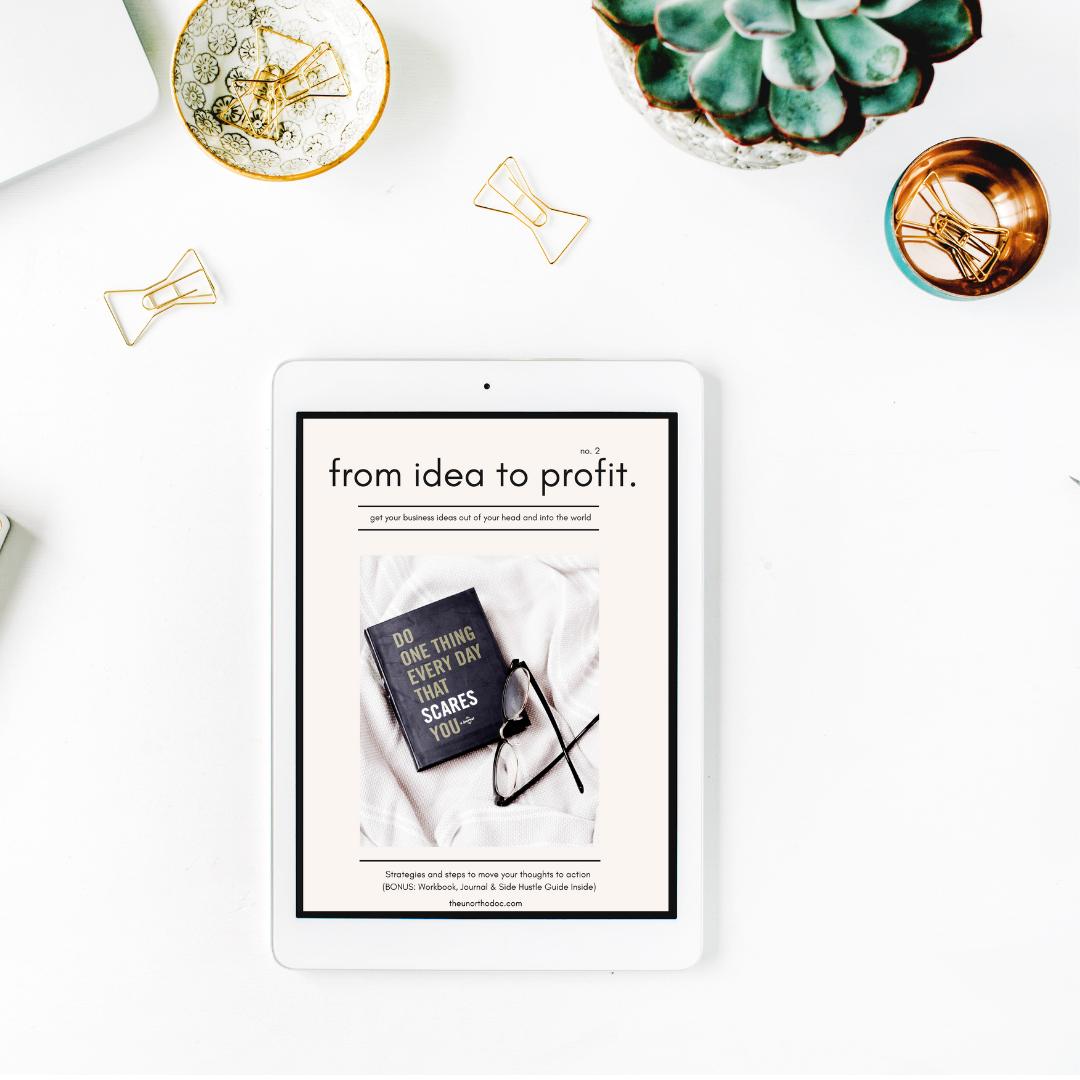
If you’re ready to take your side hustle journey even further, check out my Side Hustle Guide Volume 1, Side Hustle Guide Volume 2 and my e-book From Ideato Profit for more tips and tools on how to turn your passion into a profitable venture.

5 Tips for Scaling Your Side Hustle into a Successful Enterprise
With the gig economy booming and traditional employment models evolving, side hustles have become a lifeline for many individuals seeking financial security and professional fulfillment. From freelance writing and e-commerce ventures to consulting gigs and creative pursuits, there's no shortage of opportunities to turn your skills and passions into profitable ventures on the side.
But while starting a side hustle is relatively easy, scaling it into a thriving business requires a whole new level of dedication, strategy, and vision. As your side hustle gains traction and momentum, you'll inevitably face the question: "How can I take this to the next level? How do I turn my side gig into a full-blown thriving business?"
A guest post by: Myrtle Bautista
With the gig economy booming and traditional employment models evolving, side hustles have become a lifeline for many individuals seeking financial security and professional fulfillment. From freelance writing and e-commerce ventures to consulting gigs and creative pursuits, there's no shortage of opportunities to turn your skills and passions into profitable ventures on the side.
But while starting a side hustle is relatively easy, scaling it into a thriving business requires a whole new level of dedication, strategy, and vision. As your side hustle gains traction and momentum, you'll inevitably face the question: "How can I take this to the next level? How do I turn my side gig into a full-blown thriving business?"
In this article, we'll explore the answers to these questions, diving deep into the art of scaling your side hustle into a flourishing enterprise while maintaining an impressive work-life balance.
1. Define Your Vision
First things first, you need to have a crystal-clear vision of what you want your business to become. Defining your vision is not just about setting arbitrary goals. It's about crafting a compelling narrative that inspires you and your stakeholders. Consider conducting a SWOT (Strengths, Weaknesses, Opportunities, Threats) analysis to gain a better understanding of your business's current position and future prospects. This analysis can help you identify areas of improvement and potential growth opportunities.
Furthermore, think about the impact you want your business to have beyond just financial success. Are you passionate about environmental sustainability? Social justice? Community empowerment? Integrating your values into your business model can help differentiate you from competitors and attract like-minded customers.

2. Build a Solid Foundation
Every successful business is built on a sturdy foundation. As you work on scaling your side hustle, it's crucial to lay down the groundwork for sustainable growth. Here are some essential steps:
Legal and Financial Setup: Register your business, obtain the necessary licenses, and set up a separate bank account. Consider consulting with a lawyer or accountant to ensure compliance and financial stability.
Branding and Identity: Develop a strong brand identity that resonates with your target audience. Allocate resources towards professional logo design, website development, and cohesive branding components.
Systems and Processes: Optimize your operations by introducing streamlined systems and processes. This could include project management tools, invoicing software, and customer relationship management (CRM) systems.
Additionally, prioritize building a diverse and talented team that shares your vision and values. As you progress, connect with peers, mentors, and advisers who can provide direction and encouragement. Foster a culture of collaboration, creativity, and continuous learning to drive innovation and excellence within your organization.
If your side hustle operates as a remote business, finding the right coworking space becomes increasingly important for maintaining productivity and fostering connections. Even when traveling, you should seek out coworking spaces that offer networking opportunities, like spaces that host regular events, workshops, and networking sessions where you can connect with other remote professionals and exchange ideas.
3. Focus on Customer Satisfaction
Your customers are the lifeblood of your business. As you scale up, don’t lose sight of the importance of customer satisfaction. Here are some tips to keep your customers coming back for more:
Personalized Service: Get to know your customers personally and tailor your offerings to meet their unique needs. Show genuine appreciation for their business and go the extra mile to exceed their expectations.
Feedback Loop: Value customer feedback and apply it to enhance your products and services. Whether through surveys, reviews, or direct communication, listen attentively to what your customers have to say.
Exceptional Support: Provide prompt and helpful customer support to address any issues or concerns. Invest in training your team members to deliver exceptional service and resolve problems effectively.
4. Embrace Innovation
Innovation is key to staying ahead of the curve, but it doesn’t happen in a vacuum. Create a culture of innovation by encouraging experimentation, collaboration, and risk-taking. Dedicate time and resources for research and development to explore new ideas and technologies. Here are some more ways you can foster innovation within your business:
Stay Curious: Keep learning and exploring new growth opportunities. Attend industry conferences, read books and articles, and network with other entrepreneurs to gain fresh perspectives and insights.
Experimentation: Take calculated risks and try out new strategies. Whether it's launching a new product line, entering a new market, or experimenting with digital marketing tactics, embrace the spirit of experimentation.
Collaboration: Collaborate with like-minded individuals, businesses, or organizations to foster innovation and drive mutual success. By pooling resources and expertise, you can achieve more together than you could alone.
5. Cultivate a Growth Mindset
Cultivating a growth mindset is essential for navigating the inevitable challenges and setbacks that come with scaling a business. Join networking groups, attend industry events, and seek educational opportunities to expand your knowledge and skills. Instead of viewing failures as roadblocks, see them as opportunities for learning and growth. Celebrate your successes, but also be willing to pivot and adapt when things don't go as planned.
Final Word
Scaling your side hustle into a thriving business is no small feat. But with the right mindset, strategies, and dedication, it is entirely within your reach. By following the principles in this article and staying true to your passion, you'll be well on your way to transforming your side gig into the business of your dreams.

About the Author:
Myrtle is a journalism major, a social media marketer and is now exploring freelance writing. She's fond of anything related to health and wellness, and when she's not writing, you'll find her doing long-distance cycling, ultramarathons, hiking, or in a local cafe enjoying a good cold brew

11 Extra Income Streams For Young Professionals: Fresh Perspectives on Financial Freedom
As the financial landscape continues to evolve, the pursuit of extra income streams, or as it's popularly known, the "side hustle," has become more crucial than ever for young professionals navigating the challenges of student loan debt and escalating living costs. This is especially vital for gaining financial freedom, as additional income provides the means to invest, reduce debt, increase savings, and ultimately achieve financial independence.
While the term itself has gained notoriety over recent years, the concept of supplementing a 9 to 5 job with additional income has been a longstanding practice. As a young professional, I myself leverage my “free time,” nights and weekends to carve out supplementary incomes through real estate investing, blogging, my candle company, digital products and monetizing my influence on social media.
As the financial landscape continues to evolve, the pursuit of extra income streams, or as it's popularly known, the "side hustle," has become more crucial than ever for young professionals navigating the challenges of student loan debt and escalating living costs. This is especially vital for gaining financial freedom, as additional income provides the means to invest, reduce debt, increase savings, and ultimately achieve financial independence.
While the term itself has gained notoriety over recent years, the concept of supplementing a 9 to 5 job with additional income has been a longstanding practice. As a young professional, I myself leverage my “free time,” nights and weekends to carve out supplementary incomes through real estate investing, blogging, my candle company, digital products and monetizing my influence on social media.
In today's dynamic economy, not all side hustles are created equal, and the array of options can be overwhelming. This post aims to provide a fresh take on this concept, presenting 11 diverse and contemporary “side hustles” or extra income streams that go beyond traditional norms.

1. Blogging
Blogging has transcended from a hobby to a proven online business model, offering a flexible avenue for young professionals to build passive income, expand networks, and explore numerous opportunities. While the journey may demand commitment and consistency, the potential for substantial rewards awaits those willing to offer value and cultivate an engaged audience. I have documented my blogging journey since it’s inception. What began as a way to document my experiences and offer information, inspiration and advice to my readers has become a lucrative income stream for me. A few months ago I was interviewed by LinkedIn to talk about the process, you can find that interview here.
2. Advertising & Affiliate Marketing: Monetizing Your Influence
Affiliate marketing remains a lucrative industry where income is generated through commission-based promotion of products. Young professionals can leverage their social media presence to become brand ambassadors, opening doors for sponsored posts, takeovers, or product sales.
3. Become a Brand Ambassador: Turning Passion into Profit
Social media platforms, particularly Instagram, offer a unique space for young professionals to become influencers and brand ambassadors. Aligning with products or brands that resonate personally ensures authentic endorsements, fostering trust and potential monetization.
4. Freelance Writing/Services: Flexing Creative Muscles for Income
For those with creative skills, freelancing presents ample opportunities, ranging from web development to graphic design, writing, or editing. Utilize platforms like Upwork, Freelancer, or Fiverr to advertise your services and cater to a broad market.
5. Start a Podcast: The Rising Trend in Passive Income
Podcasting has emerged as a powerful medium for passive income. Young professionals can explore avenues like sponsorships, advertising, affiliate marketing, coaching, and public speaking events to monetize their podcasts.
6. Write an Ebook: Transforming Expertise into Revenue
Writing an ebook offers an accessible route for young professionals to share expertise and passions. With minimal upfront costs, ebooks can be sold online, providing an additional stream of income.
7. Locum Tenens: Flexible Options for Medical/Dental Professionals
Medical professionals, like dentists, can embrace locum tenens positions, offering services on off days or weekends in other practices. This flexible approach allows professionals to control the extent of their involvement and supplement their income.
8. Invest In Real Estate: Navigating Lucrative Yet Risky Waters
Real estate investment provides an opportunity to diversify income streams. Whether through property flipping, rentals, or fractional ownership via crowdfunding, young professionals can explore real estate ventures with careful research and professional consultation.
9. Rent Space In Your Home or on Airbnb: Maximizing Your Living Space
Leveraging spare bedrooms or vacant homes on platforms like Airbnb can turn unused spaces into lucrative income streams. Young professionals can maximize their living arrangements, transforming underutilized areas into profitable assets.
10. Create a Product and Sell Online: Monetizing Creativity
Creativity can be monetized by creating and selling products online. Whether through personal websites, e-commerce platforms like Shopify, or marketplaces like Etsy, young professionals can turn hobbies into profitable side hustles.
11. Create a Mobile App: Tapping into the Digital Economy
For those with coding skills or innovative ideas, developing a mobile app can open new income streams. With the potential for widespread usage, successful apps can generate substantial passive income.
Your side hustle is not just a means of making extra money; it has the potential to replace your 9 to 5 income. It can also help you develop new skills, build your personal brand or portfolio, and most importantly, contribute significantly to your journey towards financial freedom. More income translates to more opportunities for investment, accelerated debt repayment, robust savings, and the ultimate goal of financial independence. Take the risk by starting the business or pursuing that new hobby you’ve been curious about. A side hustle is your best opportunity to live life on your own terms. And with more money in your pocket, there’s nothing stopping you from making your dreams come true, all while securing a pathway to financial freedom and independence.

The Evolution of Work in the Post-Pandemic Era
The COVID-19 pandemic has fundamentally altered the landscape of work in ways we could not have imagined just a few years ago. As the world grappled with the challenges and uncertainties brought about by the virus, individuals and businesses adapted and evolved in response to the crisis. This period of adaptation has reshaped the world of work, redefining our understanding of where, how, and why we work.
The COVID-19 pandemic has fundamentally altered the landscape of work in ways we could not have imagined just a few years ago. As the world grappled with the challenges and uncertainties brought about by the virus, individuals and businesses adapted and evolved in response to the crisis. This period of adaptation has reshaped the world of work, redefining our understanding of where, how, and why we work. In this think piece, we will explore the transformation of work since the pandemic, the role of the economy in shaping work choices, the growing appeal of remote work and side businesses, and what the future of work may hold.
The State of the Economy and Its Impact on Work
The pandemic ushered in a period of economic uncertainty, resulting in job losses, furloughs, and business closures on a global scale. These challenges forced individuals to rethink their career paths and consider alternative ways to earn a living. The state of the economy played a pivotal role in driving changes in the labor market, as people sought greater financial stability and flexibility.
1. Remote Work as a New Norm
One of the most prominent shifts in the world of work during the pandemic was the widespread adoption of remote work. As businesses adapted to lockdowns and social distancing measures, they rapidly transitioned to remote work models to keep their operations running. Employees discovered the benefits of working from home, such as reduced commuting time and increased flexibility, prompting a reevaluation of their work preferences.
Even as the pandemic subsided, many companies continued to offer remote work options, reflecting the desire of both employees and employers to maintain this newfound flexibility. As a result, remote work is now seen as a viable and attractive choice, enabling individuals to balance work with personal life and contributing to reduced carbon emissions through fewer commutes.

2. Side Businesses and the Gig Economy
The pandemic also accelerated the rise of side businesses and the gig economy. With economic instability and job uncertainty, people turned to entrepreneurship and gig work as means of generating income and securing their financial future. Platforms like Uber, Airbnb, and freelancing websites saw a surge in activity as individuals sought opportunities for supplementary income.
Side businesses, ranging from online stores to freelance consulting, became avenues for pursuing passions, gaining financial independence, and diversifying income streams. The gig economy, with its flexible work arrangements, provided a lifeline for many, allowing them to adapt to changing economic circumstances.
The Future of Work
Looking ahead, the future of work appears to be a dynamic blend of traditional employment, remote work, side businesses, and gig work. This shift presents both opportunities and challenges.
1. Embracing Flexibility
The future of work will prioritize flexibility, with remote work options remaining a cornerstone of many job markets. Employees will seek employers who offer work arrangements that align with their lifestyle choices, including remote and hybrid models.
2. Emphasizing Skills and Adaptability
As the job market continues to evolve, individuals must prioritize upskilling and adaptability. The ability to learn new skills quickly and pivot into different roles or industries will be crucial for career longevity.
3. Entrepreneurship and Gig Work
The rise of side businesses and the gig economy is likely to continue as individuals recognize the value of diversifying their income streams and pursuing their passions. Preparing for the future of work may involve exploring entrepreneurial ventures and building a personal brand.
The COVID-19 pandemic reshaped the world of work in profound ways, with the economy serving as a catalyst for change. Remote work, side businesses, and the gig economy have become attractive options for individuals seeking flexibility, financial stability, and personal fulfillment. The future of work will be defined by flexibility, adaptability, and entrepreneurship. To prepare for this future, individuals must prioritize skills development, embrace change, and explore diverse avenues for income generation. As we navigate this evolving landscape, the world of work will continue to offer new and exciting opportunities for personal and professional growth.

Breaking Up with the Side Hustle: My Love-Hate Relationship in the New Era of Entrepreneurship
In this era brimming with opportunities and flexible work structures, "side hustle" has become a familiar phrase in our lexicon. I, too, have liberally used it throughout this blog, often boasting a few "side hustles" of my own. For many, it embodies ambition, the prospect of extra income, and the pursuit of dreams. But now, at the crossroads of entrepreneurship, I stand pondering why I'm considering parting ways with the term "side hustle."
In this era brimming with opportunities and flexible work structures, "side hustle" has become a familiar phrase in our lexicon. I, too, have liberally used it throughout this blog, often boasting a few "side hustles" of my own. For many, it embodies ambition, the prospect of extra income, and the pursuit of dreams. But now, at the crossroads of entrepreneurship, I stand pondering why I'm considering parting ways with the term "side hustle." It's not the entire phrase, but the latter half, "hustle," that raises questions—it conveys strain, busyness, and difficulty.
These side ventures have indeed played a pivotal role in molding my entrepreneurial journey. Beyond my role in running an Orthodontics practice, they've brought immense joy as I've nurtured them into steady earners, generating $10-$12K per month. It's a genuinely delightful experience! Yet, as I plunge deeper into the realm of business, the phrase itself emerges as a love-hate relationship that merits examination.
The Love:
1. Extra Income: Let's face it, who doesn't appreciate a financial cushion? My side hustle has been a reliable source of extra income, which has often eased the financial stress in my life.
2. Flexibility: The freedom to work on my terms, at my pace, has been a game-changer. It aligns perfectly with the era of remote work and flexible schedules.
3. Passion Projects: It allows me to pursue my passions and hobbies as income-generating endeavors. What's better than getting paid for doing what you love?

The Hate:
1. Limiting Label: The term "side hustle" can be constricting, often implying a secondary role or a mere supplement to a 'main' job. Yet, what if your side venture embodies your true passion? Sometimes, these pursuits begin as secondary endeavors but possess the potential to blossom into full-fledged ventures. Perhaps it's time to adopt a different phrase that better captures this transformative journey.
2. Stress and Burnout: The term "hustle" itself often carries associations with stress and burnout. The idea of balancing a full-time job, family responsibilities, and a side venture can be overwhelming and risk causing burnout. Therefore, it's crucial to establish a sustainable rhythm that prioritizes both mental and physical well-being. After all, a side pursuit should be an additional source of income, not a source of undue strain.
3. Entrepreneurial Evolution: In this era, we're witnessing the evolution of entrepreneurship. Businesses born as side hustles have grown into thriving ventures. The phrase 'side hustle' can't encapsulate the magnitude of such aspirations.
So, why the breakup with the term? It's about acknowledging the transformation in my mindset. I no longer see my ventures as something secondary. They are bona fide businesses, an entrepreneurial pursuit that deserves to stand on its own.
In the era of entrepreneurship and flexible work, it's time to embrace a new lexicon, one that reflects the diverse journeys we embark upon. Terms like "profit pursuit," "earnings endeavor," and "spare time startup” and “income initiative" better encapsulate the potential and ambition behind what we do.
The side hustle era has laid the groundwork, but now we're taking the reins and redefining our entrepreneurial narratives. It's time to break up with the limitations of the past and step into a future where our businesses, no matter their origins, shine brilliantly.
As I embark on this journey of linguistic liberation, I invite you to explore your own relationship with the term "side hustle." Are you ready to redefine your narrative and embrace the entrepreneurial era with a fresh perspective? It's time to discover a new language of ambition, one that truly reflects the transformative power of our pursuits.

Tax-Savvy Strategies: Maximizing Deductions for Dental Professionals and Side Hustlers
Whether you're managing your own dental practice or pursuing your passion through a side hustle, understanding the tax write-offs available can significantly impact your financial outlook. Let's delve into some valuable deductions tailored to both dental professionals and individuals with side businesses, empowering you to make impactful financial decisions.
Whether you're managing your own dental practice or pursuing your passion through a side hustle, understanding the tax write-offs available can significantly impact your financial outlook. Let's delve into some valuable deductions tailored to both dental professionals and individuals with side businesses, empowering you to make impactful financial decisions.
Essential Tools and Supplies
For dental professionals, having the right equipment and supplies is paramount for delivering top-notch patient care. The good news is that you can deduct the expenses associated with these essential items. From dental instruments and chairs to sterilization equipment and X-ray machines, keeping a record of your equipment purchases throughout the year is essential. Additionally, remember to account for costs related to supplies like gloves, masks, disposable items, and dental materials.
Investing in Expertise and Growth
In the dynamic landscape of dentistry, staying up-to-date with the latest developments is crucial. The costs you incur for attending dental workshops, seminars, courses, and conferences can be eligible for tax deductions. This encompasses registration fees, travel expenses, accommodation, and study materials. By dedicating resources to your professional development, you enhance your skills and simultaneously reduce your tax obligations.
Home Workspace Benefits
Whether you're a dental professional or a side business enthusiast, working from home might be part of your routine. If you've designated a specific area exclusively for your dental practice or side endeavors, you might qualify for a home office deduction. This deduction enables you to deduct a portion of your home-related expenses, including rent or mortgage, utilities, and related costs. It's important to ensure your home office adheres to IRS guidelines and is solely used for business purposes.

Boosting Visibility Through Marketing
Promoting your dental practice or side business is essential for attracting clients and customers. Fortunately, expenses related to marketing and advertising are generally tax-deductible. This encompasses costs associated with creating and maintaining a professional website, printing business materials, online advertising, social media campaigns, and even sponsoring local events. Maintaining a detailed record of these expenses will substantiate your deductions during tax season.
Networking and Resources
As a dental professional with a side business or blog, staying connected with your industry and accessing valuable resources is invaluable. Membership fees for professional associations, dental societies, and online communities are deductible. Additionally, subscriptions to dental publications, research databases, blogging platforms, and industry-related magazines can also be considered valid deductions. Stay informed, engaged, and enjoy the tax advantages these memberships provide.
While these deductions offer significant advantages, it's advisable to consult with a qualified tax professional or CPA who specializes in dental professionals and small business owners. They can offer personalized guidance based on your unique situation, assisting you in navigating the intricate realm of tax deductions.
Leveraging these tax write-offs allows you to optimize your tax circumstances, alleviate your overall tax responsibilities, and retain more of your hard-earned income. Embrace the advantages that come with being a dental professional and pursuing a side venture, all while making prudent financial decisions.
Here's to your ongoing success in your dental practice and your journey as a side business enthusiast. Keep shining, both in your clinical work and on your digital platform!

Prioritizing Self-Care: A Must-Have for Entrepreneurs
Being an entrepreneur can be both rewarding and challenging. In the pursuit of success, it's easy to forget about self-care. However, taking care of yourself is essential to your well-being and overall success. In this article, we'll explore some tips to help entrepreneurs prioritize self-care.
This is a guest post by Marjorie Jones
Being an entrepreneur can be both rewarding and challenging. In the pursuit of success, it's easy to forget about self-care. However, taking care of yourself is essential to your well-being and overall success. In this article, we'll explore some tips to help entrepreneurs prioritize self-care.
Enjoy Breaks
As an entrepreneur, it's natural to get caught up in work and forget to take breaks. However, taking regular breaks can boost productivity and reduce stress levels. Taking a 15-minute break every two hours can improve productivity and creativity. During your break, engage in activities that relax you, such as reading a book or meditating. Stepping away from work and doing something else can help you come back with a fresh perspective.
Stay Focused With Mindfulness
Mindfulness is a powerful tool for reducing stress and improving mental health. It involves paying attention to the present moment without judgment. Mindfulness can help you stay focused on what's important and reduce anxiety. To practice mindfulness, set aside time each day to sit quietly and focus on your breath. You can also try mindfulness meditation, which involves focusing on your breath and bringing your attention back to your breath when your mind wanders.
Improve Mental and Physical Health by Walking More
Walking is a great way to improve both mental and physical health. It can reduce stress, improve mood, and lower the risk of chronic diseases. Instead of driving to a nearby store or coffee shop, walk there instead. If possible, aim to walk in an area with a Walk Score of 70 or above. A Walk Score is a number that measures how walkable a neighborhood is. Do what you can to incorporate walking into your daily routine.
Set Boundaries
As an entrepreneur, it's easy to let work spill into your personal life. However, this can lead to burnout and reduced productivity. Set clear boundaries between work and personal time. For example, avoid checking work emails or taking work calls during your personal time. Instead, set aside specific times during the day to check and respond to work-related messages.
Spend Some Time on Personal Development
Investing in personal development can help you improve your skills and enhance your overall well-being. Attend workshops, seminars, or online courses that align with your goals. You can also join a networking group or mentorship program to connect with other entrepreneurs and learn from their experiences.

Prioritize Sleep
Sleep is essential for physical and mental health. Lack of sleep can negatively impact productivity, mood, and overall well-being. Aim to get at least seven hours of sleep each night. To improve the quality of your sleep, create a calming bedtime routine and avoid using electronic devices before bedtime. You can also invest in a comfortable mattress and pillows to ensure a restful night's sleep.
Connect with Others
Entrepreneurship can be a lonely journey, but it doesn't have to be. It's important to connect with others to feel supported and motivated along the way. Whether it's making time for family, friends, or colleagues, joining a community group, or attending networking events, building connections can help you feel less isolated and more inspired.
Invest in Quality Products
Investing in quality products can help facilitate a healthier lifestyle. For example, a comfortable pair of shoes can make walking more enjoyable, while a high-quality blender can help you make healthy smoothies and juices. However, always read reviews before making purchases to ensure that you're investing in products that are worth your money.
Self-care is a crucial component of an entrepreneur's journey toward success. By taking care of their physical, mental, and emotional well-being, entrepreneurs can achieve their goals without compromising their health. From getting enough rest to walking more often, prioritizing self-care can lead to a healthier, happier, and more productive life as an entrepreneur.
Visit The UnOrthoDoc for professional and financial development advice while maintaining work-life balance.
About The Author:
Marjorie Jones created Working Class Wow because she knows you don’t need a big budget to make your business look like a million bucks! From a well-designed logo and a carefully-crafted website to grammatically-correct copy and professionally-printed marketing materials, it is entirely possible (and surprisingly affordable) to bring a little “Working Class WOW” to your small business to build your brand, improve relationships with customers, and benefit the bottom line. WorkingClassWow.com can show you how.

Crafting Your Personal Brand: A Pathway to Success
In today's digitally connected world, personal branding has emerged as a powerful tool to distinguish oneself and create a lasting impression. Whether you're an entrepreneur, a creative professional, or someone seeking to enhance your career prospects, cultivating a strong personal brand is essential. In this blog post, we'll explore the key steps to create a personal brand that authentically represents you and sets you apart from the crowd.
In today's digitally connected world, personal branding has emerged as a powerful tool to distinguish oneself and create a lasting impression. Whether you're an entrepreneur, a creative professional, or someone seeking to enhance your career prospects, cultivating a strong personal brand is essential. In this blog post, we'll explore the key steps to create a personal brand that authentically represents you and sets you apart from the crowd.
1. Define Your Authentic Self:
Building a personal brand starts with understanding who you are at your core. Take the time for introspection and self-reflection. Identify your values, passions, strengths, and unique qualities that make you stand out. Your personal brand should align with your true self to create an authentic and genuine representation of who you are.
2. Identify Your Target Audience:
Clarifying your target audience is crucial to tailor your brand message effectively. Determine the demographics, interests, and needs of the people you want to connect with. Understanding your audience will help you shape your brand voice, style, and content to resonate with them on a deeper level.
3. Craft Your Brand Story:
Stories are a powerful way to captivate and engage your audience. Develop a compelling narrative that communicates your journey, experiences, and the value you bring. Your brand story should evoke emotions, establish a connection, and demonstrate the impact you can create. Be transparent, share your successes and failures, and highlight the lessons you've learned along the way.

4. Build a Consistent Online Presence:
In the digital age, your online presence plays a pivotal role in shaping your personal brand. Create a professional website or a portfolio that showcases your expertise, achievements, and personal brand story. Establish a strong presence on relevant social media platforms where your target audience is active. Be consistent in your visual branding elements such as colors, fonts, and logo to create a cohesive and recognizable brand identity.
5. Deliver Valuable Content:
Sharing valuable content is an excellent way to establish yourself as an authority in your field and build trust with your audience. Create a content strategy that aligns with your brand message and audience's interests. Whether it's through blog posts, videos, podcasts, or social media updates, consistently deliver high-quality content that educates, inspires, and entertains your audience. Engage with your audience, respond to their comments, and foster meaningful conversations.
6. Network and Collaborate:
Building a personal brand involves forging connections and collaborations within your industry or niche. Attend conferences, seminars, and networking events to meet like-minded professionals. Engage with influencers and thought leaders in your field through social media or by participating in relevant online communities. Collaborating with others can expand your reach, expose you to new opportunities, and enhance your personal brand's visibility.
7. Continuously Evolve and Adapt:
A personal brand is not static; it should evolve along with your personal and professional growth. Stay updated with the latest trends and advancements in your industry. Seek feedback from your audience and adapt your brand strategy accordingly. Embrace new technologies and platforms that can help you showcase your expertise and connect with your audience more effectively.
Crafting a personal brand requires time, effort, and self-reflection, but the rewards are immense. A well-defined personal brand can open doors to new opportunities, attract clients or employers, and enable you to leave a lasting impact in your chosen field. Stay true to your authentic self, consistently deliver value, and engage with your audience genuinely. By following these steps and remaining committed to your personal brand, you'll set yourself on a path to success and create a powerful personal brand that truly represents you.




Why You Need An Accountant Fo Your Side Hustle Business
By now, almost everyone has a side hustle. If you didn’t have one before the pandemic, you certainly have one now or are working on it. They’re an outstanding way to make extra money, to spread your occupational wings, and to build the foundation of a full-time business. But it’s also easy to get sloppy. Read through for 7 side hustle accounting mistakes to avoid
By now, almost everyone has a side hustle. If you didn’t have one before the pandemic, you certainly have one now or are working on it. They’re an outstanding way to make extra money, to spread your occupational wings, and to build the foundation of a full-time business. But it’s also easy to get sloppy.
Here are seven side hustle accounting mistakes to avoid:

1. Not keeping accurate income records
Since side hustles are typically second occupations, it’s very easy to be casual with record-keeping. This is very likely to happen in the first year of operation. You might simply be looking for some extra money, so you don’t bother to track the actual dollars and cents.
This habit has a few bad side effects:
Though money may be coming in, you’ll never be entirely sure how much.
Since you’re not really sure how much is coming in, you don’t really know if the business is truly successful.
Though you may be making money, you won’t know if what you’re earning is justified by the time and effort you’re putting out to earn it.
When tax filing time comes, you’ll be forced to estimate and guess how much you actually made. That can be a disaster if the IRS doesn’t agree.
Solution: Set up a dedicated bank account where you will deposit all of your side hustle income payments. At the end of the year, or the end of each month, you can simply total up the deposits to determine your income.
2. Not keeping accurate expense records
New side hustlers may be even more casual when it comes to recording expenses. This is particularly true if the expenses are small.
There is an equal number of issues with this practice:
You’ll never know what your net income is—that’s your income after deducting business-related expenses.
If you focus only on the income side, and ignore expenses, you’ll never know if your side hustle is truly profitable.
You’ll miss out on valuable tax deductions against your side hustle income.
Solution: Purchase business accounting software or hire an accountant - record all of your expenses—as well as your income—as they occur. Alternatively, you can set up a dedicated business checking account, that you run all your expenses through. That will provide you with an automatic written record of your expenses. You can also deposit your side hustle income into the same account.
3. Not determining the connection between expenses and income
We’ve already talked about how not accurately recording your income and expenses can lead to not knowing your true net income. But there’s an even more specific problem. Without keeping records, you can’t know how cost-effective your expenses are.
The primary purpose of business expenses is to generate business income
Without keeping accurate records, you’ll have no way to measure the income benefit provided by any particular expense.
In order to maximize profits, a business owner has to know which expenses will produce the most “bang for the buck”. Without keeping accurate records, you may be incurring expenses that generate little or no revenue. You may also miss an opportunity to determine which expenses produce the highest revenues.
Solution: Using accounting software or an accountant, you should be able to match expenses incurred with the relevant income produced. You can then look for inconsistencies. Are there expenses that produce little or no benefit? Are there others that result in increased income? Properly allocating between the two will keep your side hustle going in the right direction.
4. Not separating business and personal transactions
This is a mistake that even side hustle veterans make. If you’re running your side hustle income and expenses through a personal checking account, separating business and personal could be so complicated that you don’t bother to do it.
Until tax time.
That’s when it becomes a certified nightmare. Trying to separate business and personal transactions out of 12 months bank statements can take days. That’s especially true if you make personal purchases from the same vendors you make business purchases through. It will also be a problem if you don’t have a record of side hustle related income deposits.
Solution: Once again, the most effective solution is to have a dedicated checking account for your side hustle. Use that account exclusively for your business so there’s no possibility of mixing with personal transactions.
5. Not keeping track of debts and obligations—in both directions
This includes debts you’ve incurred for business purposes, or debts owed to you in connection with your side hustle. It also includes accounts receivable—income earned, but not yet collected—and accounts payable—expenses incurred, but not yet paid.
If you don’t keep track of debts and obligations, you could lose side hustle income, or fail to make timely payments. The latter could result in damage to your credit, as well as your reputation.
Solution: If using an accounting software it should have general ledger capability, that enables you to set up individual accounts. They can be set up for debts, receivables and payables. If you have terms set up with multiple customers or vendors, this will be the only way to keep accurate records of what you owe, and what’s owed to you.
6. Not collecting (adequate) sales tax
This is a definite problem if your side hustle involves selling a product. But in many states, sales tax also applies on certain services performed.
Whether you actually collect sales tax from your clients and customers may not matter. But the state sales tax division will want their cut anyway. You’ll have to keep accurate records of your business income, as well as your sales tax liability. In fact, sales tax is a payable, just like an account payable due to a supplier or vendor.
Solution: Accounting software will be a must if you are required to collect and pay sales tax. If the software has an invoicing feature, it will automatically include sales tax in customer invoices. And as payments come in, the sales tax will be credited to the sales tax payable account. At the end of the month, you’ll know exactly how much sales tax you owe. Pay it when required—sales tax divisions are notorious for being unforgiving.
7. Not making your estimated tax payments
If you don’t make estimated tax payments on your side hustle, you’ll owe money at the end of the year. This could leave you with a very large tax bill at filing time. Like thousands of dollars. If your side hustle is particularly successful, it could even be tens of thousands of dollars.
If you fail to make those payments in a timely fashion, you’ll owe interest and penalties on top of the basic tax. It’s a Catch-22 situation you can never win.
Solution. This gets down to why you need to keep accurate records of both income and expenses. If you do, you’ll be able to determine your net income at any time (net income is also generally your taxable income). You’ll need to make estimated tax payments to the IRS during the course of the year. Those tax estimates are due on April 15, June 15, and September 15 of the current year, and January 15 of the following year—all for the current tax year.
Once you determine your net income for the quarter, you’ll have to apply your marginal tax rate to the income. But you’ll also have to pay self-employment tax, which is the FICA tax for the self-employed, and those who have side hustles.
The rate is 15.3 percent of your net income.
If you’re in the 15 percent marginal tax bracket, you’ll have to allocate roughly 30 percent of your net income for estimated tax. If you don’t know how to calculate this, consult with an accountant. You can make your tax estimates online, using IRS Direct Pay.
Summary
When you have side income, taxes can get complicated quick. These are seven common side hustle accounting mistakes to avoid, but your best bet is to get some good accounting software, or a good accountant.
For more information on the business side of your side hustle, tax and accounting resources join The Climb community:
You already read The Climb letters. Now take the next step. This members-only space is for those ready to move beyond inspiration to practice intentional growth in real life.

How I Made Over $11K Blogging Income in April 2023
In today's ever-changing economy, it's more crucial than ever to create multiple streams of income and avoid relying solely on a job or a single source of earnings. The ongoing pandemic has taught us the importance of adaptability and resilience, as well as the need to have a solid financial footing. By diversifying our income streams, we empower ourselves with greater financial security and freedom. Instead of being vulnerable to economic uncertainties, we become architects of our own financial destiny.
Welcome to my monthly income report, where I share my blogging and social media earnings. I figured I could make this a thing on the blog - This report not only demonstrates that it's feasible to generate income through blogging and social media, but also holds me accountable to my goals. If you're interested in learning more about my income sources and accessing valuable resources to start your own business, I encourage you to join The Climb membership.
In today's ever-changing economy, it's more crucial than ever to create multiple streams of income and avoid relying solely on a job or a single source of earnings. The ongoing pandemic has taught us the importance of adaptability and resilience, as well as the need to have a solid financial footing. By diversifying our income streams, we empower ourselves with greater financial security and freedom. Instead of being vulnerable to economic uncertainties, we become architects of our own financial destiny. Building multiple streams of income allows us to weather storms, seize new opportunities, and cultivate a life of abundance. This blog serves as one of my income streams and I am hoping this article inspires someone who has been thinking about starting a business on the side to take that leap.

If you remember from March’s income report, I mentioned that earlier this year, I set a goal to monetize my blog and significantly increase my income. As someone who has a deep passion for blogging, it has evolved far beyond a mere hobby and become an activity I genuinely enjoy and dedicate substantial time to. Consequently, I'm eager to explore its potential and see how far it can take me.
So far this year, my blog has earned $28,0161.81. In April alone that income was $11,118.00. All the revenue I'm reporting here is directly attributed to my blog and social media platforms, particularly Instagram. For a detailed breakdown, you can find the information on The Climb membership page, which I encourage you to join.
By becoming a member of The Climb, you will get access to all my income reports and their sources, you'll gain exclusive access to comprehensive insights into how I monetize my blog and Instagram. Additionally, you'll receive valuable resources designed to help you start your side business, enhance your online presence and effectively monetize your own platform. As a member, you'll also become part of a supportive community of like-minded individuals who share the same aspirations and are embarking on a similar journey.
Generating income on the side is undoubtedly possible, but it requires dedication, time, and effort. If you're willing to invest in it, be consistent and stay true to yourself and your values, the opportunities are limitless.
So, let us embrace the entrepreneurial spirit within us, explore diverse income-generating avenues, and create a future where our financial well-being is firmly in our own hands. Remember, in today's world, having multiple streams of income is not just an option; it is a necessity for a prosperous and fulfilling life.

How to Leverage Social Media To Make Extra Income
Social media has become an integral part of our daily lives and has opened up many opportunities to make extra money. Brands have found a low cost way of promoting their goods and services through influencers and microinfluencers (if you have a small following). Guys, the influencer market has rapidly grown and reached $16.4B in 2022, it is lucrative. This growth is attributed to the increasing popularity of short video formats on platforms like TikTok, Facebook, and YouTube, the effect of the global pandemic on consumers, which catalyzed social media consumption, and the optimization of data collection, which marketers used for social media ads.
Social media has become an integral part of our daily lives and has opened up many opportunities to make extra money. Brands have found a low cost way of promoting their goods and services through influencers and microinfluencers (if you have a small following). Guys, the influencer market has rapidly grown and reached $16.4B in 2022, it is lucrative. This growth is attributed to the increasing popularity of short video formats on platforms like TikTok, Facebook, and YouTube, the effect of the global pandemic on consumers, which catalyzed social media consumption, and the optimization of data collection, which marketers used for social media ads. Here are some ways you can use social media to make extra money:

Leverage Social Media:
Influencer marketing: Influencer marketing is one of the most popular ways to make money on social media. If you have a following (large or small) on platforms like Instagram, TikTok, or YouTube, brands may pay you to promote their products or services.
Affiliate marketing: You can use social media to promote affiliate products and earn a commission on any resulting sales. Many companies have affiliate programs, and you can promote their products through your social media channels.
Social media management: Many businesses are looking for help managing their social media channels. If you have experience in social media management, you can use social media to promote your services and find clients
Sponsored posts: Similar to influencer marketing, you can make money through sponsored posts by promoting products or services on your social media channels. You can approach brands directly or use platforms like Grapevine or AspireIQ to connect with brands.
Offering services: If you have a skill or expertise, you can use social media to promote your services and find clients. For example, you can offer social media management services or graphic design services.
Selling products: You can use social media to promote and sell your own products, such as merchandise or digital products. Platforms like Instagram and Facebook offer built-in tools to make it easy to set up a shop and sell products.
Crowdfunding: You can use social media to launch a crowdfunding campaign to fund a project or business idea. Platforms like Kickstarter and GoFundMe allow you to promote your campaign on social media and raise money from your followers.
Social media offers many opportunities to make extra money. Whether you're an influencer, entrepreneur, or freelancer, there are many ways to use social media to your advantage and make money. Just remember to stay authentic and transparent with your followers and only promote products and services that align with your values and interests.
See how I use social media to make over $12K of extra income per month. I spill all the tea and give the details in my community, The Climb. I give you my exact scripting for pitching brands, the template for my media kit and more.
You already read The Climb letters. Now take the next step. This members-only space is for those ready to move beyond inspiration to practice intentional growth in real life.












How I Made Over $12K In March 2023 With My Blog
At the top of the year I wrote an article in which I outlined my blogging income and mentioned that one of my goals for 2023 was to seriously monetize and increase the income from my blog. If you’ve been with me for a while you know what happens when your girl has a goal.
At the top of the year I wrote an article in which I outlined my blogging income and mentioned that one of my goals for 2023 was to seriously monetize and increase the income from my blog. If you’ve been with me for a while you know what happens when your girl has a goal.
With all the financial uncertainty in the air, we all could use some extra cash whether it’s to cushion against a rainy day (as they are sure to come), to invest, to safe guard against a potential layoff or for whatever reason. For me, blogging is one of my great loves. It has long surpassed being a hobby and something I genuinely enjoy and spend a lot of time on, and thus I want to see how far I can take it. Perhaps one day it may even replace the income of my 9-5. I have seen it happen with other people so I know it is possible.
In this article I am going to outline the few ways I make money on my blog and how you can too.
For the month of March 2023, I made $12,164.73 from all the ventures I will list below. In February that income was $3012.56 and in January it was $1766.52. Year to date the total extra income made is $16, 943.81. All the income reported here is through my blog and social media (Instagram). Here is the breakdown:
If you're interested in learning more about how I made money through my blog and Instagram, I encourage you to sign up for my paid community. You'll get access to exclusive content and resources that will help you grow your online presence and monetize your platform. Plus, you'll be part of a supportive community of like-minded individuals who are also on the same journey as you.
Making money through your blog and social media is possible, but it takes time and effort. If you're willing to put in the work and stay true to yourself and your values, the possibilities are endless.
Thank you for reading, and I hope to see you in my paid community soon!
You already read The Climb letters. Now take the next step. This members-only space is for those ready to move beyond inspiration to practice intentional growth in real life.

9 Ways To Make Extra Income Online
More and more, people are finding different ways to either increase or supplement their income especially with current financial uncertainties. With a lot of people securing jobs that are either remote or location independent, there is now a level of flexibility that has made it easier to leverage your wifi connection to make some extra money. Whether you're looking to supplement your income or start a new career, there are a variety of ways to make money online.
More and more, people are finding different ways to either increase or supplement their income especially with current financial uncertainties. With a lot of people securing jobs that are either remote or location independent, there is now a level of flexibility that has made it easier to leverage your wifi connection to make some extra money. Whether you're looking to supplement your income or start a new career, there are a variety of ways to make money online. Here are some of the most popular methods:

1. Freelancing: Freelancing involves providing services such as writing, designing, coding, or social media management to clients online. Platforms like Upwork, Fiverr, and Freelancer.com connect freelancers with clients and offer a wide range of job opportunities. I recently hired a VA on Upwork to help me with a few admin tasks and pay her weekly. In the past I have used said platform as well as Fiverr to hire for several small jobs.
2. Affiliate marketing: Affiliate marketing involves promoting products or services through an affiliate link and earning a commission on any resulting sales. Amazon Associates, ShareASale, and Commission Junction are popular affiliate marketing platforms. You can then promote these on your social media or website.
3. Sell products online: You can sell products online through platforms such as Amazon, eBay, Etsy or your own website. You can either sell products you create yourself, or source products from wholesalers and sell them for a profit.
Turn your passion into a lucrative side hustle with this guide. It includes 10 lucrative side hustles that you can start TODAY.
This e-book is written for those who want to get their business ideas out of their heads and into the world. It includes action packed steps to move you from thought to action in as little as 1 week.
Bonus: FREE side hustle guide, side hustle workbook and journal with this purchase
4. Online tutoring: If you have expertise in a particular subject, you can offer online tutoring services through platforms such as Tutor.com, Chegg, or Wyzant.
5. Virtual bookkeeping: If you have experience in bookkeeping or accounting, you can offer virtual bookkeeping services through platforms like Bookminders, Belay Solutions, or AccountingDepartment.com.
6. Online content creation: If you are creative or have a talent for creating content such as videos, blogs, or podcasts, you can monetize your content through platforms like YouTube, Patreon, Instagram, TikTok or Substack.
7. Online coaching: If you have expertise in a particular area, such as fitness, nutrition, or business, you can offer online coaching services through platforms like Coach.me, Teachable or Udemy.
8. Online market trading: Online market trading involves buying and selling stocks, currencies, or commodities through online trading platforms like eToro, Robinhood, or TD Ameritrade.
9. Online surveys: There are many companies that pay individuals to take online surveys. While the pay is typically low, it's an easy way to make some extra cash in your spare time. Some popular survey sites include Swagbucks, Survey Junkie, and Vindale Research.
Making extra money online is easier than ever thanks to the plethora of opportunities available. Whether you're looking to earn a little extra cash or start a new career, there's a way to make money online that's right for you.
Want specifics on how to make money with any of the above, join my community below.
You already read The Climb letters. Now take the next step. This members-only space is for those ready to move beyond inspiration to practice intentional growth in real life.

Side Hustle: 5 Ways to Increase Your Skillset with Skillshare
you are looking to increase your skillset and make some extra money on the side then I am going to recommend to you Skillshare. Skillshare is a great platform for both learning new skills and teaching them to others. With a membership, you can access thousands of courses, tutorials, and workshops to enhance your existing knowledge, while also having the opportunity to become an instructor and start earning money.
Personal development is an important topic to me and one of the ways I work on myself is making sure that I hone my existing skills and gain new ones. I love learning! Here’s the thing about diversifying your skills - you become an asset. You become an asset to your place of employment and also to yourself. When you know how to do many things your skills become transferrable which could mean an increase in salary. It could also mean a new way for you to make extra money on the side.
If you’re in that boat where you are looking to increase your skillset and make some extra money on the side then I am going to recommend to you Skillshare. Skillshare is a great platform for both learning new skills and teaching them to others. With a membership, you can access thousands of courses, tutorials, and workshops to enhance your existing knowledge, while also having the opportunity to become an instructor and start earning money. In this blog post, we’ll discuss five different ways to increase your skillset with Skillshare, so you can start a successful side hustle.

Join Skillshare
With a Skillshare membership, you join a growing community of millions of passionate learners and start acquiring skills you need to reach your goals. All you need to do to get started is create an account on the platform. It is subscription-based and offers classes from the world’s best instructors in topics ranging from design, marketing, photography, blogging and business. Each class includes short video lessons, projects and resources to help you build your skills and potentially unlock a new source of passive income.
With my link you can get a Skillshare membership this month for 30% off it’s original price.
Take Classes
Once you have signed up and become a member, you want to start taking classes. Find topics that you are interested in and just have fun with it. They have over 27,000 classes in their library, you can explore different topics and find what interests you. If you have a skill you already know, you can take courses to deepen your knowledge or even teach that skill yourself.
You don’t even have to sign up for classes right away. Browse the library and save classes that look interesting to watch later. That way, you can get an idea of the types of classes available and decide which ones will be the most beneficial to your career.
Taking classes on Skillshare should be fun. Don’t feel pressured to sign up for a course that doesn’t interest you just because it’s popular. It’s important to take the time to explore and find something that speaks to your passions. You will get the most out of the experience if you choose something that excites you. I am a skillshare member and it has helped me over the years to learn about various things related to blogging and social media. What I have learned on skillshare has been invaluable.
Teach a Class
As you gain proficiency in new skills, you can take the next step to become an instructor on Skillshare and start teaching others. Teaching classes on Skillshare provides a great opportunity to earn passive income, while also giving you the chance to learn even more new skills. Plus, you’ll get the satisfaction of helping others acquire knowledge and become more proficient in areas they’re interested in.
Setting up an account to become an instructor is easy and straightforward. You simply sign up as a teacher, and then create classes by uploading pre-recorded video lectures. You’ll also need to provide students with helpful resources and give them timely feedback.
Once you’ve published your classes, Skillshare takes care of the promotion for you and shares your class with the millions of potential students on its platform. You can even choose to make your class free or premium so that you can earn money for your hard work.
Promote Your Classes
Even though Skillshare will promote your classes for you, you may want to share your classes with people on different platforms for a wider reach. To share your classes directly on skillshare, just share your class link with fellow teachers and students in the comment section of a course or via direct messages. I encourage you to also share your classes directly on social media like Twitter, Facebook, Instagram and other platforms that may be relevant to your target audience.
When creating content to promote your classes, make sure to highlight the topics covered in the course and emphasize the practical application of what students will learn. You can also create short videos and tutorials to show off your teaching style. Lastly, if you’re a part of any online communities or forums, you can share your classes there as well.
Promoting your classes is one of the best ways to make more money from Skillshare. When you reach more people, you’ll have more potential students and more chances to earn money. With this strategy, you’ll be able to start making passive income in no time while also giving others the opportunity to learn new skills.
Earn Money
By teaching your own classes on Skillshare, you can earn a passive income from your creative endeavors. After your classes have been published, Skillshare pays you for each student enrolled in them. The best part is that you don’t have to be constantly monitoring your classes since you get paid even after the course has finished. So why not give Skillshare a try and start earning money from your creative side hustle?
If you would like to give Skillshare a try, sign up for a membership and use this link to get 30% off the original price.

Step by Step Guide on How To Set Up an LLC
So you’ve decided to take that next big step and start a business or side hustle. You have your idea, business plan and everything else in place but now need to make your business legitimate. Many small business owners decide to set up an LLC for the liability protection it provides. An LLC, or limited liability company, exists separately from its owners , and the owners are, therefore not personally responsible for business debts.
So you’ve decided to take that next big step and start a business or side hustle. You have your idea, business plan and everything else in place but now need to make your business legitimate. Many small business owners decide to set up an LLC for the liability protection it provides. An LLC, or limited liability company, exists separately from its owners , and the owners are, therefore not personally responsible for business debts.
To form an LLC, you'll need to file paperwork with the state where your business is located. Every state has its own rules and procedures, but there are several steps you'll need to follow to get your LLC up and running, no matter where you live.
Step 1: Choose a name for your LLC
Get creative and choose a business name that will stand out and be memorable. Keep in mind however that most states do not allow two different business entities to have the same name. So do your research and make sure your business name is not already taken. You can't, for example, have "Lilly’s Pup Treats, LLC" and "Lilly’s Pup Treats, Inc.," even if they're located in different cities.
Do a google search and check with the US patent and trademark office to see if your proposed LLC name is available. Choosing a unique name can help avoid confusion and trademark infringement claims. Also consider whether a domain name is available that matches your business name, you will want everything to be as cohesive as possible.
If the name you've selected is available, but you aren't ready to file your LLC documents right away, you may want to consider reserving the name. Nearly every state allows you to reserve a name by filing a form and paying a name reservation fee. The length of the reservation period, filing fees, and renewal policies vary from state to state.
Step 2: Choose a registered agent
Almost every state requires LLCs to name a registered agent. A registered agent is a person who agrees to receive official documents (lawsuits, subpoenas, etc) on behalf of the LLC and to pass them along to the appropriate person at the LLC. You, the officer can be the registered agent or you can assign someone like your accountant that role if he/she set your business up for you. Some companies, like legal zoom provide registered agent services for a fee.
Step 3: File organizational paperwork with your state
You will need to file articles of organization that list things such as:
The name and address of the LLC
The length of its existence, if not perpetual
The name and address of the registered agent
The purpose for which the LLC was formed
The paperwork usually must be signed by the person forming the LLC, and in some states, the registered agent must also sign. The filing fee varies from state to state

Step 4: Prepare an LLC operating agreement
The operating agreement typically isn't filed with the state and and is usually not required by state laws. However, it is an essential way for business owners to define their rights and responsibilities and minimize future disagreements. An LLC operating agreement is a roadmap that describes how your LLC will run. Common provisions in this agreement include the statement of intent, its business purpose, the time period during which it will operate, how it will be taxed, new LLC member admissions, and member capital contributions.
Step 5: Determine licenses needed
After the LLC's formation documents are filed and approved, the state will issue a certificate or other document confirming that your LLC now exists. Once you've received the certificate, you can determine whether or not you will need specific permits or licenses—like a zoning permit or liquor license, that your business may need.
Step 6: Get an EIN
The next step is to get your Employer Identification Number (EIN). Your EIN kind of like a Social Security Number for your business. Not only is it unique to your business, but it's crucial for particular business necessities like banking, taxes, and even hiring employees.
Step 7: Register to do business in other states (optional)
If your LLC does business in more than one state, you may need to register to do business in other states. To do this, you'll need to fill out and submit paperwork that's similar to the paperwork you filed when you formed your LLC. You'll also need a registered agent in each state where you are authorized to do business.
An LLC is a popular and flexible business option that works well for many small business owners. LLCs are typically pretty easy to set up and maintain.
If you’re looking to set up an LLC and would like a trusted and reputable firm to take this off your hands, become a member of my exclusive community - The Climb and get access to all my resources
You already read The Climb letters. Now take the next step. This members-only space is for those ready to move beyond inspiration to practice intentional growth in real life.





How I Make Close to $25,000 from Blogging
In 2022 I made roughly $25,000 from my blog. Blogging has been a long time hobby of mine. I have been blogging since around 2008 and each of my blogs have always served as sort of a diary of my experiences, lessons learned and things picked up along the way. One great thing that has always come from it, is the help that it offers to people who read it. The next best thing is that it is lucrative
Blogging has been a long time hobby of mine. I have been blogging since around 2008 and each of my blogs have always served as sort of a diary of my experiences, lessons learned and things picked up along the way. One great thing that has always come from it, is the help that it offers to people who read it - whether it is inspiration, a lesson from an experience of mine, a how-to guide, an industry contact or something more tangible. My inbox is filled with people thanking me for helping them in some way or another - this to me is quite fulfilling.

I do believe that if I were to give up working as an Orthodontist, one thing that would replace it is blogging. Many people do not know this or wouldn’t believe, but I am a true introvert. I am forced to have extroverted tendencies/personality because of the nature of my career and the way I have used my platforms (i.e social media), but my preferred method of communicating will always be in written form. Seriously, text me instead of calling.
What I hadn’t set out to do was actually make money from my blog. If this is something you have been wondering about I have written a few articles on how to start a blog and how to monetize the blog. I have also written articles on different kinds of side hustles - I have many ideas when it comes to this - and what I do know how to do is turn a hobby into a business. I have done this with my candle company, have helped numerous people get their side business off the ground and have written an e-book as a guide on how someone like you can do it too. I have written several articles on making money from a blog but I never went full throttle down that path myself. I simply welcomed a few opportunities that landed in my inbox with the added bonus of making an income from my monthly operations on this site.
This e-book is written for those who want to get their business ideas out of their heads and into the world. It includes action packed steps to move you from thought to action in as little as 1 week.
Bonus: FREE side hustle guide, side hustle workbook and journal with this purchase
In 2022 I made roughly $25,000 from my blog. I consider the income from my blog as passive income. The income came from affiliate links throughout my articles and resources page, my digital products and a few sponsored posts.
One of my goals for 2023 is to increase my blog income by actively pursuing opportunities to make money with it. If I am being honest, I want to see what might happen if I actually try, and thinking long-term I want to see if I can turn this blog into a viable business. This way, I will not only gain another source of income but also (potentially) recession-proof my income. As an Orthodontist, my income is not recession-proof. If, God forbid, we should have another pandemic or the economy takes a nose dive, my current income would also be on that trajectory.
Here are my blog income sources for 2022:
Affiliate Links - $9045.42
Digital Products - $4800.50
Sponsored Posts - $10,150.00
$ 23,995.92
I am not including income from my candle company because it involves putting in extra time. I hand-pour and package each candle that is purchased and it does carry some overhead costs. However, running a candle business is another lucrative side hustle!
I will be sharing specific resources, articles and how-to guides in the member area, which is the paid portion of this site. You will get a chance to know everything I know. If you want to level up both personally and professionally, If you’re considering starting a side hustle/business I invite you subscribe to The Climb - my paid members only area. Here’s what you get:
Unlimited free access to all e-books, planners and other digital products
Member only blog posts with exclusive resources not available to the public
Access to member exclusive discounts from trusted brands
Guidance with starting a side hustle or passive income stream
As a gift, one free UnOrthoDoc Candle per year (for yearly members)
You already read The Climb letters. Now take the next step. This members-only space is for those ready to move beyond inspiration to practice intentional growth in real life.
Slow living is more than a trending hashtag – it’s a mindset that invites us to slow down, savor life’s simplest moments, and embrace a rhythm that nurtures our well-being and purpose. Wellness business coach, Joanna Sapir, familiar with the pressures of a fast-paced society, shares her journey of adopting a slow living mindset and prioritizing these practices today.
“After selling my first business, I knew I wanted to start this one with a slow lifestyle in mind. I wanted to wake naturally with no alarm each day, so my business doesn’t ‘open’ until late morning. I didn’t want to commute, so I found the technology to work with individuals from home. I limited my work hours so I have ample time for leisure, exercise, and enjoying life. I’m now going on eight years in this business, and it’s been wonderful.”