
The Work-Life Balance Myth for Healthcare Moms and What Actually Works
If you’re a mother in healthcare, you’ve likely been sold the idea of “balance” as if the right planner, schedule, or mindset could make demanding work and motherhood feel evenly distributed. I know because I once thought this was totally doable. It’s more of a “balancing act.”
In reality? Balance is a myth, and chasing it can leave you feeling like you’re constantly falling short.
Why Balance Doesn’t Work in for Healthcare Moms
Generally speaking, healthcare is not a flexible, low-demand career. It requires presence, precision, emotional labor, and responsibility, often all at once. Motherhood demands the same. Trying to give equal energy to both at all times sets an impossible standard.
What often happens instead:
Guilt at work for not being home
Guilt at home for thinking about work
Exhaustion from trying to perform well everywhere, all the time
The problem isn’t you. It’s the expectation.
What Works Instead: Intentional Seasons
Rather than balance, what has proven sustainable, for me and for many women I know, is intentional seasons.
That means:
Accepting that some seasons are work-heavy
Others are family-heavy
Some are quiet, reflective, or restorative
And trusting that none of those seasons define your worth or ambition.
Redefining Success After Motherhood
Motherhood changes you. It sharpens your priorities. It forces efficiency. It exposes what no longer matters.
For many healthcare moms, success evolves from:
Titles → autonomy
Hustle → sustainability
Constant output → meaningful impact
This isn’t a loss of ambition. It’s refinement.
Boundaries Aren’t Weakness, they’re Strategy
What actually helps:
Designing work schedules that reflect real life
Asking for help without over-explaining
Letting go of perfection at home and at work
Measuring success over years, not weeks
Motherhood doesn’t make you less committed to your profession. In many ways, it makes you more intentional about how and why you show up.
A Final Word to the Healthcare Mom Reading This
You are not behind.
You are not failing.
You are not “doing it wrong.”
You are building a life and career in layers, seasons, and choices - many of which won’t make sense to anyone else. And that’s okay.
The goal was not balance. The goal is alignment.
Get more reflections on topic like this from The Climb Sunday letters and go deeper with The Climb+ community

Why building wealth can give you the capacity to do more good.
There is a sentence I came across recently that made me stop and think:
The most philanthropic thing you can do is get rich.
At first, I wasn't sure what to make of it. We tend to think of philanthropy as something that happens after generosity has already been established: you give your time, your money, your resources, or your influence to help someone else. Getting rich, on the other hand, can sound almost antithetical to that idea. It conjures images of accumulation, consumption, and the pursuit of more for the sake of more.
But the more I thought about the statement, the more I understood the argument behind it.

One of the thoughts that has been occupying my mind lately is how easily we allow our careers to become our entire identity. It's something I've observed not only in healthcare but across so many professions. We introduce ourselves by what we do. We spend years earning degrees, climbing ladders, building businesses, and establishing reputations. Before long, our profession isn't just something we do—it becomes who we believe we are.
At first glance, that doesn't seem like a problem. In fact, our culture often celebrates it. We admire the physician who lives at the hospital, the entrepreneur who works around the clock, the attorney who bills impossible hours, or the executive who is constantly "on." We associate that level of dedication with success.
But I've started to wonder whether we've confused dedication with identity.
There's a subtle but important difference.
Your career is something you build. Your identity is something you become.

There’s a feeling that doesn’t get talked about enough, and it’s one that’s often difficult to name.
It’s not burnout, and it’s not dissatisfaction. In many ways, everything is actually going well. Your career is stable, your family is cared for, and your life reflects something you once worked hard to build. From the outside, there is no obvious reason to question anything.
And yet, there can be a quiet sense that something is shifting.
Not in a way that demands immediate action, and not in a way that disrupts your day-to-day life, but just enough to notice. It’s subtle, and because of that, it’s easy to dismiss.

For a long time, ambition tends to look the same for many high achievers. It is measured in expansion. More opportunity, more responsibility, more progress, more growth. The assumption is that ambition should keep widening over time, and that success means continuously doing more.
For many of us, that mindset works for a long time. It carries us through school, early career milestones, and the pursuit of opportunities that feel exciting and expansive. Productivity systems, goal setting, and disciplined work habits reinforce the idea that if you are organized enough and motivated enough, you can continue to increase your capacity indefinitely.

When people talk about practice ownership, the conversation usually centers around two stages.
The beginning.
And the growth phase.
The beginning is full of adrenaline. There’s the leap into entrepreneurship, the excitement of finally building something that belongs to you. After years of training and working within systems someone else created, ownership feels like freedom.
Then comes growth.
Growth is the stage everyone celebrates. More patients. Expanding teams. Increased production. New systems. New marketing strategies. Conferences and podcasts dedicated to scaling.

You could call it a habit.
Or maybe just a quiet instinct I’ve always had.
But long before Instagram, long before personal branding became a strategy, I started documenting my life online.
It was 2007.
At the time, I was simply a student with big goals and a lot of questions about how life would unfold. My first blog was called Climb, Reach, Achieve. The name itself captured exactly where I was in that phase of life: ambitious, hopeful, focused on what was ahead.
Writing was a way to process the climb.

As a parent, it’s natural to wonder whether your child’s teeth are developing “normally.” Some kids seem to have perfectly straight smiles early on, while others look… a little chaotic. The truth is, orthodontic concerns don’t always announce themselves with obvious crooked teeth. Many early signs are subtle—and often overlooked.
The good news? Early awareness doesn’t always mean early treatment. It simply means informed, calm decision-making.
Most orthodontic associations recommend a first evaluation around age 7. That doesn’t mean braces at 7, it means observation.
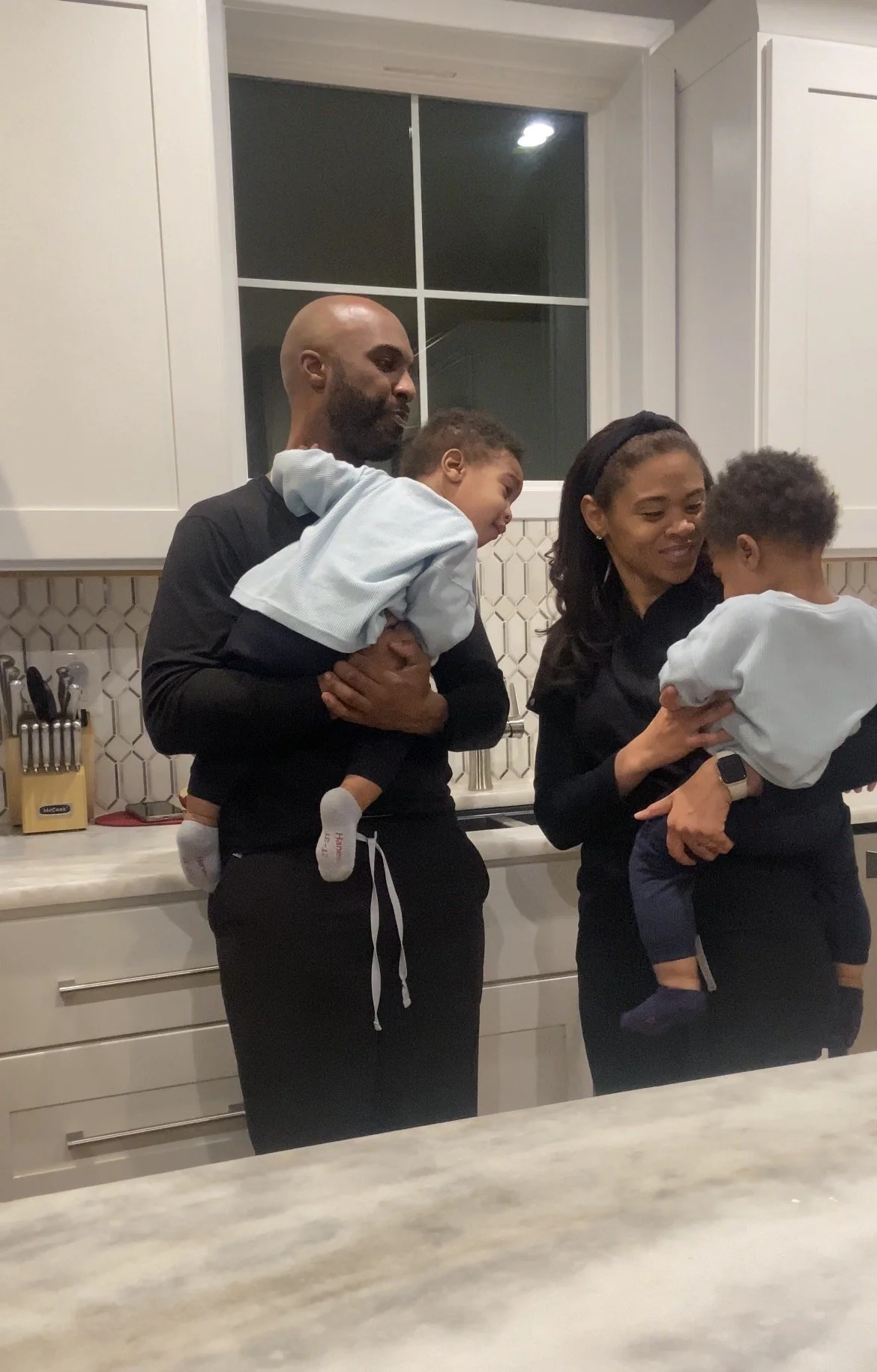
If you’re a mother in healthcare, you’ve likely been sold the idea of “balance” as if the right planner, schedule, or mindset could make demanding work and motherhood feel evenly distributed. I know because I once thought this was totally doable. It’s more of a “balancing act.”
In reality? Balance is a myth, and chasing it can leave you feeling like you’re constantly falling short.
Generally speaking, healthcare is not a flexible, low-demand career. It requires presence, precision, emotional labor, and responsibility, often all at once. Motherhood demands the same. Trying to give equal energy to both at all times sets an impossible standard.

Last year, I shared a milestone that was both exciting and emotional for our family: my son Braxton starting Pre-K for the very first time. If you missed that story, you can read it here.
This year, we’ve hit another milestone, Braxton has officially started Pre-K 4. And let me tell you, what a difference a year makes! The growth, changes, and even the challenges we’ve seen over the past year have been eye-opening.
Growth We’ve Seen
In just one year, Braxton has blossomed in ways we couldn’t have imagined.
Advanced vocabulary: His teachers continue to remark on how well he communicates. We’ve always been intentional about speaking to him in full sentences and encouraging conversation, and it shows. He comes home using new words and phrases daily, and sometimes even surprises us with how articulate he’s become.
Confidence in the classroom: Last year, he was the “new kid” navigating school for the first time. This year, he’s stepped into the role of class leader. He’s more comfortable, more vocal, and even helps his younger classmates when he can.
Love of learning: From storytelling to counting games, Braxton has fully embraced the joy of learning. It’s such a gift to watch his curiosity unfold in real time.

A few years ago, I wouldn’t have even asked this question. Work was the center of my life, without hesitation or apology. Every calendar decision, every to-do list, every ounce of energy was filtered through the question:
“How does this help me grow my business(es)?”
That made sense at the time. I had a private practice to run. A brand to build. A reputation to maintain. Employees to support. And to be honest, there’s a sense of pride and identity that comes with all of that.
But somewhere along the way, life changed.
Motherhood Reorders Everything
When I became a mom, things started to shift. It didn’t happen overnight, not in a dramatic “aha” moment, but slowly. Subtly. Then all at once.
First, it was one child. Then came twins. Suddenly I wasn’t just a business owner trying to juggle a packed schedule or manage a team . I was someone’s safe place. Someone’s source of comfort at 2 a.m. and 5 a.m. and 6:15 a.m. I was a mother managing take-ups, toddler meltdowns, preschool prep, and the soft, sacred work of just being there.

Slow living is more than a trending hashtag – it’s a mindset that invites us to slow down, savor life’s simplest moments, and embrace a rhythm that nurtures our well-being and purpose. Wellness business coach, Joanna Sapir, familiar with the pressures of a fast-paced society, shares her journey of adopting a slow living mindset and prioritizing these practices today.
“After selling my first business, I knew I wanted to start this one with a slow lifestyle in mind. I wanted to wake naturally with no alarm each day, so my business doesn’t ‘open’ until late morning. I didn’t want to commute, so I found the technology to work with individuals from home. I limited my work hours so I have ample time for leisure, exercise, and enjoying life. I’m now going on eight years in this business, and it’s been wonderful.”

Sometimes, when everything isn't immediately available, you develop an appreciation for things you might otherwise overlook.
We live in a remarkable time. So much of modern life has been designed around making things easier, faster, and more accessible. We can order almost anything we want and have it delivered to our homes. We can communicate with someone on the other side of the world almost instantly. We can have dinner arrive without leaving the house, summon a car from our phones, automate our bills, stream virtually any form of entertainment we want, and outsource countless tasks that previous generations simply had to do themselves.
There is an enormous amount to appreciate about that. Convenience has made life easier in ways that are genuinely meaningful, and access to technology, healthcare, education, transportation, and information has opened doors that were once unavailable to many people.