
I’ve Been Documenting My Life Online Since 2007
You could call it a habit.
Or maybe just a quiet instinct I’ve always had.
But long before Instagram, TikTok or Substack, long before personal branding became a strategy, I started documenting my life online.
It was 2007.
At the time, I was simply a student with big goals and a lot of questions about how life would unfold. My first blog was called Climb, Reach, Achieve. The name itself captured exactly where I was in that phase of life: ambitious, hopeful, focused on what was ahead.
Writing was a way to process the climb.

Later came Stu-Dent Diaries, where I documented the path through pre-dental studies, dental school, and residency. That space became both a journal and a resource. I shared advice on applying to dental school, navigating the process, and building a career in healthcare. Eventually it expanded into a YouTube channel as well.
Looking back, I realize something now that I didn’t fully understand then.
Each platform wasn’t just about content.
It was about a phase of life.
Every season brought a different set of questions.
As a student, the questions were about opportunity and access.
As a young professional, they were about building a career.
As an entrepreneur, they became about ownership, productivity, and freedom.
And now, this season feels different again.
These days, my writing lives mostly here at The UnOrthoDoc, where the focus is less about achieving the next milestone and more about understanding what success actually means once you’ve reached a few of them.
The questions have evolved.
Instead of asking how do I get there, I find myself asking what kind of life am I actually building?
It’s a subtle but meaningful shift.
Over the years, many people have told me they’ve followed along quietly through these phases. Some have even shared that watching my journey gave them the confidence to pursue paths of their own — whether that meant applying to dental school, starting a business, or stepping into practice ownership.
That’s something I don’t take lightly.
Because if there’s one thing nearly two decades of writing online has taught me, it’s this:
The internet moves fast, but real influence moves slowly.
It’s built over time, through consistency, honesty, and the willingness to share the evolving questions we’re all navigating.
And if my writing has always had a theme, it’s probably this:
The climb never really ends.
It just changes shape.
If you’d like to receive my Sunday letters directly in your inbox, you can subscribe here or follow on Substack. If you already enjoy these reflections, you may also enjoy The Climb+, a quieter space where I share deeper conversations on ambition, motherhood, life design, and the evolving definitions of success. You’re welcome to join us there anytime.
Why building wealth can give you the capacity to do more good.
There is a sentence I came across recently that made me stop and think:
The most philanthropic thing you can do is get rich.
At first, I wasn't sure what to make of it. We tend to think of philanthropy as something that happens after generosity has already been established: you give your time, your money, your resources, or your influence to help someone else. Getting rich, on the other hand, can sound almost antithetical to that idea. It conjures images of accumulation, consumption, and the pursuit of more for the sake of more.
But the more I thought about the statement, the more I understood the argument behind it.
One of the thoughts that has been occupying my mind lately is how easily we allow our careers to become our entire identity. It's something I've observed not only in healthcare but across so many professions. We introduce ourselves by what we do. We spend years earning degrees, climbing ladders, building businesses, and establishing reputations. Before long, our profession isn't just something we do—it becomes who we believe we are.
At first glance, that doesn't seem like a problem. In fact, our culture often celebrates it. We admire the physician who lives at the hospital, the entrepreneur who works around the clock, the attorney who bills impossible hours, or the executive who is constantly "on." We associate that level of dedication with success.
But I've started to wonder whether we've confused dedication with identity.
There's a subtle but important difference.
Your career is something you build. Your identity is something you become.

There’s a feeling that doesn’t get talked about enough, and it’s one that’s often difficult to name.
It’s not burnout, and it’s not dissatisfaction. In many ways, everything is actually going well. Your career is stable, your family is cared for, and your life reflects something you once worked hard to build. From the outside, there is no obvious reason to question anything.
And yet, there can be a quiet sense that something is shifting.
Not in a way that demands immediate action, and not in a way that disrupts your day-to-day life, but just enough to notice. It’s subtle, and because of that, it’s easy to dismiss.
When people talk about practice ownership, the conversation usually centers around two stages.
The beginning.
And the growth phase.
The beginning is full of adrenaline. There’s the leap into entrepreneurship, the excitement of finally building something that belongs to you. After years of training and working within systems someone else created, ownership feels like freedom.
Then comes growth.
Growth is the stage everyone celebrates. More patients. Expanding teams. Increased production. New systems. New marketing strategies. Conferences and podcasts dedicated to scaling.

You could call it a habit.
Or maybe just a quiet instinct I’ve always had.
But long before Instagram, long before personal branding became a strategy, I started documenting my life online.
It was 2007.
At the time, I was simply a student with big goals and a lot of questions about how life would unfold. My first blog was called Climb, Reach, Achieve. The name itself captured exactly where I was in that phase of life: ambitious, hopeful, focused on what was ahead.
Writing was a way to process the climb.
If you’re a mother in healthcare, you’ve likely been sold the idea of “balance” as if the right planner, schedule, or mindset could make demanding work and motherhood feel evenly distributed. I know because I once thought this was totally doable. It’s more of a “balancing act.”
In reality? Balance is a myth, and chasing it can leave you feeling like you’re constantly falling short.
Generally speaking, healthcare is not a flexible, low-demand career. It requires presence, precision, emotional labor, and responsibility, often all at once. Motherhood demands the same. Trying to give equal energy to both at all times sets an impossible standard.

A few years ago, I wouldn’t have even asked this question. Work was the center of my life, without hesitation or apology. Every calendar decision, every to-do list, every ounce of energy was filtered through the question:
“How does this help me grow my business(es)?”
That made sense at the time. I had a private practice to run. A brand to build. A reputation to maintain. Employees to support. And to be honest, there’s a sense of pride and identity that comes with all of that.
But somewhere along the way, life changed.
Motherhood Reorders Everything
When I became a mom, things started to shift. It didn’t happen overnight, not in a dramatic “aha” moment, but slowly. Subtly. Then all at once.
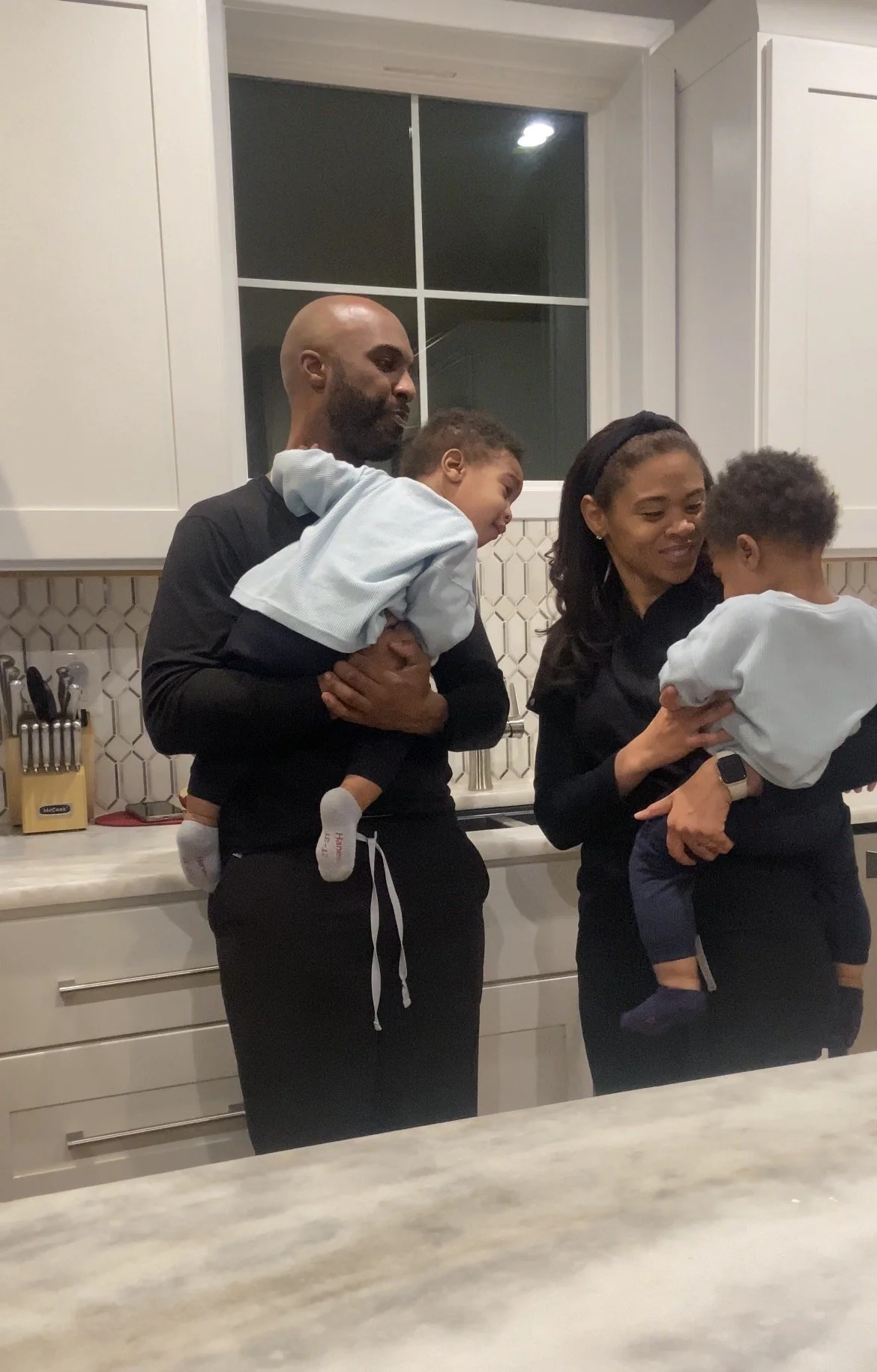
First, it was one child. Then came twins. Suddenly I wasn’t just a business owner trying to juggle a packed schedule or manage a team . I was someone’s safe place. Someone’s source of comfort at 2 a.m. and 5 a.m. and 6:15 a.m. I was a mother managing take-ups, toddler meltdowns, preschool prep, and the soft, sacred work of just being there.

Slow living is more than a trending hashtag – it’s a mindset that invites us to slow down, savor life’s simplest moments, and embrace a rhythm that nurtures our well-being and purpose. Wellness business coach, Joanna Sapir, familiar with the pressures of a fast-paced society, shares her journey of adopting a slow living mindset and prioritizing these practices today.
“After selling my first business, I knew I wanted to start this one with a slow lifestyle in mind. I wanted to wake naturally with no alarm each day, so my business doesn’t ‘open’ until late morning. I didn’t want to commute, so I found the technology to work with individuals from home. I limited my work hours so I have ample time for leisure, exercise, and enjoying life. I’m now going on eight years in this business, and it’s been wonderful.”

Justin Welch once said, "The happiest entrepreneurs I know aren't the richest. They're the ones who built a business that complements their lives rather than consuming it." This statement resonates deeply with many of us who have ventured into entrepreneurship, only to find ourselves ensnared in a trap of our own making. The entrepreneur trap is the misconception that success is measured solely by revenue. In reality, true success lies in the freedom and fulfillment that comes from designing a business that supports your life. In the pursuit of entrepreneurial success, it's easy to fall into the trap of equating revenue with happiness. However, the happiest entrepreneurs are those who design their businesses to complement their lives rather than consume them. By working during your most productive times, pursuing an inspiring mission, and automating or delegating the rest, you can create a business that supports your life and brings true success in the form of freedom and fulfillment.

Labels can limit potential and creativity. As someone who has always taken a somewhat unconventional path, I find the term “unorthodox” not just fitting, but empowering. That’s how The UnOrthoDoc was born—a reflection of my multifaceted life that defies simple categorization.
We’re often told to specialize. Get an expensive degree, secure a niche job, and stick to it for decades. While this worked in the past, the modern world demands adaptability and a broad skill set. In today’s tech-driven society, being a specialist can sometimes mean limiting your growth and opportunities. AI and automation are rapidly changing the job market, and those with narrow expertise may find themselves left behind. I say this as a specialist myself—an orthodontist, a specialty of dentistry. I get that this is contradictory. I suppose I am a walking contradiction.

I wanted to share something that's been on my mind lately. You know, we're often caught up in the whirlwind of life—rushing from one task to another, ticking off endless to-do lists, and constantly striving for more. We live in a world that glorifies hustle culture, where busyness is worn like a badge of honor and productivity is often seen as the ultimate goal. But have you ever stopped to wonder if this relentless pace is really serving us?
In slowing down, we open ourselves up to a richer, more meaningful life. We find joy in the little things, deepen our relationships, and discover a sense of peace and contentment that hustle culture could never provide. So, let's embrace the art of slowing down and savor each moment of this beautiful journey called life
I've been reflecting on this a lot, and I've come to realize that the hustle culture we've been conditioned to embrace might actually be doing us more harm than good. It's time we consider the profound benefits of slowing down.

With the gig economy booming and traditional employment models evolving, side hustles have become a lifeline for many individuals seeking financial security and professional fulfillment. From freelance writing and e-commerce ventures to consulting gigs and creative pursuits, there's no shortage of opportunities to turn your skills and passions into profitable ventures on the side.
But while starting a side hustle is relatively easy, scaling it into a thriving business requires a whole new level of dedication, strategy, and vision. As your side hustle gains traction and momentum, you'll inevitably face the question: "How can I take this to the next level? How do I turn my side gig into a full-blown thriving business?"
Once, I excitedly shared a promising business idea with a colleague, hoping to team up and bring it to life together. Instead of collaboration, I received a polite decline. Months later, I was taken aback to discover that my colleague had launched a business—selling the very idea I had shared with her.
In a world where oversharing is the norm, where every meal and milestone is broadcasted on social media, it may seem counterintuitive to keep your ambitions under wraps. But in reality, there's immense power in working quietly and letting your success make the noise.

In today’s world we often equate success with material wealth and possessions. It's easy to get caught up in the rat race of accumulation. Whether you're climbing the corporate ladder in a 9-5 job or running your own business, the pressure to chase after money and status can feel overwhelming. However, there's a different approach—one that prioritizes intentional living and designing your life around what truly matters.
Intentional living is about aligning your actions and choices with your values and goals, rather than simply going through the motions dictated by societal norms or external expectations. It's about consciously crafting a life that brings you joy, fulfillment, and a sense of purpose, regardless of your financial situation or professional aspirations.
Sometimes, when everything isn't immediately available, you develop an appreciation for things you might otherwise overlook.
We live in a remarkable time. So much of modern life has been designed around making things easier, faster, and more accessible. We can order almost anything we want and have it delivered to our homes. We can communicate with someone on the other side of the world almost instantly. We can have dinner arrive without leaving the house, summon a car from our phones, automate our bills, stream virtually any form of entertainment we want, and outsource countless tasks that previous generations simply had to do themselves.
There is an enormous amount to appreciate about that. Convenience has made life easier in ways that are genuinely meaningful, and access to technology, healthcare, education, transportation, and information has opened doors that were once unavailable to many people.