

Financial Foundation: Get Good With Money
In my book club so far this year we’ve read two books on money and they were very different. The first one, Die With Zero tells us to spend our money, throw caution to the wind and live! while the second book, The Psychology of Money tells us a different story - that one should prepare for life’s lemons, save, invest then save some more as life will inevitably through us curveballs. Both books offered great insight and are the inspiration behind this blog post.
In my book club so far this year we’ve read two books on money and they were very different. The first one, Die With Zero tells us to spend our money, throw caution to the wind and live! while the second book, The Psychology of Money tells us a different story - that one should prepare for life’s lemons, save, invest then save some more as life will inevitably through us curveballs. Both books offered great insight and are the inspiration behind this blog post.
While both books are different in their messaging, there still lies fundamental basics that both authors agree on: You must get good with money.
In my opinion, we cannot begin to even get good with money if we don’t have the basics down. This might be a refresher to some and a reminder to others. After this post, grab your daily budgeting sheets (or grab them here), pull up your online banking platform and get to work.
Here are 5 things to get started on the right path:
1. Have a PLAN
Create a roadmap for your finances. What are your financial goals and what will you do to achieve them? Perhaps you would like to earn more money this year? Realistically, how much would that be? How would you go about achieving this? Break your goals down into bite-sized action steps and work diligently to reach them. Put a timeline on each goal to keep yourself accountable. Make a plan for all the things that will require money. Consider hiring a financial planner/advisor that can give you personalized recommendations and keep you on a timeline.
2. Create and Commit to a Budget
I know I know, we don’t really like budgeting, It’s boring but it must be done. This will take some discipline. Consider adopting and applying the the 50-30-20 rule. Essentially this means, 50 percent of your money each month should go to essentials like bills and housing, 20 percent should go towards your financial goals like savings, saving for retirement and paying off debt/student loans, and 30 percent should go towards wants like vacation, entertainment, etc. Personally I dedicate 30% to financial goals and 20% for miscellaneous things like vacation and entertainment. Of course your budget sometimes need a little wiggle room and things do change so adjust along the way but for the most part try to stick to this plan. Automate it so that you don't have to think about it.

3. Start/Fund Your Retirement Account
It is really important that you get on this early! It is vital that you prioritize creating and contributing to a retirement fund and take advantage of compounding interest. Compounding interest will do a lot of the hard work for you if you start early. Here are the contribution limits or 2023. Try to maximize your contributions and take advantage of any match system your job has to offer. Speak with your accountant about the tax benefits of each type of account.
4. Keep an Emergency Fund
Make sure you have at least three (3) to nine (9) months of funds saved up for a rainy day. If 2020 taught us anything, it’s that we need to be prepared for anything and that life will inevitably through us curveballs. Your emergency fund is where part of the 20 percent savings portion of your budget should go, and it's there in case you lose your job, become ill, or encounter an unexpected expense. Keep this money in a separate savings account at a separate bank from your checking account and forego a debit card for that account. Also, automate your contributions. Ask your employer to direct debit a portion of your salary into your emergency fund account. You can also consider placing the funds into an account with high yield interest. Personally I use Ally and have been for years, but there are quite a bit of online banks with high yield interest accounts like Synchrony Bank, Marcus by Goldman Sachs, UFB etc.
5. Tackle your debt.
All debt are not created equal. It is unreasonable to tell anyone to get rid of all debt, especially if you live in the US where the financial system runs on you having debt. However, there are some debt that’s considered “bad debt” like credit card debt because it grows pretty quickly and doesn't help you in the long term. Interest rates are usually high and can take a very long to pay off. Unless of course, you stay on top of it and pay the full balance each month. On the contrary, some may argue that student loans are a form of “good debt” because it's an investment into your future earning potential. Put as much money as you can towards credit card bills first starting with the ones with the highest interest. Once that's paid off, prioritize the next highest interest debt, and so forth. Also consider automating the contribution to your debt payment so that you never have to worry about a missed or late payment.
These are the very basics. As with anything, there must be a solid foundation. Once this foundation is built, you can now go on to build on your money making/diversifying prowess. Get these planner sheets to keep you organized to stay on top of your money goals and if you love books join my book club.
Want to make more money in 2023? Grab the e-book:
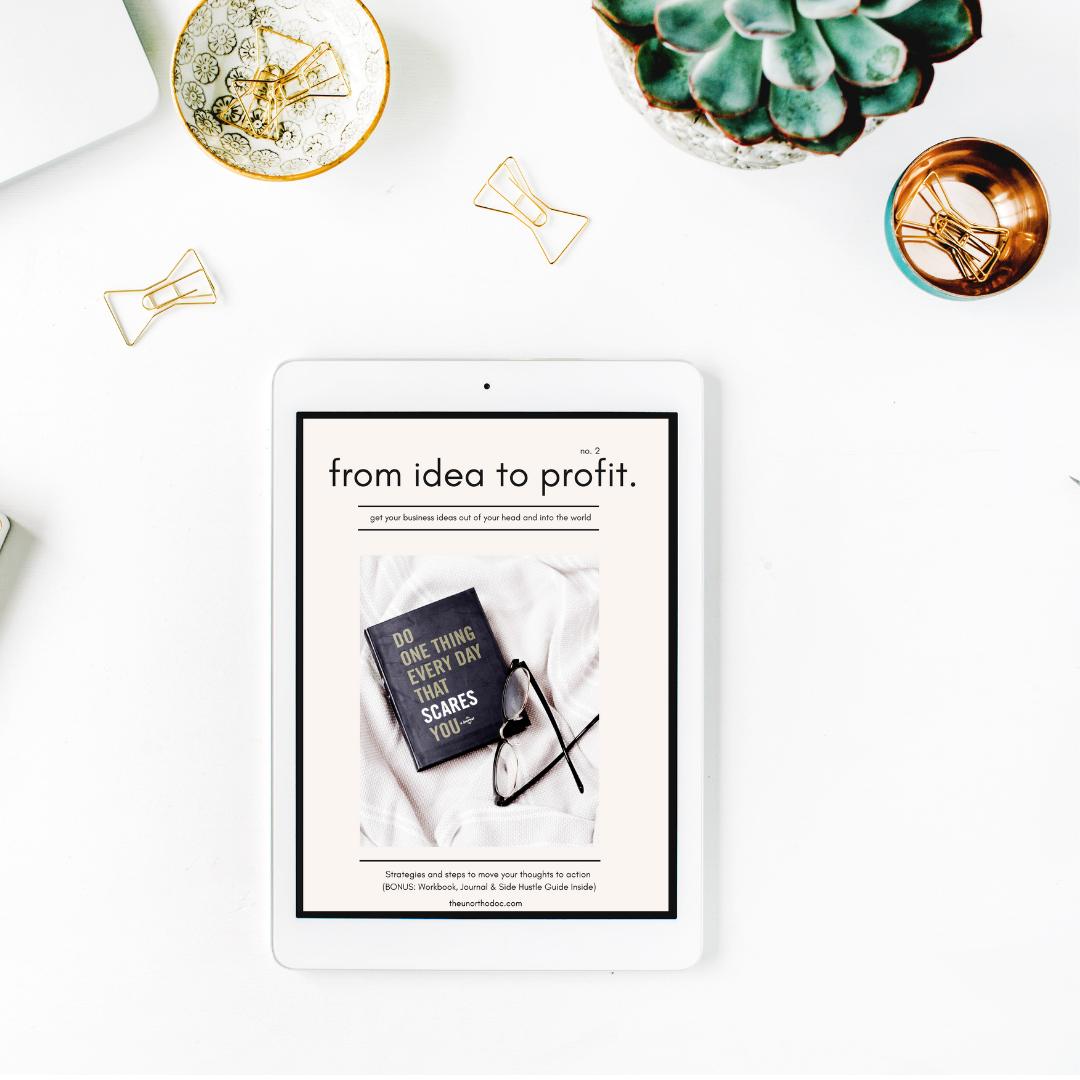
This e-book is written for those who want to get their business ideas out of their heads and into the world. It includes action packed steps to move you from thought to action in as little as 1 week.
Bonus: FREE side hustle guide, side hustle workbook and journal with this purchase





Up Your Investing Game With NFTs
If you haven’t been living under a rock you more than likely have heard of NFT’s by now. If you haven’t yet heard of them, it is all the rave in the crypto space right now! They are a new way of operating and owning assets that it is like a foreign language when getting into it for the first time. There is so much to learn and the information given in this blog post will only scratch the surface.
For some months all I kept hearing about was an online piece of work called an NFT. If you have been living under a rock you more than likely have no clue what I am talking about. In the cryptocurrency space it is all the rave right now! But what are they?? According to coinbase, NFTs (or “non-fungible tokens”) are a special kind of cryptoasset in which each token is unique — as opposed to “fungible” assets like Bitcoin and dollar bills, which are all worth exactly the same amount. Because every NFT is unique, they can be used to authenticate ownership of digital assets like artworks, recordings, and virtual real estate.
Non-fungible - What is that?
Non-fungible means that something is unique and cannot be replaced with something else. Bitcoin, for example, is worth as much as every other bitcoin. A dollar bill, is worth exactly one dollar. “Fungibility” refers to goods or assets that are all the same and can be swapped interchangeably.
NFTs on the other hand are unique and cannot be swapped interchangeably. Concert tickets are non-fungible. Even if every Drake concert ticket is the same price, they aren’t directly exchangeable. Each represents a specific seat and a specific date — no other ticket will have those exact characteristics.

The reason why they are such a big deal is because they are appreciable assets, you can buy and hold or you can buy and sell these digital assets for a lot of money! Some of the more recognizable ones on the marketplace have come from projects by Bored Apes and Crypto Punks - earlier this year the Crypto Punk NFT(crypto punk 7524 aka Covid Alien) shown below sold at Sotheby’s for 11.75 million!! The creator put them up for auction, starting at $100 and the winning bid was astronomical.

This NFT titled Everydays: The first 500 days by Beeple was put up for auction at Christie’s starting at $100 and sold for $69million!!

The below NFT, also by Beeple was purchased for $66K and sold for $6.6 million - 10 times the purchase price!

Why are NFTs Important?
You can think of NFTs as being kind of like certificates of authenticity for digital artifacts. They’re currently being used to sell a huge range of virtual collectibles, including:
NBA virtual trading cards
Music and video clips
Video art
Digital art
Virtual real estate (in a place called Decentraland)
As with Bitcoin and other crypto that has boomed in popularity over the last year, NFTs have also soared — growing to an estimated 7 billion. Each NFT is stored on an open blockchain (often Ethereum’s) and anyone interested can track them as they’re created, sold, and resold. Because they use smart contract technology, NFTs can be set up so that the original artist continues to earn a percentage of all subsequent sales (royalties).
I am a new comer to the NFT space and only purchased my first in September of this year. Some NFTs that I have personally invested in are from Boss Beauties, World of Women, Women Rise and Alpha Girl Club. I purchased a Women and Weapons NFT for 0.175 ETH which is roughly $700 USD and have gotten a few offers, the best so far being for 1.18 ETH which is roughly $5000 USD. I have not sold it - I will be holding on to it for now or until I get a much better offer. The reason I chose to invest in some of the above NFTs is because they embody a cause or a mission that I can get behind. For example, Boss Beauties has a mission to educate and empower the next generation of Women and Girls through scholarships and mentorship programs.

Tweet from Reese W.
A recent tweet from Reese Witherspoon on NFTs and the need for more women to take up space in this arena. Reese is also one that I follow on Twitter as she is part of the large NFT twitter community.
How to Purchase NFTs
NFTs are bought and sold through an NFT marketplace built specifically to handle the blockchain transaction. NFTs can cost anywhere from a few dollars to millions of dollars for a digital asset thanks to the scarcity model. To buy NFTs, you must have a cryptocurrency and seek out a purchase through an investment marketplace. Most NFTs are sold on the Ethereum blockchain, meaning you must have the cryptocurrency Ethereum to purchase. Another crypto that’s used to purchase some NFTs is Solana (Sol).
Here’s how I purchase my NFTs:
You will need the cryptocurrency Ethereum (ETH) to purchase NFTs. I purchase all my cryptocurrencies on Coinbase. If you use my referral link to purchase your first $100 worth of crypto you will get $10 worth of Bitcoin. You will also need a wallet, such as the coinbase wallet or metamask and a marketplace to purchase your NFT on, such as Opensea.
Create an Opensea account - Go tot the website opensea.io and create an account. After which you can connect your crypto wallet to OpenSea, edit your profile, and begin interacting in the space. Here’s a video on how to open an account.
Connect your wallet - A crypto wallet, such as coinbase wallet or metamask, stores your Ethereum and processes transactions on the Ethereum blockchain. A unique wallet address will be generated and you will use this address to complete transactions. Here’s a short video on how to connect a wallet to your opensea account - in this case it shows how to connect a metamask wallet, but any wallet you choose will be set up in the same way.
Fund your wallet with Ethereum - You can get ETH, the digital currency that fuels transactions on the Ethereum blockchain, from a digital currency exchange like Coinbase. You will need ETH to "mint,” create and purchase an NFT.
Research available NFTs on Opensea - You'll want to choose an NFT that you feel has an upside value potential. The NFT can be some art, music, video, or even an item within a video game. You can even search Google or Twitter for NFTs. When looking at the upcoming NFTs, note when the sale is, what the cryptocurrency requirements are, and how many of the NFT are being sold. This helps you better understand the scarcity behind the NFT you are choosing. I am a member of an NFT community where these are talked about all day and I am also involved with a number of NFT communities on twitter (the only reason I am currently on that platform).
Bid on or Purchase your NFT - Make sure that there is enough crypto to conduct the transaction including any relevant fees. Fees can include the costs of purchasing and transferring cryptos, converting one crypto into another, and gas fees(amount it costs to process the transaction). When the NFT is purchased, it is stored in a crypto wallet on the same blockchain, on a different blockchain, or in decentralized storage. Mine are stored in my coinbase and metamask wallets.
*Coinbase will launch it’s own NFT platform in Q1 of 2022, I will more than likely switch from opens when that happens*
This information is so new that it can come off very confusing. It’s an entirely new world and a new way of operating and owning assets that it is like a foreign language when getting into it for the first time. There is so much to learn and the information given in this blog post only scratches the surface. Be sure to educate yourself and do your research before investing in any NFT. I can’t wait to see how this shapes the future.

Change is Here!
Another tweet from Reese - everything is changing and we must move with the times in order to not get left behind. Investing in the stock market is great and I encourage that but there’s a new way of investing that is not yet mainstream that in my opinion, we ought to get involved in NOW.

Next Investing Step: Cryptocurrencies
There has been a lot of developments lately in the crypto space. It sounds like some cryptocurrencies like Bitcoin and Ethereum are here to stay. In my opinion, it would be unwise to not invest, if even a small portion, in cryptocurrency.
Updated January 3, 2022
If you’ve been here for a while you know Investing is one of my favorite topics. I did a mini series of blog posts a while back and many found them quite beneficial. If you missed them here they are:
Investing 101: Invest In Yourself
Setting Up Your First Investment Account
How To Start Investing In The Stock Market
6 Questions To Ask Before Investing
6 Tips on Getting Into Real Estate Investing
5 Ways To Invest in Real Estate
Before diving in, I want to preface by saying that I am by no means a cryptocurrency expert or any kind of investment advisor. I will try to keep this short and sweet with some actionable steps I used to get started with investing in crypto. The information shared are my thoughts and based on my personal experience on the topic. I’m only sharing these because I feel that if you’re not on board with crypto at this point i.e if it’s not part of your investment portfolio, you’re seriously missing out on an opportunity to build wealth.
What is Cryptocurrency?
According to nerdwallet, cryptocurrency (or “crypto”) is a digital currency that can be used to buy goods and services, but uses an online ledger with strong cryptography to secure online transactions. They work using a technology called blockchain, which is a decentralized technology spread across many computers that manages and records transactions. Part of the appeal of this technology is its security. The most popular cryptocurrency at the moment is, you guessed it, Bitcoin.
I will admit that several years ago when cryptocurrency was being introduced I was, like many, quite skeptical. It sounded highly volatile, very risky (aka scammy) and sometimes the returns sounded too good to be true. Fast forward several years later after spending quite a bit of time educating myself on the topic and speaking in depth with my financial advisor, crypto educators and other professionals, my only regret is that I didn’t invest in them a lot sooner.

Bitcoin is the world’s first digital asset, is slated to be the currency of the future and as as such, supporters are racing to buy them now in hopes that it will be more valuable later. Just like the internet changed the world many years ago, Bitcoin is expected to usher in a similar change.
My first real introduction to Bitcoin was at the beginning of the pandemic when there was a lot of time to devote to learning something new (the good old days). My husband and I dabbled in a bit of investing and trading during those times with some really good returns. During that time Bitcoin was under $10K. Today (at the time this post is being written) bitcoin sits at around $65K and is predicted to get to upwards of $80K by end of November and north of $100K by December.
There has been a lot of developments lately in the crypto space - major banks around the world and some politicians have sent out pro-bitcoin sentiments. The SEC has approved a Bitcoin ETF, New York’s mayor will be receiving his first 3 paychecks in bitcoin, so are athletes like Aaron Rogers and podcaster Joe Rogan, and El Salvador has made Bitcoin its currency (with more countries to follow suit). It sounds like Bitcoin is here to stay. In my opinion, it would be unwise to not invest, if even a small portion, in cryptocurrency.
How To Invest in Crypto
At the time of writing this, Bitcoin sits at about $65K. If you have that kind of cash to spare you can go ahead and purchase an entire bitcoin. However, you do not need to. You can purchase fractions of bitcoin, whatever dollar amount you can afford. One of the most popular platforms (and what I use) to purchase bitcoin (and other crypto) is Coinbase. However, there are other places where you can purchase bitcoin such as Paypal, Cash app, Venmo and if you use Robinhood for investing you can purchase there too. If you’re a Paypal user, grab my referral link to buy your first $5 of crypto and we can both get $10 (use it to buy even more crypto).
What is Coinbase?
Coinbase is a secure cryptocurrency trading and investing platform that offers users the ability to buy, sell, and exchange over 100 tradable cryptocurrencies such as Bitcoin, Ethereum, and more. It is very user friendly and an account is easy to set up. By using my referral link you will receive your first $10 in Bitcoin after buying or selling $100 of any cryptocurrency you want.
If I were you, I would start investing ASAP as Bitcoin is predicted to get to upwards of $80K by end of November 2021 and north of $100K by December 2021.
*This prediction has changed as the markets changed due to the new COVID-19 strain, Omicron*
If you are very risk averse or still think putting your money in crypto is scary you can earn crypto in other ways. I no longer use my regular debit card for purchases. I now use the Fold debit card where I earn satoshis (a small portion of bitcoin) with my everyday purchases.
What is Fold?
Fold is a bitcoin app and debit card that gives you free bitcoin for qualifying purchases.
Fold lets you earn free bitcoin while you shop. It works just like a regular debit card from any major bank where you would earn rewards (like cash back) on purchases but instead earn free crypto. The average purchase provides 25% cash back in bitcoin. Downloading the app and signing up for a Fold debit card is really easy and there’s benefit in getting both. The app is available in the App Store and if you use my referral link to sign up you can earn 5000 satoshis or sats for short. Satoshis, what’s that? The name is a moniker for bitcoin’s founder Satoshi Nakamoto and is a fraction of bitcoin. In the app, you will also have the opportunity to win additional bitcoin daily with the spinwheel. They have a range of prizes with the ultimate being an entire bitcoin. Read more about that here. There are two different types of debit cards, the Spin or the Spin+. The spin has no annual fee but has a $21 activation fee, while the spin+ has an annual fee of $150 but no activation. With the latter, you are able to earn more rewards and up to 100% cash back. Personally, I have the spin card - I get the benefit of getting fractions of bitcoin (which over time will add up to a large sum) with all my purchases without paying an annual fee. Plus, I am already investing in Bitcoin elsewhere so I don’t feel the need to try to get 100% cash back. After you’ve accumulated at least 50,000 satoshis you can transfer your crypto to a wallet, such as the coinbase wallet (there are others but this is what I use). Ultimately, if you’re looking for a relatively easy way to join the world of cryptocurrencies without investing your own money this is a great option.
There you have it! I have touched on my experience with investing in crypto and hopefully it gives a little insight on making it a part of your investing portfolio. It is very easy to get started, but as with any investment vehicle, do your due diligence, speak with your financial advisor, take caution and be aware that any form of investing is risky.
Next Investing topic will be on NFTs. Be on the look out for that.

5 Ways to Invest in Real Estate
Real Estate Investing has been a hot topic, especially among the the financial independent community and those looking to build wealth through passive income. I firmly believe we are all budding entrepreneurs. We want to control our destiny, work for ourselves and feel good about making a difference in the world. Real estate investing is an excellent way to stretch one’s entrepreneurial muscles.
Real Estate Investing continues to be a hot topic of discussion especially among the financial independence community and those looking to build wealth. I firmly believe we are all budding entrepreneurs who seek to control our destiny, work for ourselves and feel good about making a difference in the world. Real estate investing is an excellent way to stretch one’s entrepreneurial muscles.
It wasn’t until I met my husband (then boyfriend) that I fully understood real estate investing or even cared about it. It was an area he was excited and passionate about and that I naturally (as the engaging and supportive partner) got excited about too. At the time he had a mixture of both residential and commercial properties that garnered significant income - the best part being it was passive income, or as he calls it mailbox money. That is, money that arrives in the mail or in your account that you don’t physically go to work for. FYI, it doesn’t come without its struggles but the reward can be life altering.
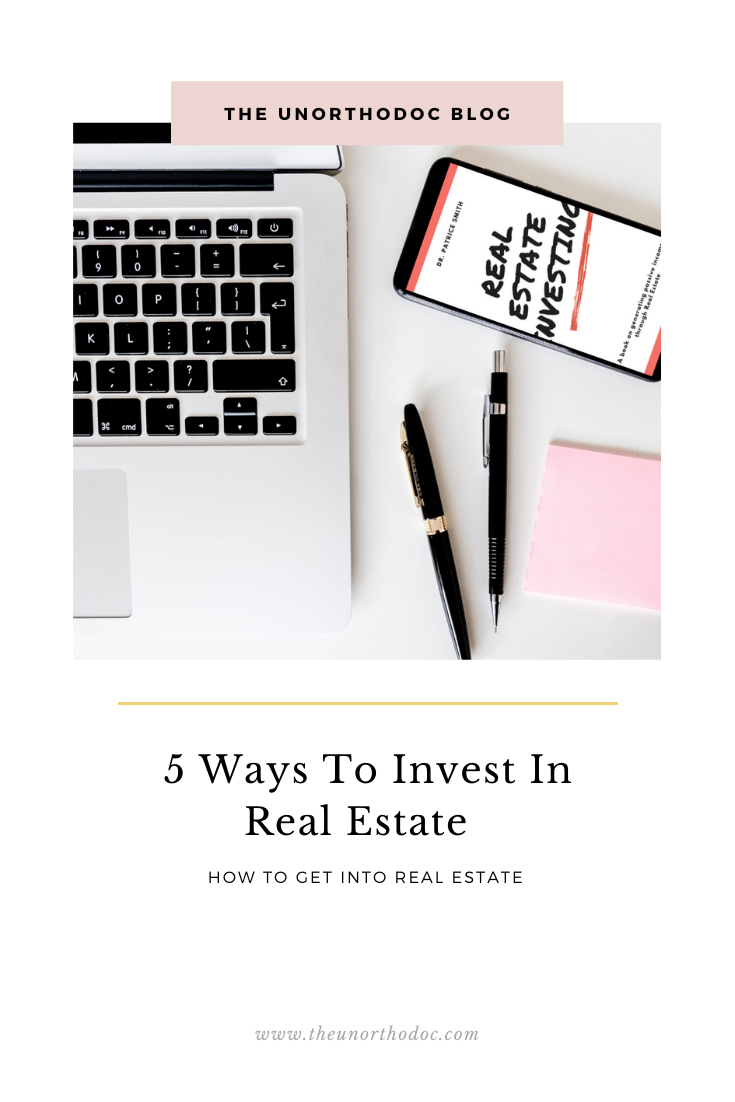
There are several ways to get involved in real estate. They include the purchase, ownership, management, rental and/or sale of real estate for profit.
THERE ARE GENERALLY FIVE LARGE CATEGORIES OF REAL ESTATE INVESTING:
Rental Property: Become a Landlord
This is what most people think of when they hear the term real estate investing: You buy a house, rent it out and collect a paycheck each month. It sounds easy, but it comes with challenges. Finding a property with the perfect mix of location, the right price, higher-than-average rental rates, great tenants, etc is difficult. In addition to this, there are at times issues where tenants won’t pay rent, high taxes, foundation issues, etc and unless you hire a property management company you will be dealing with these yourself. In an ideal situation, a property appreciates over the course of the mortgage, leaving the landlord with a more valuable asset than he/she started with.
Real Estate Investment Groups
Real estate investment groups are like small mutual funds that invest in rental properties. In a typical real estate investment group, a company buys or builds a set of apartment blocks or condos, then allow investors to purchase them through the company, thereby joining the group. A single investor can own one or multiple units of self-contained living space, but the company operating the investment group collectively manages all of the units, handling maintenance, advertising vacancies and interviewing tenants. In exchange for conducting these management tasks, the company takes a percentage of the monthly rent.
Real Estate Trading (Flipping)
This typically involves buying a distressed property with the intention to refurbish it and sell it quickly for a profit. You have to buy low and sell high; you need to estimate closing costs, resale value and rehab costs carefully. From there, you’ll need to add your holding costs (insurance, property taxes, utilities, interest on the money if you’re borrowing it) and your cost to sell (typically 8%). This is for people with significant experience in real estate valuation and marketing. flipping houses has a shorter time period during which capital and effort are tied up in a property. But depending on market conditions, there can be significant returns, even in shorter time frames.
Real Estate Investment Trusts (REITs)
A REIT is a company that owns and finances real estate properties. You, as an individual, can invest in that REIT and essentially be investing in real estate. This is a great option for someone who only wants portfolio exposure to real estate and is not looking for a side job
Crowdfunding
What if there was a really great property for sale but it is too expensive for you alone to invest in? With crowdfunding platforms, you can invest in real estate by pooling funds and sharing the returns with other investors. Real estate crowdfunding is a passive investment; you won’t have to become a landlord, but you can still reap the rewards of real estate investing.
BONUS: If you’re a dentist going into practice ownership, it is very beneficial to own the commercial real estate of your practice - more on this in a letter post.
If you ever considered going into real estate investing but not sure what avenue to take, these are all great options to get involved. Remember, all investments have risks but its how you manage and mitigate those risks that make the difference. Take a look at these Real Estate Investing Tips before diving in.
This is the 6th and final article of the Investing Series. Click here for Part V, Part IV, Part III, Part II and Part I
Sign up below to ensure you get all these amazing articles directly to your inbox. Articles are published once per week with an occasional bonus article.
This article is for educational and informational purposes only. Contact a financial advisor before making any financial decision.
This article may contain affiliate links.





6 Tips on Getting Into Real Estate Investing
Going into real estate can be an exciting investment strategy, one that is both satisfying and lucrative. However, it’s not all rose petals and fairy dust. Every investment comes with risk but its how you manage and mitigate those risks that makes the difference. If you are seriously considering diving into real estate investing here are a few things to take into account.
Going into real estate can be an exciting investment strategy, one that is both satisfying and lucrative. However, it’s not all rose petals and fairy dust. Every investment comes with risk but it’s how you manage and mitigate those risks that make the difference. If you are seriously considering diving into real estate investing here are a few things to take into account.

SIX (6) THINGS TO KNOW ABOUT REAL ESTATE BEFORE INVESTING
Establish Relationships
It is not just a numbers game, it’s also a people game -Relationships are important. Everything is about relationships and real estate is no different. You have to find a reputable and trustworthy realtor who understands your goals, an honest contractor who won't take advantage of you, and tenants who are credit worthy and will pay on time.
Location
Where you buy a property is just as important as what property you buy. Do your research to see what developments are happening in the area you are looking to purchase. An average house may yield higher returns in a more developed part of town than a really nice house in a poorly developed part.
Funding
Evaluate the different ways of getting in. Wealthy people invest in real estate because it is a secure way to keep and grow their money. Three ways to fund your real estate property: Self Financing(using your own cash), securing a loan, or raising capital via equity investors.
Tax Advantages
Owning real estate offers Tax shelters. Do your research to educate yourself on how to take advantage of these.
When To Purchase
Real Estate has cycles. Purchase when markets are low. Acquiring properties in a low market can sometimes bring considerable appreciation values. Also consider purchasing in less desirable areas. They have a tendency to turn around over time and bring notable returns.
Be Flexible
Things will not go as smooth as planned. It is inevitable that things will go awry at some point, whether it’s a bad tenant, bad property management, etc. Maintain a level of flexibility to help deal with any situation that arises.
Although the above six tips are geared mainly at owning rental property as a form of real estate investing, there are generally five different ways to invest in real estate which we will get into in the next post.
This was Part V of the Investing series: Click here for Part IV, Part III, Part II and Part I
Our investing series will continue in our next article and will dive into the different ways to invest in Real Estate. Sign up below to receive the Investing Series directly to your inbox:
This article is for educational and informational purposes only. Contact a financial advisor before making any financial decision.
This article may contain affiliate links.

6 Questions To Ask Before Investing
Whether you’re a first-time investor or have been investing for many years, there are some basic questions you should always ask before you commit your hard earned money to an investment.
“If you treat Investing like a casino, it’s going to treat you like a gambler”
I had a sit down chat with a financial advisor/ wealth manager from a popular brokerage firm to answer some burning questions about investing. He has chosen to be anonymous in this blog post as we did not have enough time to get these questions and answers approved by his firm. However, he has guaranteed that all answers are truthful and based on general knowledge that anyone can google. He has also given me permission to give his contact information (via email) to my readers who are interested in learning more about investing.
Whether you’re a first-time investor or have been investing for many years, there are some basic questions you should always ask before you commit your hard earned money to an investment.

Q: What would you recommend as a starting point for a new investor?
A: For someone just starting out I would recommend they get an understanding of money and how it works. They have to determine their goals and their risk tolerance to market volatility. For example, certain types of bond funds can counterbalance market volatility so a starting point could be with bonds. Next, they have to choose an advisor that will put together a program designed to accomplish those goals .
Q: What is a recommended portfolio diversification for a beginner i.e percentage of stocks, bonds, mutual funds, etc?
A: This is a nuanced question and depends on the person’s time horizon. For example, if you’re a 25 year old planning to use the money as a down payment on a house in 5 years you may be better suited with a larger portfolio of bonds. The short answer is, if they are investing for the long term they are going to see more growth in blue chips and mutual funds that pay rising dividends over time. See JP Morgan’s Guide to The Markets - Time, Diversification and the Volatility of Returns.

What this shows is the 1, 5, 10 and 20 year return going all the way back to 1950 of a pure stock portfolio, a pure bond portfolio and a 50/50 mix. There isn’t a 5 year period in that 70 year history where there was a loss of money with a 50/50 mix. The worst that happened in any 20 year period is that you quadrupled your money. So, the suggestion would be if they’re investing for the long term invest in companies that provide basic necessities for our way of life and go with a 50/50 mix.
Q: What factors determine how you will invest someone’s money and do things like age and risk tolerance play a role?
A: There are many factors that play a role when it comes to someone investing. Things like:
How involved the person wants to be with their investments, i.e hands on versus hands off approach
Time horizon, not so much age. For example, if they are 70 years old but they are investing for their grandchildren’s legacy then age doesn’t matter.
Risk Tolerance
Tax considerations
IRA account versus Taxable brokerage account
Tax efficiency
Tax harvesting strategies
Q: How do you manage investment accounts for taxes?
A: Generally , there are 3 ways to invest money for taxes:
Taxable (pay as you go)
Tax deferred (Traditional IRA, Annuities)
Tax free (Roth IRA, Insurance products)
Q: What is your approach to financial planning?
A: I approach it as a process and it should be the same no matter who the individual works with
Get a feel for who they are, what they want to accomplish and why
Determine where they are coming from, their psychology about money, their values and their belief system around money and investing.
Ask them to quantify this as much as possible, in terms of their goals for the account, their psychology about risk
Tax needs
Risk tolerance
Are goals realistic
Am I a good fit for them and vice versa
Based on the above , I will then go through the courses of action and next steps. I will be transparent about:
The cost structure of each option
The degree of involvement each party needs to have for each option
Fees for services
I will then set up a periodic review for each account, i.e monthly, quarterly or annually.
Q: What are some important questions a client should ask their financial advisor before investing?
A: This is probably one of the most important questions.
How is the plan in the client’s best interest
Explain cost structure
Discuss any potential tax considerations
The various risks associated with the investment. Every investment has risks. There’s no such thing as a risk free investment
Describe in full the process of beginning this journey
If the advisor is unable to answer any of the above to the client’s satisfaction, they should exercise caution before proceeding.
If you would like to learn more about Investing or begin your own Investing journey with this advisor, feel free send me an email below and I will forward his info: CONTACT ME
This is Part IV of The Investing Series. Click here for Part III, Part II, and Part I.
Our investing series will continue in our next article on the topic of Real Estate Investing. Sign up below to receive the Investing Series directly to your inbox:
This article is for educational and informational purposes only. Contact a financial advisor before making any financial decision.
This article may contain affiliate links.

How To Start Investing in The Stock Market
Investing can be a confusing topic but a vehicle that can change your financial future for the better. You don’t need a lot of money to start investing. In some cases, you only need a few dollars to get started. Of course, you may have a goal of increasing your investments over time but don’t let limited resources stop you from building your long-term wealth.
Many people know the importance of investing but never actually do it!
I must admit, there was a time when the topic of investing was very confusing and overwhelming for me. The learning curve with all the different financial terms and what they meant were steep. It took several talks with my financial advisor, my husband breaking things down in detail and me listening to some great podcasts to finally get a good understanding of it.
Like most people, my first experience with investing was through a retirement account that I have with Edward Jones. Once I read upon the subject of investing (the most helpful being JL Collins’ The Simple Path To Wealth), listened to podcasts on the topic and consulted with the experts, I graduated from being a rookie and started investing with Vanguard in their VTSAX (Admiral Shares). You can see some of my recommended books on investing here and learn more about Vanguard’s VTSAX here.
Investing requires a mindset shift, and you should look to start by investing in a retirement plan, followed perhaps by investing in the stock market. But how do you even get started investing in the stock market? I will give an overview of how to get started and for the sake of this article let’s get some definitions down:
Investing: Putting money into a vehicle with the goal of receiving a return down the line (growth). In most cases, you plan for little involvement on your part once you’ve invested the money.
Stocks - A stock is part ownership of a company. They are also called shares or equities and the more you own the bigger your ownership stake in the company is.
Bonds - A bond is when you loan money to a company or the government who in turn pay you back in full with interest.
Mutual Funds - A mutual fund is a pool or compilation of funds from a group of investors set up for the purpose of buying security like stocks, bonds, etc.
Index Funds - An index fund is a type of mutual fund with a portfolio constructed to match or track the components of a market index, such as the Standard & Poor's 500 Index (S&P 500).
Exchange Traded Funds (ETFs) - These are similar to index funds however, they can actively be traded throughout the day at the current market price (you'll pay commission fees as a result) unlike mutual funds and index funds that are traded at the end of the day, and at the market's closing price.
Brokerage Firm - A brokerage firm is a financial institution that manages or facilitates the buying and selling of securities (different kinds of investments e.g. stocks, bonds, etc) between buyers and sellers. They typically charge commission fees on trades and can provide you with up-to-date research, market analysis and pricing information on various securities. Examples of brokerage firms in the US include Vanguard, Fidelity, Charles Schwab, etc.

How To Start investing
Investing can change your financial future for the better. You don’t need a lot of money to start investing. In some cases, you only need a few dollars to get started. Of course, you might have a goal of increasing your investments long-term. But don’t let limited resources stop you from building your long-term wealth.
Try a Robo-Advisor
A robo-advisor is the term often used to refer to digital platforms for investing and is essentially a virtual financial advisor. With the use of algorithms and technologies, it eliminates the need for a human financial advisor and is a more hands-off approach. Rabo-Advisors are marketed to millennial as a digital solution for the often intimidating process of investing. You’re asked some questions online and based on your answers it provides automated financial management services and tailor your investment recommendations based on your goals.
The benefit of using a robo-advisor is that the fees are typically much lower, even though you are getting customized portfolio recommendations. Most robo-advisory firms offer low minimum investment requirements and take care of portfolio rebalancing automatically.
If you are interested in trying a robo-advisor, some popular ones are Acorns, Robinhood or Betterment.
Micro-Investing
There’s an app for that! Just like robo-advisors, micro-investing apps offer a variety of tools and ways in which you can be investing. Micro-investing apps are marketed towards millennials and young, rookie investors and was built around the idea of helping people get into investing with as little as a few dollars. Some popular micro-investing apps include:
Acorns - It is simple and is perfect for the true beginner looking to get help building a well-diversified portfolio. You can choose from among five portfolios, all of which are invested in ETFs from well-known investment management companies like Vanguard. It costs as little as $1 per month for accounts under $1 million, or free for college students.
Robinhood - Typically attractive to those looking to do individual stock picking and even dabble in cryptocurrency and options trading. Trading is commission free, but there are fees charged by SEC and FINRA.
Stash - Great for beginners who want to be a bit more hands on about picking investments or has specific preferences on the types of companies they invest in. They offer access to more than one hundred investments, including ETFs and individual stocks. It costs $1 per month with no commission on accounts under $5000 for Stash Invest and $2 per month for Stash Retire.
Seek out a Brokerage Account
There are many investment services available on the market today. Each offers different services and charges different fees. In some situations, you may want to buy and sell stocks on a regular basis. These transactions can add up quickly at some brokerage firms. In other situations, you might choose an index fund with fees built-in. Either way, you'll want to find a brokerage account that minimizes fees for your investment strategy.
Decide What Kind of Account You Want To Open
The type of account you open will depend on the reason you’re investing in the first place. Most times when one is investing they are doing so for a medium-long term goal.
Decide Which Brokerage Should You Use
You have many options when it comes to picking a brokerage firm. Consider a hands on versus a hands off approach (depending on how comfortable you currently are with investing).
Consider the minimums for opening an account. Many, but not all brokerage firms will have a minimum initial investment in order to open an account or invest in certain funds. These minimums vary, and therefore can have a huge impact on which institution you pick. For example, my very first investment was in Vanguards VTSAX with a minimum required investment of $10,000. If you are not in a position to invest that amount at the moment you have several options:
You can opt to choose a different brokerage firm
Search and see if another comparable fund at the same brokerage has a lower initial investment requirement
Invest at a different brokerage and transfer your funds after you’ve met the investment minimum at the brokerage you want
Keep saving until you hit the minimum
See if the exchange-traded fund (ETF) version is cheaper than the mutual fund version, sometimes it is.
Determine what the brokerage firm’s fees will be.
Determine whether you want to go with a Full Service Brokerage Firm versus Discount Brokerage Firms. The main difference is the the full service firm will have an advisor helping you build and manage your portfolio, but you will pay higher fees. You take a more DIY approach when going with a discount brokerage firm and therefore will save more in fees. Plus, Discount brokerage firms may have minimum initial investments, often between $1000 to $3000. Some popular discount brokerages include Vanguard, Fidelity, Charles Schwab, TD Ameritrade, Ally Invest, etc.
Pick Your Investments
When picking your investments consider your goals, risk tolerance, time horizon and whether you want it to be actively or passively managed. Keep in mind that you will pay more in fees for an actively managed account. You will also need to diversify as you build your portfolio so as to not put all your eggs in one basket. For example, investing in mutual, index, or ETFs gives you exposure to a variety of sectors and companies, and is a good first step.
Investing can be a confusing topic but it doesn’t have to be once you understand a few basics. You can start with a robo-advisor or a micro-investing app to get your feet wet and level up to a brokerage firm when you feel you are more comfortable.
This is Part III of The Investing Series. Click here for Part II and Part I
Our investing series will continue in our next article and will feature an Interview with a Wealth Management expert from a popular Brokerage Firm. Sign up below to receive the Investing Series directly to your inbox:
This article is for educational and informational purposes only. Contact a financial advisor before making any financial decision.
This article may contain affiliate links.

Setting Up Your First Investment Account
If you have a retirement account such as a 401K, 403B, Roth or Traditional IRA, Congratulations! You’re already an investor. A lot of people don’t consider their retirement savings as investing. Saving for retirement is important and should (arguably) be your first investing priority.
If you have a retirement account such as a 401K, 403B, Roth or Traditional IRA, Congratulations! You’re already an investor. A lot of people don’t consider their retirement savings as investing. Saving for retirement is important and should (arguably) be your first investing priority because:
It helps lower your tax liability either today or in retirement (depending on the type of account)
You’re possibly getting free money from an employer (if there is a match program)
It can easily be automated, so building your nest egg becomes habitual
It can help you achieve financial independence and be able to walk away from the need to earn a paycheck
If you’re not yet saving for retirement, I urge you to start today. It is extremely beneficial to start saving for retirement early so that you can take advantage of compound interest.
Employer 401K
If your employer offers a 401K plan then you’re in luck and won’t have to do this yourself. However, do make sure you are saving up to the point where you get the employer match. An employer match is when an employer puts money in your retirement plan, matching your contribution up to a certain percentage. For example, your employer might have a contingency that they will match you 100 percent up to 4%. If you earn say, $40,000 - in order to get the full 4% match, you will have to contribute at least 4% of your salary into the 401K. That is, about $66 per biweekly paycheck (or $133 per month) and so does your employer. You would have saved roughly $1600 per year in your 401K and receive an additional $1600 from your employer making it a total of $3200 (half of this was free money).
The great thing about a 401K is that the money you save is automatically deposited into the plan before it’s taxed, so less of your income will be taxed now. Plus, the 401(k) allows your savings to grow tax-free until you withdraw the money at retirement. This feature means your money will compound at a faster rate. Only when you withdraw money will you pay taxes. Read more about the types Retirement Accounts here.
If you don’t have a retirement plan with your employer or are self employed, a retirement account is very easy to set up.

Here’s how to to Set up Your Own Retirement Account
Decide How Much You Want to Save
If you’re following the 50/30/20 rule, then you should already have in mind to put 20% of your income towards saving and investing. So, you may decide to put between 10-15% of this allocation towards investing to yield a respectable nest egg. Consider the example of a 30 year old taking home a $50,000 salary. If he/she gets a 3% salary bump on average each year, and her investments earn an average annual return of 7% during her working life, then saving 15% of her income would yield $1.7 million by the time she reaches age 65. That is the power of starting early and of compound interest.
Decide What Types of Investments You Want
If you’re not eligible for a retirement fund at work that gets you matching funds, you can sign up for a Roth IRA or Traditional IRA. A Roth IRA is funded with money out of your paycheck that has already been taxed (post tax dollars), but when you withdraw the money in retirement, it will be tax-free. While a Roth IRA won’t save you money on taxes this year, it’s a fantastic way to avoid paying taxes on your future investment earnings. A Traditional IRA on the other hand utilizes pre-tax dollars. This gives you the ability to lower your taxable liability today but you will be required to pay taxes on it in retirement.
If you’re self employed or the owner of a small business you have the option of setting up a SEP IRA, Solo 401k or SIMPLE IRA. You can get more information about those types of Retirement Accounts here.
The type of Investment will depend on your time horizon (how long you have to invest). For example, a younger person will have a longer time to invest. It is advisable that when starting out you stick to an all-in-one fund also known as a target date-fund. Target-date funds are a convenient way to save for retirement because it removes the overwhelming investment choices to put into your retirement account. In this fund, you select a year closest to when you feel you will retire. For example, If you are 30 years old and you want retire at age 65 then it will be Target Date Fund 2055. The fund’s managers will then automatically invest you in a primarily aggressive portfolio now and then rebalance it to be a more conservative portfolio by time you plan to retire.
Choose Where to Open Your Account
There are plenty of options when it comes to opening a retirement account. Brokerage firms, banks, and other financial institutions offer a myriad of options to hold investments (i.e stocks, mutual funds, bonds and cash, earmarked for retirement). Where you choose to open an account will depend on the type of investor you are, hands-on or hands-off. If you have a little experience with investing and would like to buy and sell, an online broker may be the most beneficial. Consider building a portfolio out of low-cost index funds and ETFs. This approach makes it easier to ensure adequate diversification in your portfolio (which lowers your investing risks) and helps minimize the fees you’ll pay. Look for a broker that has low or no account fees and small commissions; offers a wide selection of no-transaction-fee mutual funds and commission-free exchange-traded funds; and provides solid customer support and educational resources, especially if you’re a new investor. Some great options are Vanguard,Fidelity, ETrade, Charles Schwab, Edward Jones, and TDAmeritrade to name a few.
A hands-off approach is an automated way to manage your investments using a robo-advisor. A robo-advisor will choose low-cost funds and rebalance your portfolio, keeping it in line with your investing preferences and timeline for a fraction of the cost of hiring a human financial advisor. This option is usually better for those who agonize over investment decisions. Look for one with a low management fee, generally 0.40% or less, and services that meet your needs.
If you decide to use a robo-advisor for your IRA, you don’t actually need to choose your investments. Your robo-advisor will ask you for your goals and preferences and select investments that match up with them, and even adjust those investments over time. Some great robe-advisors are Robinhood, Betterment, Ally Invest, and Acorns to name a few.
Fund Your Account and Get Started
After you’ve figured out how much you want to invest, the type of account you want to invest in and where, all that’s left to do is fund your account and get started. Put your money in and automate it so that a set amount comes out of your bank account each month. That’s it, you’re done.
If you’re starting out as an investor there’s no better way to start than with a retirement account. Choose a broker or financial institution, fund your account, select a few investments (stocks, mutual funds, ETFs), automate it, and put your money to work. Your future self will thank you!
This is Part II of The Investing Series. Click here for Part I.
Over the next couple weeks I will be breaking down the topic of Investing and providing ways in which you can start investing right away. Sign up below to receive the Investing Series directly to your inbox:
This article is for educational and informational purposes only. Contact a financial advisor before making any financial decision.
This article may contain affiliate links.

Investing 101: Invest in Yourself
Investing can be a confusing topic. When we talk about investing we immediately think of the stock market and things like stocks, bonds, index, mutual funds and ETFs start to come up. However, there’s only one investment that always pays off.
“The best investment you can make is in yourself”
Investing can be a confusing topic. When we talk about investing we immediately think of the stock market and things like stocks, bonds, index, mutual funds and ETFs start to come up. However, there’s only one investment that always pays off and that is investment in ourselves and in our mind. You are the most important place you can put your time and money. We are living in a digital age where you can learn anything you want with just a few clicks. There are books and online courses that can help you learn exactly what you want from the convenience of your home. By improving your talents, skills and abilities, you’re investing in something that you will always have; nobody can tax it or take it away from you. Markets can crash, stocks and bonds can be lost, or material possessions can burn–however your knowledge is a tremendous asset that will often provide significant returns.

Manage Time
Majority of people sell time for money. They go to work for several hours in exchange for a paycheck. Unfortunately they use their money to buy (and finance) consumer expenses which serve to decrease your finances. A minority of people understand that time is your most valuable commodity. Your time is limited and you can’t create more of it. So, financially speaking, it is expensive to not make the best use of your time. The principle behind investing is to have your money work for you. The money you invest attracts more money 24 hours a day, 7 days per week.
Set Goals
Setting goals will help you accomplish them. When you write things down it is a lot easier to get things done. Once you’ve identified a goal and written it down, you’re more likely to change your behavior and take actionable steps to achieve that goal. To save, invest and become wealthy has a lot more to do with your mindset than what your income is. Since you’re reading this I know your goal is to learn how to invest so start by making a goal of saving and investing at least 20% of your income (following the 50/30/20 rule).
Choose Friends Wisely
“Over here we measure success by how many people successful next to you.” - Jay Z. You are the average of the five people closest to you. Whatever your goal in life is, whether it is to be rich, happy, powerful, positive or more productive, find people who share that passion and invest in their lives.
Read Books. Learn New Skills
Successful people read. Habitual reading will transform your mind in powerful ways: It stimulates your imagination, sharpens your critical thinking skills and helps you synthesize new ideas. There is typically a book on any topic you wish to learn about whether it’s starting a business, personal finance, etc. See some of my recommendations here.
Take Care of Your Body
If time is your most precious commodity, then your body is number two. You should spend time exercising regularly in order to have a healthy body and a healthy mind. Regular exercise has been linked to more energy, more productivity, reduced stress, improved brain power, better memory, and even increased creativity. It’s the best way to maintain a healthy weight, improve your mood, ward off disease, and to combat mental health conditions such as anxiety and depression.
Become the Boss of Your Money
One of the biggest myths about money is that you need to make a lot of money to be wealthy. It’s not about how much you make but what you do with the money you make - i.e professional athletes who go broke 2 years after their contract ends. The key is to spend less, earn more and INVEST. The majority of people make money from a job (exchanging time for money) and after paying taxes they spend what’s left on consumer expenses (liabilities) often times going over budget and utilizing credit cards. They then need to go back to work to pay for said liabilities - enter the rat race. The wealthy utilize a different strategy, they spend what’s left after saving and investing. They use money as a tool to build wealth first. So here’s how to become the boss of your money: Get rid of (consumer) debt, save 3-6 months living expenses for an emergency fund, start to make your money work for you (invest).
Create Multiple Income Streams
So you’ve gotten a handle on the idea of saving and investing. Now you want to earn more so you can invest more (wealth building) by creating multiple income streams. Perhaps you want to start a new business venture, get involved in real estate investing, or turn your passion project from a hobby to a business. Alongside earning extra income, it is a great way to build new skills. Who knows, one day you might be able to replace your 9 to 5 with something you are truly passionate about.
Now that we’ve gotten a mindset shift, let’s dive into the basics of Investing.
Over the next couple weeks I will be breaking down the topic of Investing and providing ways in which you can start investing right away. Sign up below to receive the Investing Series directly to your inbox: