Originally published 2022, Updated September 2026
Did you know that scientists have identified more than 700 bacterial species in the human mouth? Your oral microbiome is a remarkably diverse ecosystem, and not all of these bacteria are simply “good” or “bad.” What matters is the balance and behavior of the microbial community as a whole.
A healthy mouth isn't a sterile mouth. It's a mouth with a microbial community that exists in relative balance with its environment and with you.
When that balance is disrupted, a state often referred to as dysbiosis, certain bacteria can become more abundant and contribute to problems like tooth decay, gingival inflammation, periodontal disease and bad breath.
That's why we're learning to think about oral health not simply as killing bacteria, but also as supporting a healthier oral ecosystem.

WHEN THE BALANCE SHIFTS
Because there really aren't two neat categories of bacteria where everything is either good or bad.
Take Streptococcus mutans, for example. It is strongly associated with dental caries and has characteristics that allow it to thrive in acidic environments and contribute to enamel demineralization. But caries is a disease of the microbial community and its environment, not simply the presence of one “bad” bacterium.
When we frequently expose our teeth to fermentable carbohydrates, bacteria metabolize those carbohydrates and produce acids. Repeated acid challenges can push the tooth environment toward demineralization and, over time, contribute to cavities.
And as dental plaque develops and the microbial community becomes increasingly dysbiotic, the risk of oral disease can increase.
Things that can contribute to an unhealthy oral environment include:
Frequent sugar and refined-carbohydrate exposure
Inadequate oral hygiene
Dry mouth
Certain medications
Smoking
Other factors that alter the oral environment
THE BACTERIA THAT HELP MAINTAIN BALANCE
Some oral bacteria are associated with oral health and can compete with potentially harmful organisms for nutrients and colonization sites.
For example, Streptococcus sanguinis is a common commensal organism associated with oral health and can compete with S. mutans. Other commensal streptococci can produce substances that inhibit potentially pathogenic organisms and help shape a healthier microbial community.
This is an important distinction because the goal isn't to eliminate bacteria from your mouth.
It's to support a microbial community that is compatible with oral health.
But here's the catch: simply killing or removing bacteria isn't the same thing as creating a healthy oral microbiome.
Your mouth is constantly being recolonized by microorganisms. That's why maintaining good oral hygiene isn't about creating a bacteria-free environment. It's about regularly disrupting plaque while supporting an oral environment that favors health.
HOW DO YOU SUPPORT your ORAL MICROBIOME?
This is where dental probiotics come in.
Oral probiotics are products containing specific live microorganisms that are intended to provide a health benefit when consumed in adequate amounts. Some are formulated specifically for oral health and are designed to introduce particular strains of bacteria into the oral environment.
The idea is fascinating: rather than simply trying to eliminate microorganisms, could we introduce beneficial strains that compete with or influence potentially harmful bacteria?
Research so far suggests that certain oral probiotics may help reduce levels of cariogenic bacteria such as S. mutans and may improve some measures of halitosis. There is also evidence suggesting potential benefits as an adjunct to periodontal therapy. However, results vary considerably depending on the strain, dose, formulation and duration of use.
The research is promising, but dental probiotics should be viewed as an adjunct to, not a replacement for, the fundamentals of oral care. That means brushing twice a day with fluoride toothpaste, cleaning between your teeth, maintaining a balanced diet, managing dry mouth and seeing your dental professional regularly still matter.
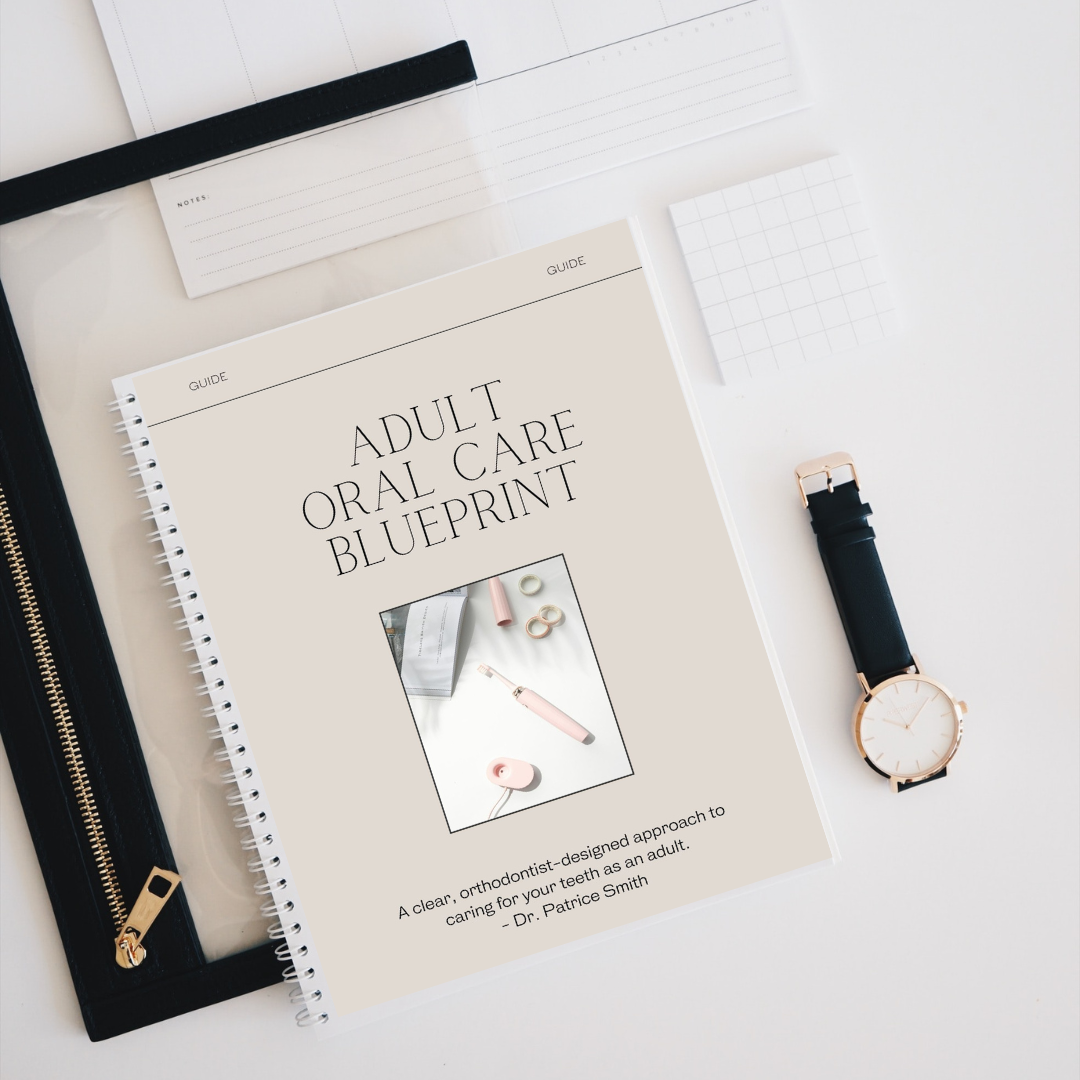
A clear, orthodontist-designed guide to building a simple, effective oral care routine that fits your life.
Most adults are doing something right, but not necessarily what matters most. There’s a lot of information about oral care, but very little clarity. This guide was created to simplify that.
Inside, you’ll learn how to build a routine based on your specific needs, choose the right tools without guesswork, and focus on what actually makes a difference without overcomplicating it.
This is the same framework I use when guiding patients in real life, adapted into a clear, structured approach you can apply on your own.
If you’ve ever thought, “I just want to know what to do …for me,” this will help.
WHAT DOES THE RESEARCH SAY?
The research on oral probiotics is promising, but it is still evolving.
Studies have found that certain probiotic strains may help influence the oral microbiome and may provide benefits for things like Streptococcus mutans levels and bad breath. However, the effects are strain-specific, and not every probiotic product will have the same results. Recent reviews also note that differences in strains, doses, formulations and study designs make it difficult to make broad claims about oral probiotics as a whole.
So, I don't think of dental probiotics as a replacement for brushing, flossing or professional dental care. They're an adjunct — an additional tool that may help support a healthier oral environment.
Your foundation still matters most: brushing twice a day with fluoride toothpaste and cleaning between your teeth regularly remain the basics of evidence-based home oral care.
SOME ORAL PROBIOTICS TO CONSIDER
If you're interested in adding an oral probiotic to your routine, here are a few products worth exploring.
One important note: oral probiotics are not all interchangeable. Different products contain different strains, doses and formulations, so I recommend looking at the specific strains and evidence behind a product rather than simply choosing the one with the largest number of CFUs.
Affiliate Disclosure: Some of the links below are affiliate links, which means I may earn a commission if you make a purchase through my link, at no additional cost to you. I only share products I believe are worth considering.
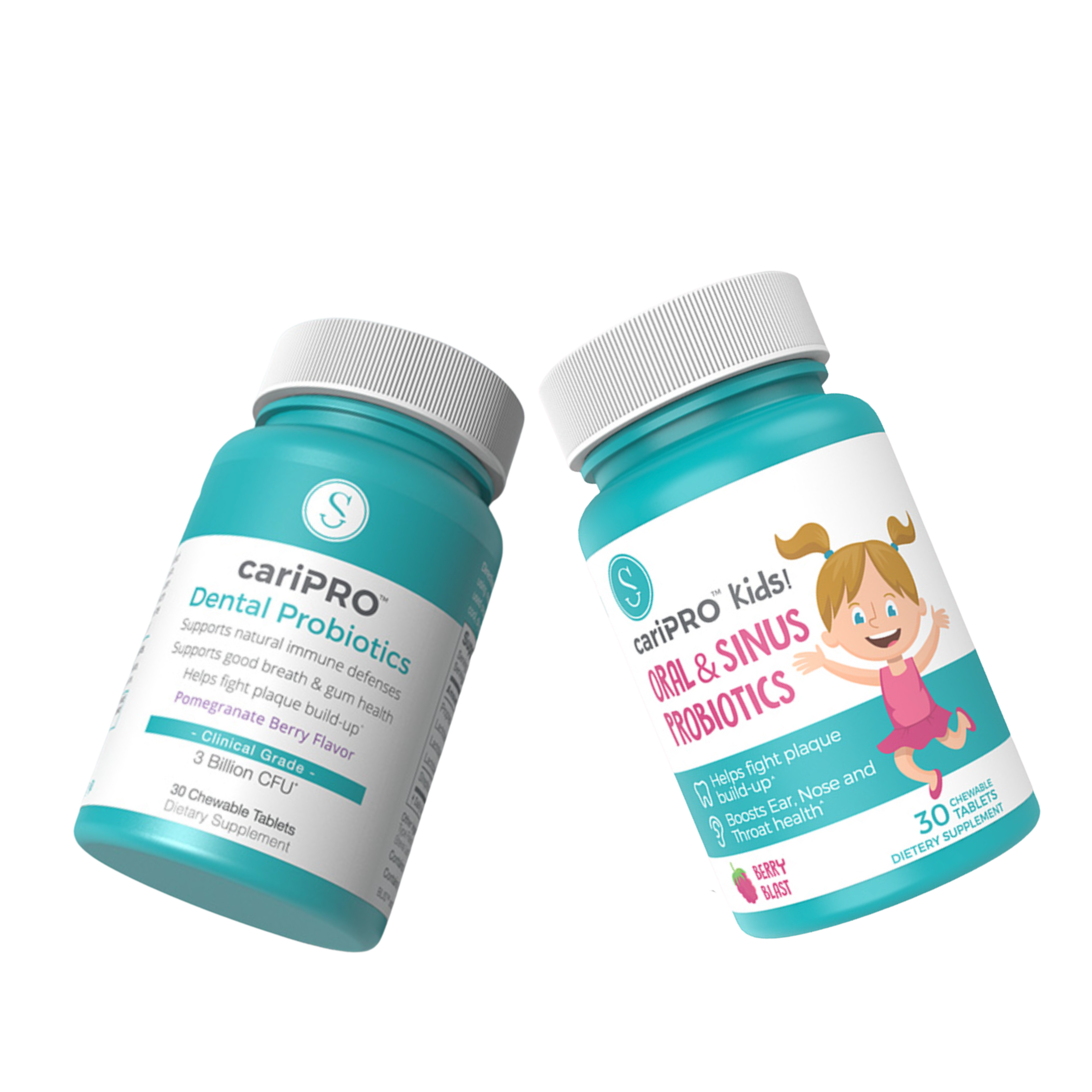
Smile Brilliant
The optimal way to build a healthier oral
microbiome and support ear / nose / throat
immunity!

ProBiora
The original dental probiotic - brings your oral biome into balance, addressing the cause of most common teeth and gum issues.

Great Oral Health
GOH offers chewable oral probiotics that are vegetarian, gluten-free, sugar-free and lactose-free with natural flavor. They have no artificial flavors, colors or sweeteners and carries a unique and patented blend of dental probiotics packed with 7 potent strains of probiotics.
code: DRPATRICE10 gets you 10% off.

Burst Oral Care
Burst oral care’s probiotics contain one of the highest concentrations of BLIS K12TM and BLIS M-18TM available. Studies have shown that these probiotic strains support robust oral health.
code: SSNQED gets you 30% off.
Your mouth isn't supposed to be bacteria-free, it's supposed to have a healthy, balanced microbial ecosystem.
Oral probiotics are an interesting and emerging way to potentially support that ecosystem. But they're not magic, and they're certainly not a substitute for the basics.
Brush. Clean between your teeth. Manage your diet. Stay hydrated. See your dentist. And if you're interested in probiotics, choose one based on the strains and evidence, not just the biggest number on the bottle.





NOBS is a dentist-founded oral-care brand offering fluoride-free toothpaste tablets. Its finished tablet formulation was evaluated by university researchers in a peer-reviewed laboratory study published in Dentistry Journal. Co-founded by dentist Dr. Ilon Choai, NOBS combines 5% na
no-hydroxyapatite with a pre-measured tablet designed for everyday brushing, work, and travel.