Why Your Sensitivity Toothpaste Might Not Be Working
Sponsored Article: This educational article is presented in partnership with Ollie
One of the most common complaints I hear from patients is, "My teeth are so sensitive."
Cold water hurts. Ice cream hurts. Sometimes even breathing in cold air can trigger that sharp, uncomfortable feeling.
Most people do what they're supposed to do: they buy a sensitivity toothpaste. But after months—or even years—of using it, many still struggle with sensitive teeth.
So why does that happen?
What Actually Causes Tooth Sensitivity
Many people think of teeth as solid blocks of enamel, but that's not exactly how they work.
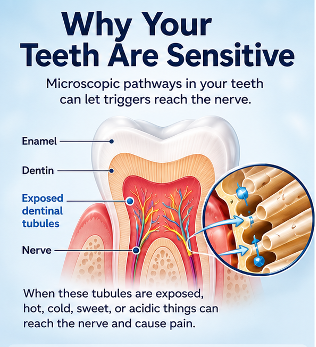
Under the enamel are microscopic channels called dentinal tubules. Think of them as tiny pathways that connect the outside of your tooth to the nerve inside.
When those pathways become exposed, hot, cold, sweet, or acidic foods can reach the nerve much more easily, causing sensitivity.
There are several reasons this can happen, including:
· Gum recession
· Teeth grinding or clenching
· Brushing too aggressively
· Acidic foods and drinks
· Enamel wear over time
· Certain dental procedures
The common theme is that the protective barrier around the tooth becomes compromised, allowing those microscopic pathways to become exposed.
How Most Sensitivity Toothpastes Work
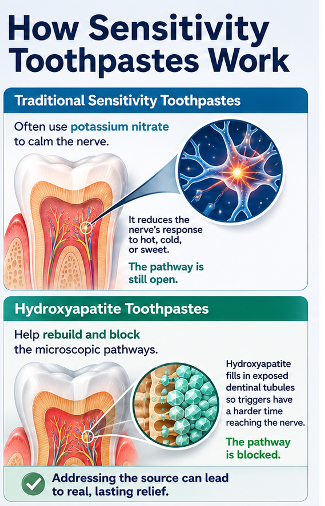
Many popular sensitivity toothpastes use an ingredient called potassium nitrate.
Potassium nitrate works by calming the nerve inside the tooth. Instead of fixing the source of the problem, it helps reduce the nerve's response to stimulation.
For some people, this provides relief. But many patients tell me that their sensitivity never completely goes away, even after using these products consistently.
That's because the exposed pathways are still there.
The nerve may be less reactive, but the underlying cause of the sensitivity hasn't changed.
A Different Approach
This is where hydroxyapatite comes in.
Hydroxyapatite is a mineral that naturally makes up a large portion of your enamel and dentin. In recent years, it has become increasingly popular in toothpaste because of its ability to support remineralization.
In simple terms, hydroxyapatite helps restore minerals to areas of the tooth that have lost them.
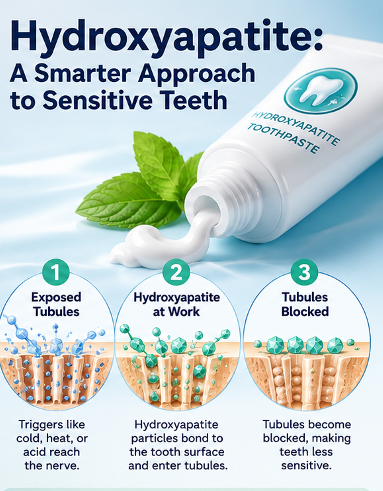
More importantly for sensitive teeth, it may help fill and block exposed dentinal tubules.
If those pathways are blocked, cold drinks and other triggers have a harder time reaching the nerve in the first place.
Rather than simply dulling the sensation, the goal is to address the pathway contributing to the sensitivity.
How Long Does It Take to Work?
This is one area where expectations matter.
Hydroxyapatite isn't an overnight fix.
Some people notice improvement fairly quickly, while others may need several weeks of consistent use before seeing significant results. In general, I tell patients to give any remineralizing toothpaste at least a month before deciding whether it's working.
Like most things in dentistry, consistency matters.
Using the product regularly will give you the best chance of seeing improvement.

Which Hydroxyapatite Toothpaste Should You Choose?
There are a growing number of hydroxyapatite toothpastes on the market, and not all formulations are the same.
When evaluating products, look for formulations that contain a meaningful concentration of hydroxyapatite and are designed to effectively interact with the tooth surface.
One example is Ollie, which contains 10% nano-hydroxyapatite and is available in several flavors, including mint, cinnamon, strawberry, and orange. Ollie also offers a formulation that combines hydroxyapatite with fluoride for individuals who prefer both ingredients.
For readers interested in comparing hydroxyapatite toothpaste options, I've reviewed several formulations in my other guides.
At the end of the day, the best toothpaste is the one you'll use consistently and that supports your individual oral health goals.
The Bottom Line
If your sensitivity toothpaste isn't giving you the results you expected, it may be because it's only helping to quiet the nerve rather than addressing the source of the sensitivity.
Hydroxyapatite offers a different approach by helping support remineralization and blocking the microscopic pathways that contribute to sensitivity.
While it takes time to work, many people find it provides meaningful improvement when used consistently.
And if your sensitivity is severe, sudden, or isolated to one tooth, don't assume it's normal. That's a good reason to schedule a dental exam and make sure something more significant isn't going on.