Early Signs Your Child Might Need Braces (And When to Actually See an Orthodontist)
As a parent, it’s natural to wonder whether your child’s teeth are developing “normally.” Some kids seem to have perfectly straight smiles early on, while others look… a little chaotic. The truth is, orthodontic concerns don’t always announce themselves with obvious crooked teeth. Many early signs are subtle, and often overlooked.
The good news? Early awareness doesn’t always mean early treatment. It simply means informed, calm decision-making.
Early Signs Parents Often Miss
Here are some common indicators that your child may benefit from an orthodontic evaluation:
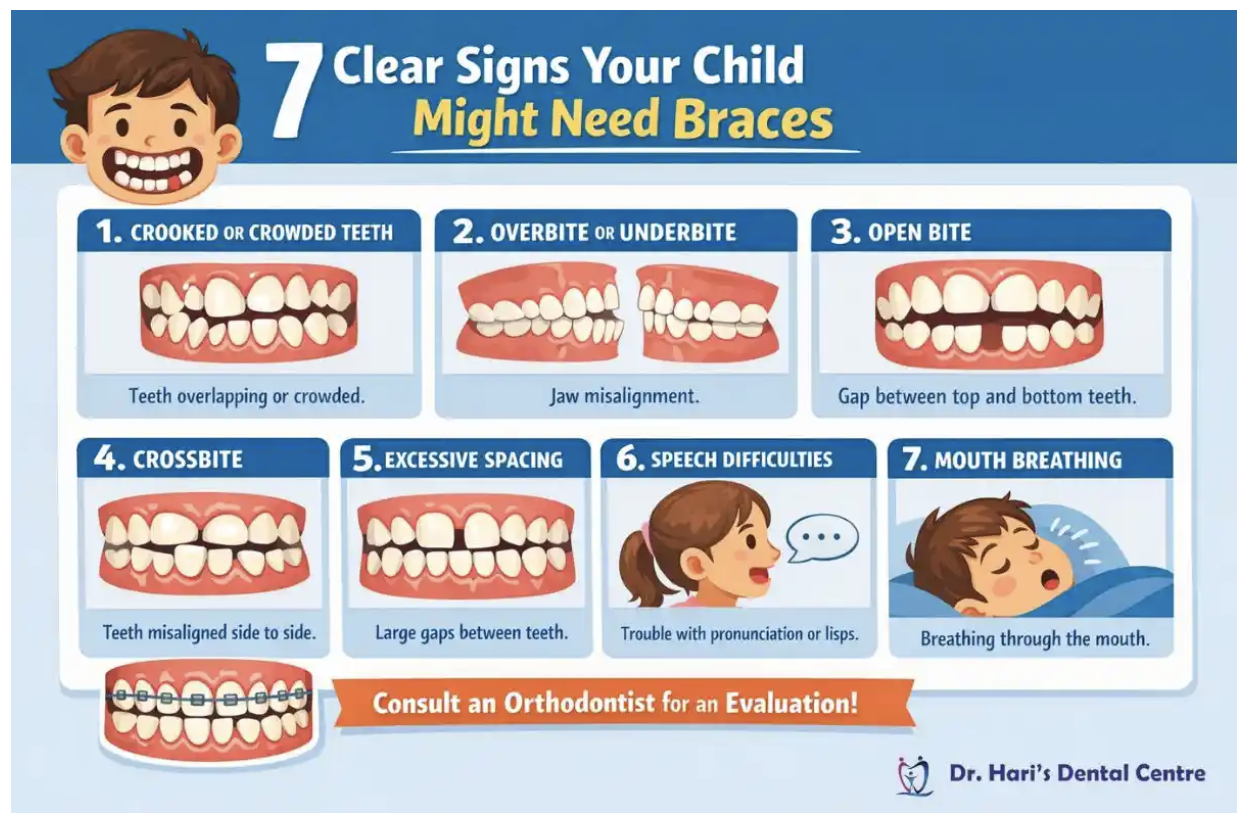
1. Crowded or overlapping teeth
If teeth are coming in twisted, overlapping, or squeezed together, it may indicate that the jaw doesn’t have enough space for proper alignment.
2. Early or late loss of baby teeth
Losing baby teeth too soon or holding onto them for too long, can affect how permanent teeth erupt and align.
3. Mouth breathing
Consistent mouth breathing (especially during sleep) can impact jaw development and facial growth.
4. Thumb sucking or prolonged pacifier use
When these habits continue beyond early childhood, they can influence tooth position and bite development.
5. Difficulty chewing or biting
If your child avoids certain foods or struggles to chew comfortably, it may be related to how their teeth fit together.
6. Speech issues
Lisping or other speech challenges can sometimes be connected to bite or jaw alignment.
7. Teeth that don’t come together properly
Underbites, overbites, crossbites, or open bites aren’t just cosmetic, they can affect function and long-term oral health.
So… When Should a Child See an Orthodontist?
Most orthodontic associations recommend a first evaluation around age 7. That doesn’t mean braces at 7, it means observation.
At this age, an orthodontist can:
Monitor jaw growth and tooth eruption
Identify potential issues early
Decide whether treatment is needed now, later, or not at all
In many cases, the best plan is simply “wait and watch.” Early visits often prevent unnecessary treatment and, when intervention is needed, can make it simpler and more efficient later.
What Parents Should Know (That No One Really Explains)
Early evaluations are about information, not pressure
Not every child needs braces
Timing matters more than rushing
Early care can sometimes reduce treatment length and complexity later on
As both an orthodontist and a parent, I approach these conversations with families differently than I once did. I know how overwhelming decisions about your child’s health can feel. My goal is always clarity, reassurance, and trust, not urgency.
If you’ve been wondering whether it’s time to check in, consider this your permission to get answers without commitment.