

The Power of Contract Negotiation
Contracts represent more than mere agreements; they are the conduits through which we navigate our professional journeys. Yet, all too often, these agreements tilt in favor of one party, leaving the other to grapple with the remnants of unfulfilled potential. For women, who historically have faced unique challenges in the realm of contract negotiation, reclaiming their rightful portion of the divine plan can be a transformative act of empowerment.
Contracts represent more than mere agreements; they are the conduits through which we navigate our professional journeys. Yet, all too often, these agreements tilt in favor of one party, leaving the other to grapple with the remnants of unfulfilled potential. For women, who historically have faced unique challenges in the realm of contract negotiation, reclaiming their rightful portion of the divine plan can be a transformative act of empowerment.
defining your worth: YOUR DIVINELY ORDAINED PORTION
At the heart of every negotiation lies the recognition of one's inherent worth. It's about acknowledging the unique talents and gifts bestowed upon you by a higher power and demanding nothing less than what you deserve. Your divinely ordained portion encompasses the abundance meant for you, a legacy waiting to be claimed.
THE TALENT EXCHANGE CONUNDRUM
Too often, women find themselves navigating the labyrinth of corporate structures, their talents commodified and undervalued. Whether in the realm of medicine, where doctors generate substantial revenue for corporations while receiving only a fraction of the proceeds, or in other industries, where the gender pay gap remains an enduring challenge, the need for equitable contracts has never been more pressing.

Embracing Independence and Freedom
In response to this imbalance, a growing number of women are embracing independence and entrepreneurship. The rise of personal branding and the pursuit of greater autonomy signal a shift towards reclaiming control over one's destiny. Yet, the path to independence is not without its challenges, and for many, negotiating contracts with corporations or other entities remains a necessary step.
The Importance of Contract Negotiation
For those who choose to work with others or organizations, it's crucial to arm yourself with effective contract negotiation tactics. Negotiating, especially for women who might face unique challenges, involves shifting your mindset to ensure you receive what you deserve.

Key Negotiation Tactics
Learn to Say NO: Overcoming the fear of rejection is the first step in asserting your true worth. Genuine negotiation often begins with a refusal to accept the status quo.
Ask for More Than You Want: Boldness pays dividends in negotiation. By requesting more than you anticipate receiving, you create room for compromise and demonstrate your value.
Be Willing to Walk Away: Your willingness to walk away from an unfair deal is a powerful bargaining chip. Establish your deal-breakers and stand firm in your convictions.
Seek Legal Counsel: In the complex landscape of contract negotiation, legal expertise is invaluable. A skilled attorney can help decipher legal jargon, identify potential pitfalls, and advocate on your behalf.
The Path Forward
As you embark on your journey of negotiation and self-discovery, remember that your worth is non-negotiable. Whether you choose to work within established frameworks or carve out your own path, the ability to negotiate effectively is your greatest asset. It's a skill that evolves with practice, empowering you to shape your destiny and secure your rightful portion of abundance.
In the pursuit of equitable contracts and fair treatment, may you find the courage to advocate for yourself and others, paving the way for a future where every woman receives her due.








How to Negotiate Your Contract, Like a Boss
Many professionals find the idea of engaging in contract negotiation intimidating. For this reason, many skip it all together and accept what they're offered, or they negotiate very minimally.
At this point, I have negotiated a few contracts to lend some insight on how to negotiate your contract to get what you want, what is fair and what you deserve.
Many professionals find the idea of engaging in contract negotiation intimidating. For this reason, many skip it all together and accept what they're offered, or they negotiate very minimally.
At this point, I have negotiated a few contracts to lend some insight on how to negotiate your contract to get what you want, what is fair and what you deserve.
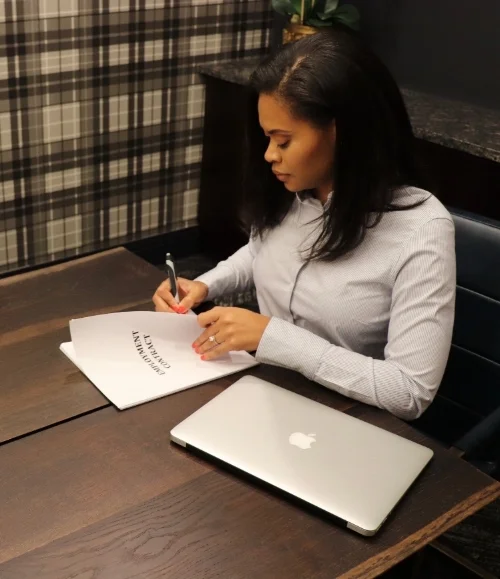
To Negotiate like a boss, especially if you're female, will take some mindset changes. Here I've outlined a few ways to successfully Negotiate your contract and get what you want.
1. Say NO
One of the greatest inhibitions in asking for your market value or what you think you're worth is the fear of rejection. Once you can get passed this fear you can move on to the negotiating table. Understand that the real Negotiating doesn't start until someone says no! Never just accept what you're being offered. Quite often contracts are written with wiggle room for that reason. The goal of negotiating is to reach an agreement with someone whose interest may not necessarily be aligned with yours. In this context the word no is not a negative thing but offers grounds to problem-solve and come to a consensus and an agreement. The alternative is being stuck in a job with individuals who are happy to place their needs above yours.
2. Ask for More Than What You Want
It's a much better negotiating strategy to ask for more than you actually want or think you will get. Allow each party to say no a couple times before saying yes. People aren't necessarily happy when they get what they want. Think about it: You sit with your potential employer and say " I would like a 10% increase from my previous salary and a corner office" and his/her immediate response is "Sure, no problem!" You will likely suffer from buyers' remorse and wonder if you should have asked for a 20% increase instead.
3. Be Willing to Walk Away
A lot of negotiating is a mind game. The greatest bargaining advantage goes to the person who is perceived to have the least to lose. Establish your deal breaker or bottom line and be willing to walk away from a deal (or say you will). If you at least act like you're prepared to walk away if your bottom line isn't met then the other party will be more incentivized to meet your requirements.
4. Get a Lawyer
You have looked over your contract thoroughly but you need a second pair of eyes on it. There may be some legal jargon that you don't understand or have over looked. A lawyer will be able to point some things out to you that you may have missed and can even negotiate on your behalf. In my experience it has been worth the money pay a lawyer to do some of the heavy lifting for you.
I know contract negotiations aren't always easy. You must ensure that you ask the right questions upfront, learn to say no, don't get bullied into signing on to something you will regret later and be willing to walk away. At the end of the day, make sure that you are getting a fair deal.









Contracts: Questions To Ask Before Signing an Associate Agreement
Your first associate contract is a major milestone in your new career but it can be a pretty intimidating process. It is important to have a lawyer review your contract with you and there are some key questions to ask and keep in mind even before you hire one
Your first associate contract is a major milestone in your new career but it can be a pretty intimidating process. It is important to have a lawyer review your contract with you and there are some key questions to ask and keep in mind even before you hire one.
Phil Bogart, a lawyer with Whiteford, Taylor and Preston LLP has laid out the top 10 questions to ask before signing your associate agreement. Find them below:
Direct Links to this article may be found at: wtplaw.com and dentaltown.com
If you have questions about associate contracts, contact Phil Bogart at wtplaw.com
Why building wealth can give you the capacity to do more good.
There is a sentence I came across recently that made me stop and think:
The most philanthropic thing you can do is get rich.
At first, I wasn't sure what to make of it. We tend to think of philanthropy as something that happens after generosity has already been established: you give your time, your money, your resources, or your influence to help someone else. Getting rich, on the other hand, can sound almost antithetical to that idea. It conjures images of accumulation, consumption, and the pursuit of more for the sake of more.
But the more I thought about the statement, the more I understood the argument behind it.