

5 Boss Behaviors To Grow Into
A truly great boss is hard to find, difficulty to leave, and impossible to forget. You’ve heard it before - people don’t leave jobs or their companies, they leave their bosses. This holds true as I think about the bosses I’ve had and as I reflect on the type of boss that I aspire to be.
The Greatest Gift of Leadership is a Boss Who Wants You To Be Successful - Jon Taffer
A truly great boss is hard to find, difficult to leave, and impossible to forget. You’ve heard it before - people don’t leave jobs or their companies, they leave their bosses. This holds true as I think about the bosses I’ve had and as I reflect on the type of boss that I aspire to be.

Research has shown that there are a number of key leadership behaviors that bosses or managers can learn and develop. These behaviors are grounded in managing social-emotional reactions to our surroundings. By cultivating these behaviors, leaders can build a team that is accountable, trusting, resilient, proactive, and passionate about their work and the company’s mission.
Here are the 5 leadership behaviors that can have an impact on your team’s productivity and engagement:
Compassion
Compassionate leadership means showing genuine interest in team members’ success and well-being. This leadership behavior establishes a commitment to understanding, but not necessarily agreeing. It is also a more objective form of empathy. Unlike empathy, compassion creates emotional distance so that the leader can make sound and proactive decisions on the team member’s behalf. This behavior will ultimately lead to more trust and loyalty from team members.
Effective Listening
Listening can be more empowering than speaking. Effective communication skills are key to building trust with teammates and getting them to buy into your vision. Effective listening is a combination of both verbal and non-verbal communication skills that can be learned and practiced over time.
Embracing Change
Great leaders are able to quickly change course and help their team evolve with the organization’s needs. These people enjoy the process of continually striving for improvement and pushing their teams to the next level. They also are not afraid to fail as they realize that mistakes are mere opportunities to better themselves.
Embracing a Coaching Mindset
Great leaders produce other great leaders through coaching. As a coach you are able to see each individual’s development and growth. Great leaders are able to tie people’s individual development to organizational objectives which increases accountability, improves retention, and develops stronger leaders within their teams.
Cultivating an Inspiring Vision
Effective leaders prioritize the creation of an inspiring work environment which propels their teams to see beyond their perceived limitations and step up to new challenges. Motivational leaders have a keen understanding of how to create a strong sense of community and belonging within their organizations. They regularly celebrate and reward achievements, and sets the standard for performance. As a result, their teams tend to see lower turnover, increased productivity, and elevated levels of motivation.
Great leaders are skilled communicators that tend to be humble, compassionate, and transparent. Some are born with innate talents and a set of behaviors that make them particularly suited for greatness. However, many leadership behaviors can be learned, developed, and practiced over time.
Now, do you think you have what it takes to be a great Boss or Leader? Thought so, Let’s Do This!
A version of this article can be found at BetterUp.











Can You Refinance Student Loans After Consolidation?
Consolidation and refinancing can both be viable options when trying to simplify student loan repayment or lower monthly payments. Combining student loan balances under one roof, either through consolidation or refinancing, has the potential to lower a borrower’s interest rate (in the case of refinancing), extend the repayment term, or both, which can reduce the monthly payment to a more affordable level.
Consolidation and refinancing can both be viable options when trying to simplify student loan repayment or lower monthly payments.
Combining student loan balances under one roof, either through consolidation or refinancing, has the potential to lower a borrower’s interest rate (in the case of refinancing), extend the repayment term, or both, which can reduce the monthly payment to a more affordable level.
Many borrowers, however, find themselves asking whether they can refinance student loans after they have already consolidated them.
In short, if you have previously consolidated your student loans—whether through the government or a private lender—you can still refinance your student loans if you are eligible.
Difference Between Student Loan Consolidation and Refinancing
Student loan consolidation may be referring to two different things in most cases:
Consolidating federal student loans via the Direct Consolidation Loan program
Consolidating federal and/or private student loans together via refinancing with a private lender
Federal Direct Consolidation Loan Program
Federal Direct Consolidation Loan is a program that allows you to combine outstanding federal student loan balances, either in full or in part, with the federal government. Private student loans are not eligible for consolidation under this program.
Borrowers can easily complete a consolidation of selected federal loans through a brief online request form through the Department of Education. All the provisions of federal student loans remain available to borrowers, including income-driven repayment plans, deferment, and forbearance, with a loan consolidation.
Consolidating Student Debt When Refinancing
Refinancing student loan debt is a different process that involves a private student loan lender, not the federal government. When refinancing, student loan borrowers have the option to combine one or more federal or private student loans into a single loan with a new lender—sometimes referred to as private student loan consolidation.
Refinancing is available through many private lenders, meaning interest rates, repayment terms, features, and total costs differ greatly. Refinancing can be beneficial to student loan borrowers if they are able to secure a lower interest rate than what a consolidation or their original loan terms offered. However, if you refinance federal student loans, you will lose any protections that came with the loans and access to federal repayment plans.
How to Refinance Consolidated Student Loans
Some borrowers may opt to consolidate their federal student loans initially, then later decide that they want to refinance to take advantage of benefits like a lower interest rate. In this case, refinancing can be done directly with a private lender even after a consolidation is done.
To refinance consolidated student loans, student loan borrowers need to simply find the private lender they would like to utilize, complete an application for the refinance, and once approved, make payments to the new private loan lender.
Most student loan lenders offering to refinance loans have an easy online application process, the ability to add a cosigner to strengthen the application, and several options for repayment terms.
You can compare student loan lenders and find your best match here.
How Often Can You Refinance a Student Loan?
Student loan borrowers can refinance their student loans as many times as they would like, so long as their credit and income remain strong. Lenders do not typically put restrictions on how often loans may be refinanced, although borrowers may need to move to a different lender if a refinance was recently completed.
As student loan interest rates shift, refinancing student loan debt may be a cost-effective strategy for reducing the total cost of borrowing. However, there are factors to consider before refinancing multiple times.
See the full article here: Can You Refinance Student Loans After Consolidation?
This is a sponsored post by LendEDU

How I Saved Over $4000 by switching Cell Phone Carriers
I did a complete financial overhaul about a year ago and discovered over $6000 of wasted money. A big chunk of that was in cell phones bills! This was a major money leak. Money leaks are those small expenses that you forget about soon after spending the money. They can wreak havoc on your budget.
One of the most challenging things when it comes to personal finance is finding and plugging money leaks. If you’ve seen my previous article on the topic you will find that it is quite easy to spend money without realizing. Money leaks are those small expenses that you forget about soon after spending the money. They can wreak havoc on your budget.
I did a complete financial overhaul about a year ago and discovered over $6000 of wasted money. A big chunk of that was in cell phones bills!
At the time, I was with one of the major cell phone providers carrying three lines of service. That is, three cell phones that weren’t fully paid for and three lines with unlimited talk, text and data. All this came at a cost of roughly $280/month. My fiancé had a similar situation where he was with another major cell phone provider carrying two lines of service. His monthly payments were around $240/month. Combined we were paying approximately $6240 in cell phone bills alone per year!
Nowadays, most cellphone plans don’t lock you into a contract. Gone are the days where you’re stuck with the same cellphone carrier for two years, unless you’re willing to pay hundreds of dollars in early termination fees. These days it’s easy to switch, and in many cases you can save yourself a lot of money by doing so.
We did some research and by switching providers we are currently saving roughly $4000/year! We combined my 3 lines with my fiancés 2 lines and went with a single carrier and currently pay $139/month for all 5 lines. That is roughly $1668 per year. This is saving us a whopping $4572 per year just on cell phone bills! Our services continued with the same great quality as before. I must mention however that in switching carriers, we had to purchase 3 new cell phones carrying an upfront cost of roughly $1600.
This was a simple adjustment which revealed an area that isn’t necessarily thought about when attempting to reduce expenses. If you are attempting to plug money leaks, definitely do not ignore this category as you might also find an opportunity for huge savings.
Also, If you’re hesitant to switch carriers because you get great coverage with your current carrier, there’s something you need to know. Smaller carriers such as Metro, Boost Mobile and Cricket, all run off of one of the major networks — AT&T, T-Mobile, Sprint or Verizon. So, if you’re with AT&T but sick of paying $120 per month for your plan, switch to Cricket Wireless and pay just $55 per month for unlimited data all on the same network. You’ll still get the same great coverage even though you’re no longer on an AT&T plan. You can find a list of carriers here.
*This is not a sponsored post, I do not get paid for the above views.

Plugging Money Leaks
One of the most challenging parts of getting a grip on your finances is finding money “leaks” and plugging them. I speak a lot on saving/investing for retirement and tackling student loans. However, I must address the topic of unknowingly wasting money aka money leaks. The faster we figure out where all our money is going the better we will be able to plan and have more money to put towards saving, investing, paying off debt, etc.
One of the most challenging parts of getting a grip on your finances is finding money “leaks” and plugging them. I speak a lot on saving/investing for retirement and tackling student loans. However, I must address the topic of unknowingly wasting money aka money leaks. The faster we figure out where all our money is going the better we will be able to plan and have more money to put towards saving, investing, paying off debt, etc.
A money leak is simply any amount of money that you spend and are unable to identify what you spent that money on at the end of the month when you’re reviewing your bank and/or credit card statements. It can happen quite quickly and sometimes go unnoticed. For example, one week you may not have gotten a chance to prepare your meals and suddenly you’re eating out everyday for lunch, or you subscribed to a free trial of HBO to binge watch a season of one of you’re favorite shows and forget to cancel the membership. These seemingly tiny expenses add up and before you know it you’re wondering where all your money went.
I did a complete financial overhaul about a year ago and discovered over $6000 of wasted money. A big chunk of that was in cell phones bills - by switching providers I am currently saving roughly $4000/year!
Here’s how to identify and begin plugging your money leaks:
Step 1: Print out your credit card and/or bank statements for the last 3 months and highlight all your set monthly automatic withdrawals, example: mortgage/rent, savings, Insurances, car note, utilities, etc. Now look at those highlighted items and see if there’s a possibility to cut or lower the cost of any of those items like a cell phone bill, cable bill, interest rate on a car note or even a credit card.
Are your utility bills consistent? Cell phone and cable bills are terrible money leaks. Cable companies will sometimes increase monthly payments which can go unnoticed if you’re on automatic withdrawal.
Do you need cable at all? Consider alternatives like Netflix or Hulu which are a fraction of the cost.
Are you paying for more services than you need? Many of us no longer utilize a landline so why pay for it?
If your monthly data usage on your cell phone is, say 10mb or so then why pay for unlimited data?
Have you tried refinancing your auto loan? This would be a good thing to do especially if your credit score has increased since you initiated the loan.
Call your credit card companies and request a lower rate. If the answer is no, simply switch to another company that offers you a lower rate.
Step 2: Identify all the un-highlighted items and categorize them.
Typically the miscellaneous expenses are date nights/eating out, emergencies, etc.
Save all your receipts and review them each week so that you can track your spending. By knowing that you have to review your receipts you may not be so apt to spend frivolously.
Use a budgeting app to help you stay on track. If you find it difficult to stay on top of your finances, consider tools like Mint or You Need a Budget.
Avoid leaky places and budget before you go. A simple night out with friends can turn into regret if you do not plan ahead. We all know how out of control things can get when we’re having fun, especially if drinks are involved. Have a ballpark figure in mind or a set amount that you want to spend on food and drinks and don’t go over that limit.
Needless to say, once you’ve found the leaks and plugged them you must decide what do you do with that “extra” money. Treat it like it’s a bonus from work or a gift from your generous grandma - no, do not spend it. Options for this money could be investing, saving towards your retirement, paying off credit card debt, or making extra payments on your student loan debt.
Money leaks are poison to any kind of financial progress. If you have too many of them, it can make personal finance feel incredibly confusing and hopeless because it feels like all of your money is just evaporating. Take charge, use the above guidelines to get started and take control of your finances.

Asset Protection For Young Professionals
Asset protection is a hot topic among young professionals. Let’s face it, we spent years in school and sacrificed a lot to get to this point so it’s only right to search for ways to protect what we’ve earned. Asset protection is a term used to describe the way we go about protecting our finances from those who see us as a target. These may be creditors, individuals looking to sue, etc. Everyone needs to give thought to this but there are some groups, namely physicians and dentists that are more vulnerable to legal action.
Asset protection is a hot topic among young professionals. Let’s face it, we spent years in school and sacrificed a lot to get to this point so it’s only right to search for ways to protect what we’ve earned. Asset protection is a term used to describe the way we go about protecting our finances from those who see us as a target. These may be creditors, individuals looking to sue, etc. Everyone needs to give thought to this but there are some groups, namely physicians and dentists that are more vulnerable to legal action.
Malpractice Insurance
Whether you’re a physician, dentist, or any other type of healthcare professional, having malpractice insurance is not only important but necessary. Approximately 34% of doctors will have a lawsuit or judgement against them in their lifetime, according to the American Medical Association. Be sure to purchase a malpractice insurance policy that provides the best coverage for your specialty.
Retirement Accounts
Having retirement accounts are very important, but many of us are not aware how it provides asset protection benefits. All qualified retirement accounts provide complete protection from a broad array of creditor classes, including malpractice and bankruptcy creditors. Putting money away for retirement allows you to contribute to tax deductible and tax deferred accounts.
Creating a Corporation
A Limited Liability company and a corporation are business entities that are separate from the owner of the business. You can create a corporation and become an employee of your own company. That way, if anyone should come after you personally or if a judgement was ruled against you it would only affect the income which you earned as an employee working for said cooperation.
Pre-Nuptial Agreement
For some this can be a touchy subject but many couples are getting married at a later age and may have acquired assets prior to marriage. A prenup is a very good idea for a young doc. It gives you a chance to have control over how assets are divided in the event the marriage ends in divorce. You get to make these decisions while you still love each other without interference from the state.
If you get married, STAY Married
When discussing asset protection, we think about how to protect ourselves if we are sued. However, you are far more likely to lose assets to your spouse than to a disgruntled patient. Believe it or not, many times when a doctor or other young professional loses assets it’s through divorce. Come up with ways to stay connected with each other throughout the years and keep your marriage fresh! hint: Don’t stop dating each other.
Use the above bullet points as a place to begin and start protecting the assets you worked so very hard to acquire.

Harmful Effects of DIY Braces
Do-It-Yourself (DIY) braces and at-home teeth straightening kits have become a trend popping up all over the internet, promising dentist-quality results at a fraction of the price. While I understand how attractive these may look and sound, unfortunately, things that sound too good to be true often are. As an orthodontist I have seen some pretty damaging effects of DIY braces and wanted to share a few facts about this dangerous trend.
*WARNING: THIS POST CONTAINS GRAPHIC IMAGES *
Do-It-Yourself (DIY) braces and at-home teeth straightening kits have become a trend popping up all over the internet, promising dentist-quality results at a fraction of the price. While I understand how attractive these may look and sound, unfortunately, things that sound too good to be true often are. As an orthodontist I have seen some pretty damaging effects of DIY braces and wanted to share a few facts about this dangerous trend.
What Are DIY Braces
We consider DIY braces anything that you do yourself to facilitate the movement of teeth. There are videos posted online where teens and young adults use items like rubber bands, dental floss, fishing lines, earring backs, paper clips, and more to move their teeth. These items are often found embedded or covered by gum tissue. Mail order aligners are becoming very popular but many of their disadvantages are not being addressed. Here we will discuss some reasons why seeing an orthodontic professional is best.

Harmful Effects of DIY Braces
Orthodontic treatment is about more than just straightening teeth. It involves moving of teeth and bone to restore proper form and function. It must be managed properly to yield the best results. Attempting to close a gap or straighten your teeth yourself significantly increases the risk of serious damage to your teeth and gums, resulting in tooth loss, changes in speech and possible infection. It is also worth considering that repairing the damage from DIY procedures could be far more expensive than the investment in an orthodontic specialist.
Tooth Loss
Using tight rubber bands or other materials to adjust your smile quickly is detrimental to tooth health. Rather than create the straight smile you crave, makeshift braces could destroy your teeth at their roots.
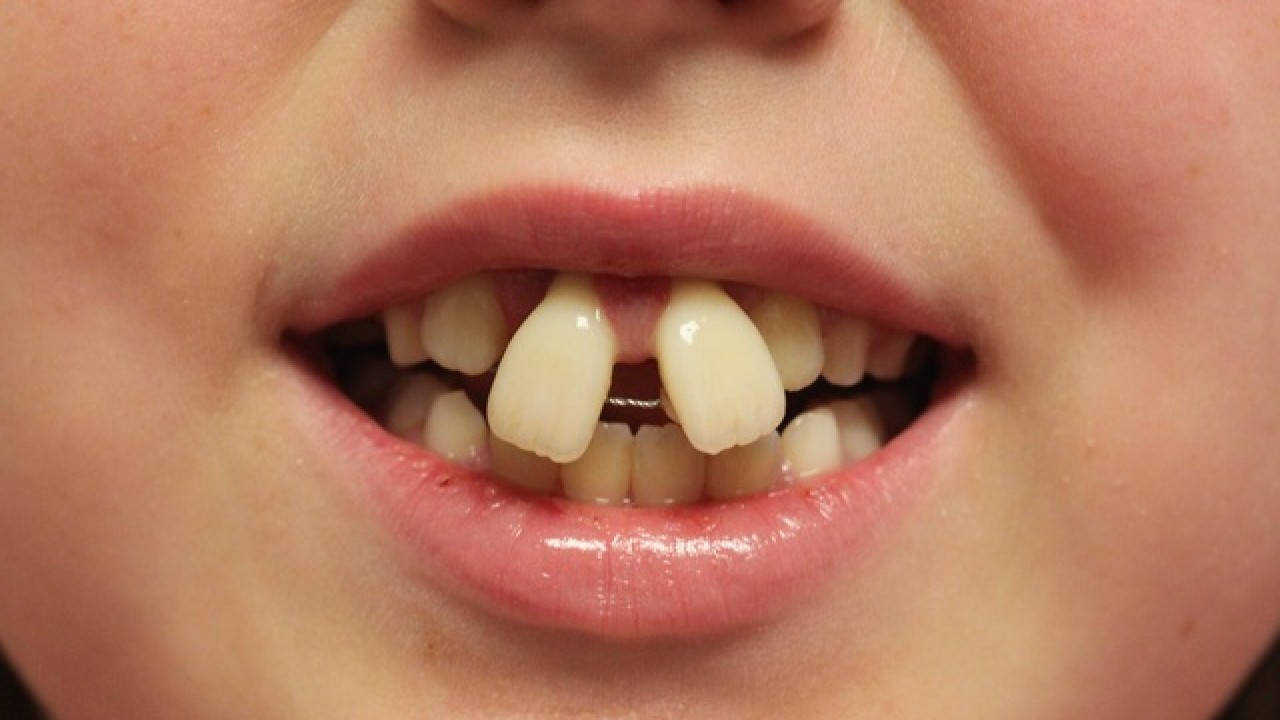
Unrestricted blood flow is necessary to maintain healthy teeth and gums. Makeshift braces and ill fitting DIY clear aligners can impinge on the tissues and cause unwanted movement of teeth. That subsequent movement can result in conditions such as the one seen below and cause a host of other issues that will require an immediate visit to your dentist.

Infection
Since DIY braces involve nonsterile, nonmedical-grade supplies, it’s easy to develop an infection. Rubber bands, paper clips, and similar items can cut into the gums and injure the tissue, causing open sores that aren’t able to heal while you continue to wear the makeshift braces. A gum infection may not sound serious, but it can cause damage to the surrounding tissues, severe bone loss, and spread through your circulatory system.

Speech Problems
The position of teeth also has an effect on the way we speak and pronounce words. DIY Braces often do not account for movement outside of the desired areas. This movement must be controlled properly to prevent conditions evidenced in the pic below. As a result, your upper and lower jaw may not fit together as they once did, ultimately affecting your phonetic ability.
Relapse
DIY braces offer no guarantees, so even if you try to make your own and successfully manage to move your teeth, the results most likely won’t last. Professional braces are designed to move teeth in slight increments over a period of time. There’s a reason for this: Quick adjustments have a greater chance of shifting back.
Since DIY braces tout quick results in less time, your teeth are more likely to move back to their original positions after discontinued use.
Pay More Than You Saved
Most people turn to DIY methods to save money, but when it comes to important dental procedures, you could end up paying much more to repair the damages. Surgery to address infections, correcting bone loss or extracting non restorable teeth can be traumatizing and expensive. When you consider the costs associated with correcting damages from DIY braces and at-home straightening kits, you’re better off saving the money for professional braces and having the treatment done right by a professional.
Please do not fall victim to these DIY trends and fast braces schemes. Do your research and ensure you are choosing the right professional for your smile and overall health.

Why You Should Consider Ditching Your Whole Life Policy
I remember sitting through many lunch and learns back in dental school and residency where we were constantly told that we needed to get life Insurance. After the differences between Whole and Term Life Insurances were discussed, many of the insurance agents(Reps) would emphasize the need for Whole Life versus Term Life Insurance, especially for us soon-to-be dentists. They advertised Whole Life Insurance as the best plan to “offer great returns”, “protect our assets,” while providing a substantial death benefit.
I remember sitting through many lunch and learns back in dental school and residency where we were constantly told that we needed to get life Insurance. After the differences between Whole and Term Life Insurances were discussed, many of the insurance agents(Reps) would emphasize the need for Whole Life versus Term Life Insurance, especially for us soon-to-be dentists. They advertised Whole Life Insurance as the best plan to “offer great returns”, “protect our assets,” while providing a substantial death benefit.

Fast forward a few years later and after much research, I have come to the realization that obtaining and holding a whole life insurance policy was not the best idea. Let’s look at the difference between the two:
Term Life Insurance
Term Life Insurance is “pure” life insurance. The policyholder pays fixed premiums for a limited period of time (term). If they die while the policy is in effect, their beneficiary receives a death benefit.
Whole Life Insurance
Whole Life Insurance is a type of permanent life insurance which is guaranteed to remain in force for the insured's entire lifetime. It offers a savings component and life-long protection. As long as premiums are paid, whole life insurance provides a death benefit after you die.
Life insurance is not a very good investment vehicle. Life Insurance is best utilized in case of unexpected death, hence the case for term life insurance.
Here’s Why Whole Life Insurance May Be A Bad Idea:
The cost of whole life insurance is a lot higher than the cost of term life Insurance.
In Term life insurance, the beneficiaries receive the death benefit IF you die during the designated period. Whereas, in whole life insurance, the death benefit is received WHEN you die.
Whole Life insurance provides a death benefit in case you die while someone else depends on your income, but it is a very expensive way to provide that protection.
Whole Life insurance accumulates a cash value that you can borrow against. However, it takes time to accumulate that cash value. In fact, your first year premiums usually are paid to the agent that sold you the policy. While there may be a number of uses for this cash value, it is generally inferior to other options that can accomplish the same purpose.

Tackling Student Loan Debt
Almost all young dentists face confusing (and often conflicting) choices after graduation because of the significant amount of student loan debt they have from dental school. The average dental school graduate has more than $247,000 in student debt. That figure has risen nearly 40% since 2010.
Almost all young dentists face confusing (and often conflicting) choices after graduation because of the significant amount of student loan debt they have from dental school. The average dental school graduate has more than $247,000 in student debt. That figure has risen nearly 40% since 2010.
"[Dentists have] been trained for years to focus on passing the next academic exam, completing a procedure correctly or passing a licensing exam," says Dr. Douglas Carlsen, founder of Golich Carlsen, a financial consulting firm for dentists. Carlsen retired from his own dental practice in 2004. "[Dentists] have not, in many instances, been prepared well for the real world of employment and possible business ownership," he says. "They have not been prepared for the world of consumer purchasing and financial planning."
The key, Carlsen says, is for dentists to get on solid financial footing so they can start to tackle their student loan debt. Here's how:
Make a Financial Plan
Carlsen recommends that young dentists address debt by establishing goals they want to reach within a certain deadline. Include your partner, if you have one. Factors to consider include what kind of lifestyle you want to have, how much student loan debt you have, how much savings you want to have and what kind of practice you will be a part of in the next one, five, and 10 years, he says. Identifying these parts of your life will help clarify the amount you can dedicate to paying down debt while living your life.
The goal of the financial plan is to help you keep your expenses low. By reducing your spending, Carlsen says you could dedicate 40% of net income to pay down debt. "I personally know of dentists that have paid off $400,000 in less than eight years," he says.
Free budgeting apps, such as Mint and Personal Capital, can make it easy for dentists (or anyone else) to track their spending.
Consolidate and Pay Down Student Debt
In general, dentists with good credit can consolidate and refinance their loans with a lower rate from a private lender. For example, Common Bond could save the average dentist thousands over the life of their student loans.
If qualifying for student loan refinancing at a lower interest rate is not an option immediately after dental school, Carlsen recommends consolidating federal student loans and using an income-driven repayment plan.
Remember Your Retirement Fund
You'll want to balance student loan repayment with other goals, such as retirement. Nate Wenner, a CPA and certified financial planner who specializes in working with dentists, recommends dentists set aside at least 10% of their gross income toward retirement.
"After meeting that baseline level of saving, one can look to more aggressively pay down any debt which carries an interest rate higher than what you might expect to earn by investing over the next 10 years," he says.
Good financial habits can help dentists retire early, Carlsen says. He notes that the dentists who retired at 50 he knows have these characteristics in common: They bought a home and remained in it until retirement. They have saved more than 20% of their annual net income after their student loans have been paid off. They started saving for retirement by age 35 or earlier. And finally, they paid cash for everything except their homes and practices.
Hold off on Buying a Home or Practice
Carlsen says the worst mistake he sees young dentists make is to buy a home too soon. "A young dentist should not buy a home until he or she is stabilized in their employment or practice situation," he says.
Don't rush into buying a practice, either. "I see many of the national brokers promising much higher income projections for practices for sale than what is prudent," Carlsen says. "There will be a plethora of practices for sale by baby boomer dentists in the next five to eight years. Take your time and find a practice that suits your style, not what others tell you to do."
Following these tips can help dentists pay off their student loans faster and set themselves up for an even brighter future.
This is a sponsored post from Common Bond
A version of this story was originally published in Forbes.com.

Benefits of Social Media to Your Dental Practice
For many years, dentists relied almost exclusively on reputation, word of mouth, expensive advertising and flyer marketing to help build their practices. But, it’s a different time now and more likely than not, our patients/audience are on one or more social media platforms. Whether it’s Facebook, Instagram, Twitter, Snapchat,etc being active on social media will give us the ability to drive traffic, reach new patients and build lasting relationships that will only benefit our practices.
For many years, dentists relied almost exclusively on reputation, word of mouth, expensive advertising and flyer marketing to help build their practices. But, it’s a different time now and more likely than not, our patients/audience are on one or more social media platforms. Whether it’s Facebook, Instagram, Twitter, Snapchat,etc being active on social media will give us the ability to drive traffic, reach new patients and build lasting relationships that will only benefit our practices.
Some great benefits of Social Media to our practices are:
Increased Visibility
Social media allows for greater visibility, provides us the chance to reach a wide audience and create relationships with current and potential patients. Because of this increased visibility we are now able to spread information about our practices far and wide.
Reach & Interact with Potential Patients
One of the most important things about social media is that we are able to reach and connect with our audience. It’s a great place for them to see customer testimonials, experiences, friendly office images and the results of our work. Responding to questions through social media helps as well - our patients will like the fact that their doctor is accessible.
Strengthen Patient Relationship
Before now, patients needed to call the office and speak to the receptionist to schedule an appointment, ask questions or discuss a concern. Now that there’s social media, our patients have better access to us and our offices. They can send messages and get a quick response, and If our social media pages are less clinical, it will be easier for our audience to see us as relatable. The viral nature of social media also means it’s easy to spread information about you and your practice far and wide. By writing articles, posting videos and sharing information that demonstrates our expertise, we can begin to show our patients what we and our practice(s) are about. It is also a great tool to elicit responses by creating content that gets people to click, comment or share.
In my practice, we recently started to utilize Facebook, Instagram and we are working on snapchat filters (kids love this!). The results so far have been great! Our patients learn more about our practice, staff and doctor(s), and they are leaving us really great feedback which is helping to drive traffic to our website and ultimately our practice. If you’re not already, you should definitely consider utilizing social media in your practice - if done correctly will benefit your practice in the long run.
Related Post: Social Media Blunders that Will Hurt a Young Doc’s Career

How Student Loan Consolidation Positively Impacted My Credit Score
Many of us have student loan debt, and if you’re a dentist or physician your student loan amount may be pretty significant. Figuring out how exactly to go about tackling them can be quite daunting; from knowing the different repayment options and which is best for you, to knowing whether to consolidate or refinance or even making the decision to take your time paying or pay down aggressively.
Many of us have student loan debt, and if you’re a dentist or physician your student loan amount may be pretty significant. Figuring out how to go about tackling them can be quite daunting; knowing whether to consolidate or refinance, choosing from the different repayment options, and deciding which is best for you.
On my own journey to pay down my mountain of debt I stumbled upon a little surprise. I discovered that a wonderful side effect of consolidating your student loans is a credit score increase. I was able to significantly increase my credit score by consolidating my loans.
Here’s how that works:
One factor that determines your credit score is the number of lines of credit that you have open. Remember that you get a loan for every semester of school and thus at the end of your four years (or however long your schooling is), you will end up with several student loans. As a general rule, If you have too many lines of credit, your score will go down. By consolidating your student loans, you are replacing your many student loans with one new loan. You will still have the same amount of debt, but the number of lines of credit goes down, thus increasing your score.
A second advantage of student loan consolidation is that it will appear that you have paid off all of your other loans. Any record of debt repaid is a good thing! Depending upon how your loans are consolidated, it could read that your loans were refinanced or it could read that it was paid in full. Either way, your credit score is helped.
One final advantage of consolidating your student loans is that it can often lower your monthly payments. This helps your credit score because the ratio of debt to income will go down.
Consolidating your student loans is dependent upon the type of loans that you have. For Federal Loans, consolidation is usually a great idea, but for private loans it gets more tricky as there are several private loan lenders to choose from (SoFi, Laurel Road, LendKey, Earnest, Splash Financial, etc). Do your research, speak with a trusted professional and choose the best option for you.

Refinance or Consolidate your Student Loans?
As young professionals, many of us left or will be leaving school with student loan debt. As our grace periods wear off and we enter repayment a lot of us find ourselves scouring the internet or asking friends and colleagues how they are going about tackling their student loans. It can be daunting going through the options - some of us have loans from undergraduate school and/ or graduate school. Some of us may have taken out private student loans, federal loans or a combination. Either way, we need to know the options for repaying these loans.
As young professionals, many of us left or will be leaving school with student loan debt. As our grace periods wear off and we enter repayment a lot of us find ourselves scouring the internet or asking friends and colleagues how they are going about tackling their student loans. It can be daunting going through the options - some of us have loans from undergraduate school and/ or graduate school. Some of us may have taken out private student loans, federal loans or a combination. Either way, we need to know the options for repaying these loans.
Student loan refinancing and student loan consolidation are two different tactics to help borrowers repay their loans. In some cases student loan consolidation is the way to go, and in other situations student loan refinancing is best. So what that difference?
Consolidation
Consolidation refers to combining multiple student loans into one loan. You may have taken out a separate loan for each semester of school and thus by consolidating you are combining all those different loans into one, which results in just one monthly payment instead of many. This is designed to make repayment easy and typically refers to federal student loans. Since it applies to federal student loans you keep all the benefits that federal loans offer (loan forgiveness, income based repayment, etc). Consolidation however, does not lower the interest you pay on the loans. The interest you pay is calculated based on the average interest of all your combined loans. It is important to note that consolidation does not necessarily save you money - it simply combines all your loans to make your payments easier to manage.
Consolidation is only done through the Department of Education (studentloans.gov)
Refinancing
Refinancing your student loans is a good option if you have several loans from several sources (private, federal, etc). This option does not combine your loans, but rather creates a brand new loan. Your new loan’s interest rate can be lower depending on your credit score, so it is important that this score is healthy. The great thing(s) about refinancing is that you will now have one single new loan instead of many and there is the potential to get a lower interest rate which can save you a lot of money over time.
Refinancing can be done through a private loan lender (not government). There are many options out there like SoFi, Laurel Road, Earnest,, LendKey, etc.
Which is best?
If you have multiple private loans OR a single private loan with a high interest rate - Refinance
If you have federal student loans and planning on getting student loan forgiveness or rely on Income based repayment - Consolidate
If you have both federal and private loans and want a single loan with low interest rate - Refinance

An Orthodontist Can Boost Your Self Esteem!
People who are happy with the the way they look are typically more confident and have higher self esteem than those who are not. The way our teeth look and the appearance of our smile can have a pretty significant impact on the way we view ourselves. This is where an Orthodontist comes in. Orthodontics is a specialized branch of dentistry that has a focus on the alignment of teeth.
People who are happy with the the way they look are typically more confident and have higher self esteem than those who are not. The way our teeth look and the appearance of our smile can have a pretty significant impact on the way we view ourselves.
It’s true that individuals with misaligned (crooked) teeth usually are more reserved, shy or self conscious. They in turn cover their mouths when they smile or laugh, smile with their lips closed, or avoid speaking when around strangers or peers.
This is where an Orthodontist comes in. Orthodontics is a specialized branch of dentistry that has a focus on the alignment of teeth. Orthodontists diagnose, prevent, intercept, and treat dental and facial irregularities. According to the American Association of Orthodontists (AAO), the goal of orthodontic treatment is a beautiful smile and a good bite—meaning straight teeth that mesh well with the teeth in the opposite jaw and look great.
Having healthy self-esteem and self-confidence is especially important for children, as it can impact their mental and emotional well-being during their early years of development and can shape the person they grow up to be. In today’s competitive world, you want to empower your child with everything you can to feel confident about themselves.
But, braces is not just for kids. Nowadays, adults are getting braces to get the smile they always wanted and deserved. There are several different types of braces to choose from; traditional metal braces, ceramic braces that match the color of your teeth and even clear aligners, like invisalign. More and more adults are getting braces and totally embracing the journey, like Mollie (pictured below) that’s owning her braces journey.
Mollie expresses that “I was a cheerleader but I never smiled big. Group photos and everyone is smiling but then there’s me looking all angry with the soft smile. The school picture photographers always used to tell me to smile with my teeth but I always refused.” Now she is on her way to a straighter, more beautiful smile and embracing every step of it.

Mollie with the soft smile, before she was comfortable to smile showing teeth.

A more confident Mollie, with braces showing off her beautiful smile.

Smile/non-smile :)

The changes that occurred in only 3 months of having braces on. Bottom: month 1; Top: Month 3

Her smile is getting straighter and more beautiful.
Follow along with Mollie’s braces journey by visiting her instagram page (molliewearsbraces).
In my practice, I have seen how life altering getting a straighter, more beautiful smile can be. Orthodontists can help boost one’s self-esteem by:
Improving one’s appearance - Straighter teeth means a much more beautiful smile, which in turn means a more attractive appearance.
Improving Health - straighter teeth are easier to clean than misaligned (crooked) ones, which means healthier gums, fewer cavities and fewer staining.
Correcting Speech Impediments - While not all speech patterns can be corrected without the help of a Speech & Language Pathologist, the straightening of teeth can help to improve some speech patterns.
If you’ve been thinking about a more desirable smile or have been considering Orthodontic treatment, visit the AAO website here to find an Orthodontist in your area.
Disclaimer: I am not Mollie’s Orthodontist

Step-by-Step Guide on How to Set New Year Intentions (Goals) that You Will Actually Stick To
A new year is upon us, which means it’s time to reflect on the past year and bid the last 12 months adieu. With 2019 comes the promise of a fresh start whether it be personal or professional. But, how many of us get really excited for a new year and set lofty goals only for them to fall by the wayside in mid-January? Setting new year resolution for goals has been a long time tradition but statistics show that only about 10% of people actually stick to their new year resolutions past the month of January - that’s pretty low, but we can change that.
A new year is upon us, which means it’s time to reflect on the past year and bid the last 12 months adieu. With 2019 comes the promise of a fresh start whether it be personal or professional. But, how many of us get really excited for a new year and set lofty goals only for them to fall by the wayside by mid-January? Setting new year resolutions has been a long time tradition but statistics show that only about 10% of people actually stick to their new year resolutions past the month of January - that’s pretty low, but we can change that.
I am a huge proponent of self improvement and and an even bigger proponent of setting goals that are actually measurable and attainable. So how exactly do you set intentions that you will actually stick to? Be SMART about it.
Before you set a goal, first figure out your “why.” By figuring out and articulating the reason you want to achieve something you are more likely to remain motivated to stick to it, rather than it being something you think you should do.
S - Small and Specific: Break your goals into smaller, more specific ones. For example, if your goal is to eat healthier in 2019, be more specific by making it about adding 1 fresh fruit or vegetable and a bottle of water per day for the month of January.
M - Measurable : All your goals must be measurable, that means you should be able to describe the physical manifestation of the outcome of your goal. Example, losing 2lbs per week by adding one fruit or vegetable and a bottle of water to our diet each day.
A - Attainable and Accountability: Is your goal attainable? Can you realistically achieve your goal? Another great way to stay on track is to find someone you trust to keep you accountable. Example, someone who will check in to make sure you had your fruit/vegetable each day or someone who will ensure you meal prep.
R - Relevant and Realistic: Is this goal relevant to you or even realistic? Ensure you’re not setting a goal that you really don’t care about and hence not realistic. Example, I dislike running. If i make it a goal of mine to incorporate running 1 mile/day I know I will fail. Instead, I ensure I get my cardio in by getting on the elliptical or bike each day.
T - Timely: Make a tentative plan for everything you do. Don’t just make it a goal to exercise once per day. You know your schedule, you know if you’re a morning or late night person. Instead of saying you will work out once per day, say you will work out at 5:30 each morning for 1 hour before work/school.
In all of this, a sure way to make things happen is to write it down. It sounds strange, but there is enormous power in putting things down on paper, and according to research you become 42% more likely to achieve your goals and dreams when it’s written.
Bonus: Be your own D**n Cheerleader and eliminate self doubt. Figure out what keeps you motivated and inspired. I love quotes! I keep them everywhere - my phone’s wallpaper, sticky notes around the house, on my desk at work, I listen to music, books and podcasts that are uplifting. I tolerate no negativity and try to stay away from it at all costs.
Remember, a goal without a plan is just a wish. By breaking down your goals into bite-sized, manageable actions and writing them down,setting goals and intentions for the new year that you can actually stick to becomes a much easier process. Happy New Year!

Retirement Planning for Young Professionals
It is never too early to start saving towards retirement. As the new year approaches everyone is setting their goals and intention for the coming months. A main focus for many of us will be our money management and long term goals(retirement planning). It is imperative to have some knowledge of compounding interest to fully understand the benefits of starting early. In this post I will cover some basics of retirement planning and hopefully compel every young professional to start saving towards retirement(if you haven’t already).
*Updated to reflect 2019 Increases
It is never too early to start saving towards retirement. As the new year approaches everyone is setting their goals and intention for the coming months. A main focus for many of us will be our money management and long term goals(retirement planning). It is imperative to have some knowledge of compounding interest to fully understand the benefits of starting early. In this post I will cover some basics of retirement planning and hopefully compel every young professional to start saving towards retirement(if you haven’t already).
Before moving forward, I must remind you that retirement planning is a long term investment. In most cases you will not be able to access these funds until around age 59 1/2 without severe ramifications (taxes + penalties). So, if you are investing and need to access your funds sooner than this, you may have to think of other types of investments, which we will talk about in a subsequent post.
There are many different accounts and plans available and choosing the right one is very important as they each have different benefits and advantages, especially when it comes to tax planning. Here are a few to help you get started.
Simple IRA (Saving Incentive Match Plan for Employees)
For the year 2018, participants can make employee contributions of up to a maximum of $12,500 per year if you are under 50 years old and $15,500 if you are older than 50. Both employee and employer contribute to this account. Contributions are non tax deductible.
Traditional IRA
Anyone can open a traditional IRA account - but honestly, if you are a dentist or physician (like most of my colleagues are), then there really is no use for this type of account. During residency you have the option to open a Roth IRA (more on that below) because your lower salary allows you to stay within the income restrictions. Later as you start your career and your salary increases you will most likely surpass the income caps and will have the ability to deduct your traditional IRA contributions. However, it’s worth understanding as it forms the framework for all other types of retirement accounts. A Traditional IRA is set up by you (not an employer) and the maximum contribution to this type of account is $6,000 if you’re under 50 years old and $7,000 if you’re older. The contributions are tax deductible and grows tax-free. If you withdraw the money prior to age 59 1/2, there will be ramifications of a 10% tax (penalty) as well as any income tax which would be owed on the money. After age 59 1/2, you just have to pay the income tax based on your tax bracket at that time. At age 70, you will be required to start withdrawing part of the money each year, the “Required Minimum Distribution (RMD).” This is age based and starts out at about 3.6% and increases to about 8.8% at age 90.
Roth IRA
I absolutely love a Roth IRA. However, there is a contribution income limit. If you make more than $120K (single) or $179K (married), you cannot contribute to a Roth IRA. However, there are ways to get around that with Roth IRA conversions, which we will discuss in a subsequent post. Anyone with earned income can open a Roth IRA and contribute up to $5000 per year. If income is sufficient, one can also open a Spousal Roth IRA and contribute another $5000. If you’re over 50, those limits are raised to $6000 per year.
The reason I love a Roth IRA is because you contribute with after-tax money, but it is never taxed again! You don’t pay taxes on capital gains and dividends as the money grows, and it comes out tax-free in retirement. You generally can’t access the money before age 59 1/2, but unlike a 401K or Traditional IRA there are no required minimum distributions beginning at age 70.
401K
If you are an employee of a company and your employer offers a 401K retirement plan, there’s absolutely no reason why you should not be participating. It is even more important that you participate if said company is offering a match. A match is basically free money! Do not leave free money laying on the table. The contribution maximum for the year 2019 is $19,000 and the great thing about a 401K is that you are investing pre-tax dollars. The not-so great thing is that when you go to retrieve your money (after age 59 1/2), you will be taxed on this (unlike with a Roth IRA).
If you're an Independent Contractor (not a W2 employee), you’re considered to be “running your own business.” In this case, you can also make an employer contribution of 20% of your net income up to $55,000.
SEP IRA (Simplified Employee Pension)
If you have your own practice, a SEP IRA may be a good option. This allows you to contribute 25% of your business profit or $55,000 per year, whichever is less. The contributions are tax deductible, and investments grow tax deferred until retirement.
This is not a comprehensive list of retirement vehicles but it’s a great place to start. Everyone, as early as possible, should start contributing to one of the above. Speak with your financial planner or accountant for more clarification about which plan is best for you. Hope this helps in getting started.

Best Money/Finance Podcasts for Young Professionals
On the path to becoming a professional regardless of the field you’re in, the focus has been getting to the place where we finally start our careers. Nobody taught us anything money or finance related. We lacked knowledge regarding taxes, refinancing/consolidating student loans, insurances, retirement, and investing.
On the path to becoming a professional regardless of the field you’re in, the focus has been getting to the place where we finally start our careers. We have been through many years of schooling - studying, passing classes, maintaining grades, matriculating, improving skills, applying for residencies and specialty programs. The remaining time was utilized to catch up on sleep, exercise and balance family and social life. Nobody taught us anything money or finance related. We lacked knowledge regarding taxes, refinancing/consolidating student loans, insurances, retirement, and investing.
I began listening to finance/money podcasts when I started my career as an Orthodontist. I went from having no income to a substantial salary that I wasn’t quite sure what to do with. I know I wanted to make smart financial decisions and improve my financial literacy but didn’t know what professionals to seek or even what types of questions to ask.
Undoubtedly my CPA and friends with experience have been invaluable but I wanted more. I wanted to learn all the financial terminology that I would often hear people speak of, words like index funds, mutual funds, compound interest, asset allocation, capital gains, amortization, differences between 401K, 403b, Roth and the list goes on. I wanted to learn more about financial independence, real estate investments, and passive income.

Books are usually my thing but podcasts have proven to be quite convenient and there have been a handful of podcasts that I listen to religiously and that have helped me tremendously over the last several months.
Afford Anything - This podcast is one of my favorites as Paula Pant is all about Financial Independence and is a big proponent to the FIRE movement. FIRE stands for Financial Independence Retire Early. She’s 34, retired, financially independent, has zero debt and makes a living through real estate investing, blogging and podcasting. She introduces listeners to different ways to build passive income and rid yourself of a 9-to-5 job.
Stacking Benjamins - I love this because the guys on this show drop so many financial gems but do so in a very lighthearted and fun way. Their humor and jokes may give the perception of lack of serious-mindedness but if you listen beyond that it is evident their focus is on helping their listeners build wealth.
Smart Passive Income - I’m all about passive income so naturally I gravitated towards this podcast. Pat Flynn is awesome! He frequently pulls in over $100, 000 per month in passive income. He gives his listeners different ways to go about setting up passive income streams and his podcasts are always inspiring.
The Side Hustle Show - I love this podcast because they offer great tips and business strategies for those looking for multiple income streams. If you want to perhaps keep your 9-5, supplement your income and have a few extra bucks here and there this podcast is certainly for you. It’s very informative and every time I listen I learn ways to improve my own side hustle(s).
Choose FI - The podcast is great! Here FI stands for financial Independence and the hosts discuss life optimization strategies that are possible when we decide to get off the hamster wheel.
Profit Boss with Hilary Henershott - I recently started listening to this podcast and it has been quite informative. It’s geared towards women who want to take charge and create success in their financial lives. It has been very motivating and inspiring.
So if you’re looking to improve your financial situation, gain financial independence, retire early, start a side business or have passive income then I definitely recommend the above podcasts. Listen to episodes during your commute, at the gym, while running, etc. The knowledge gained can enlighten your path and brighten your future. Feel free to give feedback on your experience.
Happy Listening!

Professional Teeth Whitening At Home
White teeth are always in style! Everyone wants a sparkly white smile and if you read my previous post you will know that there are many culprits out there that may diminish the whiteness of your teeth over time. Some of those culprits include coffee, tea, red wine, sodas, curry, turmeric, cigarette smoke to name just a few.
White teeth are always in style! Everyone wants a sparkly white smile and if you read my previous post you will know that there are many culprits out there that may diminish the whiteness of your teeth over time. Some of those culprits include coffee, tea, red wine, sodas, curry, turmeric, cigarette smoke to name just a few.
To combat these I mentioned different things to do and different products that will help to achieve a pearly white smile. Now, I am an Orthodontist and deal with teeth all day long and besides the most common question of “when am I getting my braces off?,” the second most common question I get is “How can I get my teeth whiter?” This is why I was very excited when Smile Brilliant asked me to review their at-home whitening system. I am always open to trying new products, especially if it means helping my patients.
My beautiful sister happily volunteered to be my test subject, since she’s always trying to get a whiter smile.
The Process:

Smile Brilliant sent me their teeth whitening kit which included impression material, an impression tray, whitening gel and desensitizing gel. My sister took her impressions and sent them back to smile brilliant in the pre-paid package provided. From there her trays were fabricated and sent back to her. Within a few days she received her custom fitted whitening trays and her whitening journey began.
She wore her trays to bed at night for about 2-21/2 weeks to achieve the results below!



After a few short weeks of (conveniently) wearing trays to bed, a desirable result was achieved. My sister is very happy with the results and says based on the ease of the overall process and the results she would definitely recommend it to a friend.
Giveaway!!
If you’re thinking about starting your own whitening journey, you’re in luck! Smile Brilliant will be giving one of MY readers $149 in credit to use on their site. To enter, visit Smile Brilliant through this link and provide your name and email address. This is open to anyone is the US, UK, Canada, and Australia! The winner will be chosen randomly and contacted by Smile Brilliant directly.
If you’re feeling impatient and want to get started with your smile transformation ASAP, you can save 15% on your Smile Brilliant order now with code theunorthodoc at checkout.
Happy Whitening!

White Teeth Are Always In Style
We all want sparkly white teeth! Your smile is often times the first thing someone notices when they look at you so it makes sense to want to keep your teeth in tip top shape. However, there are some culprits that may prevent us from having and maintaining our pearly whites.
We all want sparkly white teeth! Your smile is often times the first thing someone notices when they look at you so it makes sense to want to keep your teeth in tip top shape. However, there are some culprits that may prevent us from having and maintaining our pearly whites.

The Main Culprits to a White Smile:
These are some of the biggest contributors to our smiles fading over time.
Coffee
Tea
Red Wine
Soda
Smoking
I am a BIG tea lover. I have a cup several times per day so it goes without saying that my teeth gets stained pretty quickly. Here are some products (some of which I use) that helps in keeping your teeth perfectly white:
Whitening ToothPaste - These toothpastes contain 1-1.5% carbide peroxide (a whitening agent) that is capable of removing surface stains. Some of my favorite whitening toothpastes are Crest 3D White, Crest 3D White Brilliance, Sensodyne true White (for the with sensitive teeth).
Whitening Strips and Gels - Whitening strips and gels contain a concentration of carbamine peroxide roughly six times stronger than toothpastes (6-10%). This amount of solution is enough to start penetrating your dental pores and lifting deeper stains. Although stronger than whitening toothpastes, strips and gels need to be applied carefully and evenly. Some of these strips and gels (and there are many) include Crest White Strips, Smile Brilliant, Bright White to name a few.
Professional Teeth Whitening - Custom whitening trays can be done by your dentist. These whitening systems usually contain an even stronger solution of carbamide peroxide (10-15%). You get the trays to take home and use as directed. However, the most efficient, fast, and safest way to whiten you teeth is at a dentist’s office. With in-office treatment, the dentist uses a solution that usually contains ~35% carbide peroxide to get you instantly white teeth.
Tips for Maintaining Your Pearly Whites:
Now that you have obtained your pearly whites, you will want them to remain this way. A few things you can do to minimize staining are:
Instead of coffee, tea, red wine and other beverages that stain your teeth, try drinking more water or other clear drinks as alternatives.
If you are like me and must have tea (or coffee) try drinking from a straw. This will reduce the surface area that the beverage covers and thus reduce staining.
Brush daily (at least 2x) with a whitening toothpaste, and floss!
See your dentist regularly.

How to Negotiate Your Contract, Like a Boss
Many professionals find the idea of engaging in contract negotiation intimidating. For this reason, many skip it all together and accept what they're offered, or they negotiate very minimally.
At this point, I have negotiated a few contracts to lend some insight on how to negotiate your contract to get what you want, what is fair and what you deserve.
Many professionals find the idea of engaging in contract negotiation intimidating. For this reason, many skip it all together and accept what they're offered, or they negotiate very minimally.
At this point, I have negotiated a few contracts to lend some insight on how to negotiate your contract to get what you want, what is fair and what you deserve.

To Negotiate like a boss, especially if you're female, will take some mindset changes. Here I've outlined a few ways to successfully Negotiate your contract and get what you want.
1. Say NO
One of the greatest inhibitions in asking for your market value or what you think you're worth is the fear of rejection. Once you can get passed this fear you can move on to the negotiating table. Understand that the real Negotiating doesn't start until someone says no! Never just accept what you're being offered. Quite often contracts are written with wiggle room for that reason. The goal of negotiating is to reach an agreement with someone whose interest may not necessarily be aligned with yours. In this context the word no is not a negative thing but offers grounds to problem-solve and come to a consensus and an agreement. The alternative is being stuck in a job with individuals who are happy to place their needs above yours.
2. Ask for More Than What You Want
It's a much better negotiating strategy to ask for more than you actually want or think you will get. Allow each party to say no a couple times before saying yes. People aren't necessarily happy when they get what they want. Think about it: You sit with your potential employer and say " I would like a 10% increase from my previous salary and a corner office" and his/her immediate response is "Sure, no problem!" You will likely suffer from buyers' remorse and wonder if you should have asked for a 20% increase instead.
3. Be Willing to Walk Away
A lot of negotiating is a mind game. The greatest bargaining advantage goes to the person who is perceived to have the least to lose. Establish your deal breaker or bottom line and be willing to walk away from a deal (or say you will). If you at least act like you're prepared to walk away if your bottom line isn't met then the other party will be more incentivized to meet your requirements.
4. Get a Lawyer
You have looked over your contract thoroughly but you need a second pair of eyes on it. There may be some legal jargon that you don't understand or have over looked. A lawyer will be able to point some things out to you that you may have missed and can even negotiate on your behalf. In my experience it has been worth the money pay a lawyer to do some of the heavy lifting for you.
I know contract negotiations aren't always easy. You must ensure that you ask the right questions upfront, learn to say no, don't get bullied into signing on to something you will regret later and be willing to walk away. At the end of the day, make sure that you are getting a fair deal.

Turning Your Hobby or Passion Into a Business
I love my profession and honestly cannot think of any other career that I would enjoy as much. My passion lies in creating beautiful smiles and I enjoy and love my patients dearly! However, there are many other things that I love, enjoy and am passionate about.
I love my profession and honestly cannot think of any other career that I would enjoy as much. My passion lies in creating beautiful smiles and I enjoy and love my patients dearly! However, there are other things that I love, enjoy and am passionate about.
I love scented candles! When I was in undergrad and dental school I remember spending quite a bit of money purchasing candles from bath and body works, Marshalls or TJ Maxx, and Yankee Candle Co. As a cash strapped student, money can get really tight and there isn't much room in the budget for such luxuries. That's when I decided to try my hand at making my own candles.
When I started making candles there was a period where I was only comfortable making them for myself. As time went on I became confident enough to give a few to my family who critiqued them and helped me to perfect it. Soon I was using my own candles in my home exclusively and so were some of my friends and family. Every few weeks I was getting requests for more and more candles. This is when I had an "aha moment" and decided to turn this creative hobby into a business. I found something that I not only loved doing but one that was also producing a profit.
If you are looking to turn your hobby or passion into a business, here are a few tips I figured out along the way that will help to get you started :
1. Do What You Love
When you're at work (or school), what are some of the things you wish you were doing instead? What things give you joy and make you happy? What activities do you enjoy? How about photography? Calligraphy? Painting? For me it was blogging and making candles. I've always had a blog. Writing is a hobby and truth be told, it is also therapeutic, so I've always had a corner on the world wide web. I also picked up the hobby of candle-making because of my love for scented candles. I've since turned them both into profitable ventures, writing for several papers, sites and blogs and founding UnOrthoDoc Candle Co. Find something that you enjoy doing and think of how you can monetize it.
2. Do It For Free
When I started making candles, I gave them away to family and friends. If anyone was celebrating a special occasion they knew the gift that I would come bearing. I welcomed feedback and criticism and used it to improve my new found skill-set. Take baby steps in the beginning and perfect your craft before turning it into bucks.
3. Combine Your Passion with Your Other Skills
I am an Orthodontist and thus my passion lies in creating beautiful smiles. But, that's not all I'm passionate about. I love traveling, writing, and candle making also. I like to consider myself a bit unorthodox, hence the name UnOrthoDoc Candle Co. On my site, I was able to combine my love for writing with my love for making candles. Figure out how to create your own success tool kit /secret sauce made up of all the different skills and experiences that only you have. This is what will make you stand out and keep your service unique.
4. Determine Your Ideal Client and Make Connections
Who’s going to pay you for the work you want to do? Who is your ideal client/customer. What’s their lifestyle like? And most importantly, based on who your ideal client is, what value can you bring to them? When that is known, your next step is to identify ways to connect with them. How can you draw attention to your work and provide a product or service worth purchasing? Once your audience is aware of your work and finds value in it, build your portfolio so you can show off your work.
5. Do It For Cheap
Once you've built some value, then you can start to charge a bit for it. When you reach out to paying clients, you’ll be able to present the free work that you did as a sample or a portfolio. Don't charge too much in the beginning until you're 100% happy with the quality of your product.
6. Fine Tuning
Pay attention to the details and fine tune things. Figure out things that you like and don't like, things that are working and things that aren't. I changed the name of my candle company twice before I settled on the current name. I've been through many vendors to source the best products and there are still things that I continue to fine tune today. The devil is in the details.
7. Follow a Pro
Take a look at people who are doing what you would like to be doing. What is their strategy? There’s no need to reinvent the wheel, and learning from those who found success before you doesn’t mean you can’t be original. Copy strategy, but make the rest yours.
8. BONUS: Don't quit your day job (yet)
All of this talk about following your passion could make you feel like you’re ready to put in your two weeks. Don't. You can still keep your day job and have your passion be your side hustle, or vice versa. Take this process slow and have your job fund your new venture (until you start making real money).



Creating a Life You Don't Need a Vacation From
I came across a meme on Instagram that said "Create a Life You Don't Need a Vacation From" and it resonated with me quite deeply. It made me reflect on my own life and ask some really deep questions: Am I living in my purpose? Do I love what I do? If I didn't get paid for my work, would I still enjoy it? Am I living my best life?
I came across a meme on Instagram that said "Create a Life You Don't Need a Vacation From" and it resonated with me quite deeply. It made me reflect on my own life and ask some really deep questions: Am I living in my purpose? Do I love what I do? If I didn't get paid for my work, would I still enjoy it? Am I living my best life?
In general my answer is yes to all of the above. However, there are areas where I could certainly be doing better. It made me think of so many people who constantly wait for the weekend or wait for vacation or holiday until they can finally relax and have some fun. Don't get me wrong, I love a vacation like anyone else. But there is a difference between feeling like you need a vacation and actually just enjoy taking them. I personally try to take a small vacay almost every weekend. It makes me happy!
I don't ever want to be in a position where my adulthood includes days that I'm just trying to get through so that I can get to two weeks of vacation. I don't ever want to be in a position where I am waiting on retirement to enjoy life.
So, what exactly does it mean to create a life you don't need a vacation from? This will be personal to every individual but in general it is striking a balance between :
1. Being challenging enough to keep you stimulated, yet comfortable enough to not feel constantly stressed out.
2. Having a sense of purpose and meaning, to get you excited to wake up in the morning, but having some idle downtime to just be, without having to do.
3. Incorporating things you love to do on a daily basis, but being realistic that there would also be other things that just have to get done.
The key, I've found, is to be intentional in all that you do. You have to wake up each day with a vision backed by intention and fueled with purpose.
Love what you do and you will never work a day in your life - Anon
Some things that I have incorporated that really helped me in this area, and that might help you as well include:
1. Taking Care of Mind, Body and Spirit - Many times when we feel unhappy is because we are not nourishing an aspect of our lives. Eating healthy, exercising and getting sufficient sleep are very important. Strike a balance! Sometimes we need to turn the tv off, get off of social media and spend time with ourselves. There are a lot of things on the internet that are simply distractions from our purpose. Do not get caught up. Cultivate an attitude or gratitude for the life you have built up to this point, enjoy where you are right now.
2. Stop Complaining - I'm not always good at this and continue to make progress in this area. It is simply useless to complain. It makes you miserable and changes nothing. There is so much to be grateful for! I started keeping a gratitude journal and there is a prayer I keep in the notes app on my phone: " God, grant me the serenity to accept the things I cannot change, the courage to change the things I cannot accept, and the wisdom to know the difference." If you're in a situation where you're simply not happy, take steps to remove yourself.
3. Be Intentional - Wake up each day and set your intention: I will be happy today. Today will be fantastic and I will complete all my tasks in a timely manner. No one will steal my joy today. I will work out and eat clean today. I am amazing! I am the best orthodontist and I will create some beautiful smiles today. I am going to rock these 24 hours! etc. You will be amazed at how these simple intentions will alter your mood and set the tone for the rest of your day. Be happy! and take steps to live a life you don't need a break from.