

Financial Foundation: Get Good With Money
In my book club so far this year we’ve read two books on money and they were very different. The first one, Die With Zero tells us to spend our money, throw caution to the wind and live! while the second book, The Psychology of Money tells us a different story - that one should prepare for life’s lemons, save, invest then save some more as life will inevitably through us curveballs. Both books offered great insight and are the inspiration behind this blog post.
In my book club so far this year we’ve read two books on money and they were very different. The first one, Die With Zero tells us to spend our money, throw caution to the wind and live! while the second book, The Psychology of Money tells us a different story - that one should prepare for life’s lemons, save, invest then save some more as life will inevitably through us curveballs. Both books offered great insight and are the inspiration behind this blog post.
While both books are different in their messaging, there still lies fundamental basics that both authors agree on: You must get good with money.
In my opinion, we cannot begin to even get good with money if we don’t have the basics down. This might be a refresher to some and a reminder to others. After this post, grab your daily budgeting sheets (or grab them here), pull up your online banking platform and get to work.
Here are 5 things to get started on the right path:
1. Have a PLAN
Create a roadmap for your finances. What are your financial goals and what will you do to achieve them? Perhaps you would like to earn more money this year? Realistically, how much would that be? How would you go about achieving this? Break your goals down into bite-sized action steps and work diligently to reach them. Put a timeline on each goal to keep yourself accountable. Make a plan for all the things that will require money. Consider hiring a financial planner/advisor that can give you personalized recommendations and keep you on a timeline.
2. Create and Commit to a Budget
I know I know, we don’t really like budgeting, It’s boring but it must be done. This will take some discipline. Consider adopting and applying the the 50-30-20 rule. Essentially this means, 50 percent of your money each month should go to essentials like bills and housing, 20 percent should go towards your financial goals like savings, saving for retirement and paying off debt/student loans, and 30 percent should go towards wants like vacation, entertainment, etc. Personally I dedicate 30% to financial goals and 20% for miscellaneous things like vacation and entertainment. Of course your budget sometimes need a little wiggle room and things do change so adjust along the way but for the most part try to stick to this plan. Automate it so that you don't have to think about it.

3. Start/Fund Your Retirement Account
It is really important that you get on this early! It is vital that you prioritize creating and contributing to a retirement fund and take advantage of compounding interest. Compounding interest will do a lot of the hard work for you if you start early. Here are the contribution limits or 2023. Try to maximize your contributions and take advantage of any match system your job has to offer. Speak with your accountant about the tax benefits of each type of account.
4. Keep an Emergency Fund
Make sure you have at least three (3) to nine (9) months of funds saved up for a rainy day. If 2020 taught us anything, it’s that we need to be prepared for anything and that life will inevitably through us curveballs. Your emergency fund is where part of the 20 percent savings portion of your budget should go, and it's there in case you lose your job, become ill, or encounter an unexpected expense. Keep this money in a separate savings account at a separate bank from your checking account and forego a debit card for that account. Also, automate your contributions. Ask your employer to direct debit a portion of your salary into your emergency fund account. You can also consider placing the funds into an account with high yield interest. Personally I use Ally and have been for years, but there are quite a bit of online banks with high yield interest accounts like Synchrony Bank, Marcus by Goldman Sachs, UFB etc.
5. Tackle your debt.
All debt are not created equal. It is unreasonable to tell anyone to get rid of all debt, especially if you live in the US where the financial system runs on you having debt. However, there are some debt that’s considered “bad debt” like credit card debt because it grows pretty quickly and doesn't help you in the long term. Interest rates are usually high and can take a very long to pay off. Unless of course, you stay on top of it and pay the full balance each month. On the contrary, some may argue that student loans are a form of “good debt” because it's an investment into your future earning potential. Put as much money as you can towards credit card bills first starting with the ones with the highest interest. Once that's paid off, prioritize the next highest interest debt, and so forth. Also consider automating the contribution to your debt payment so that you never have to worry about a missed or late payment.
These are the very basics. As with anything, there must be a solid foundation. Once this foundation is built, you can now go on to build on your money making/diversifying prowess. Get these planner sheets to keep you organized to stay on top of your money goals and if you love books join my book club.
Want to make more money in 2023? Grab the e-book:
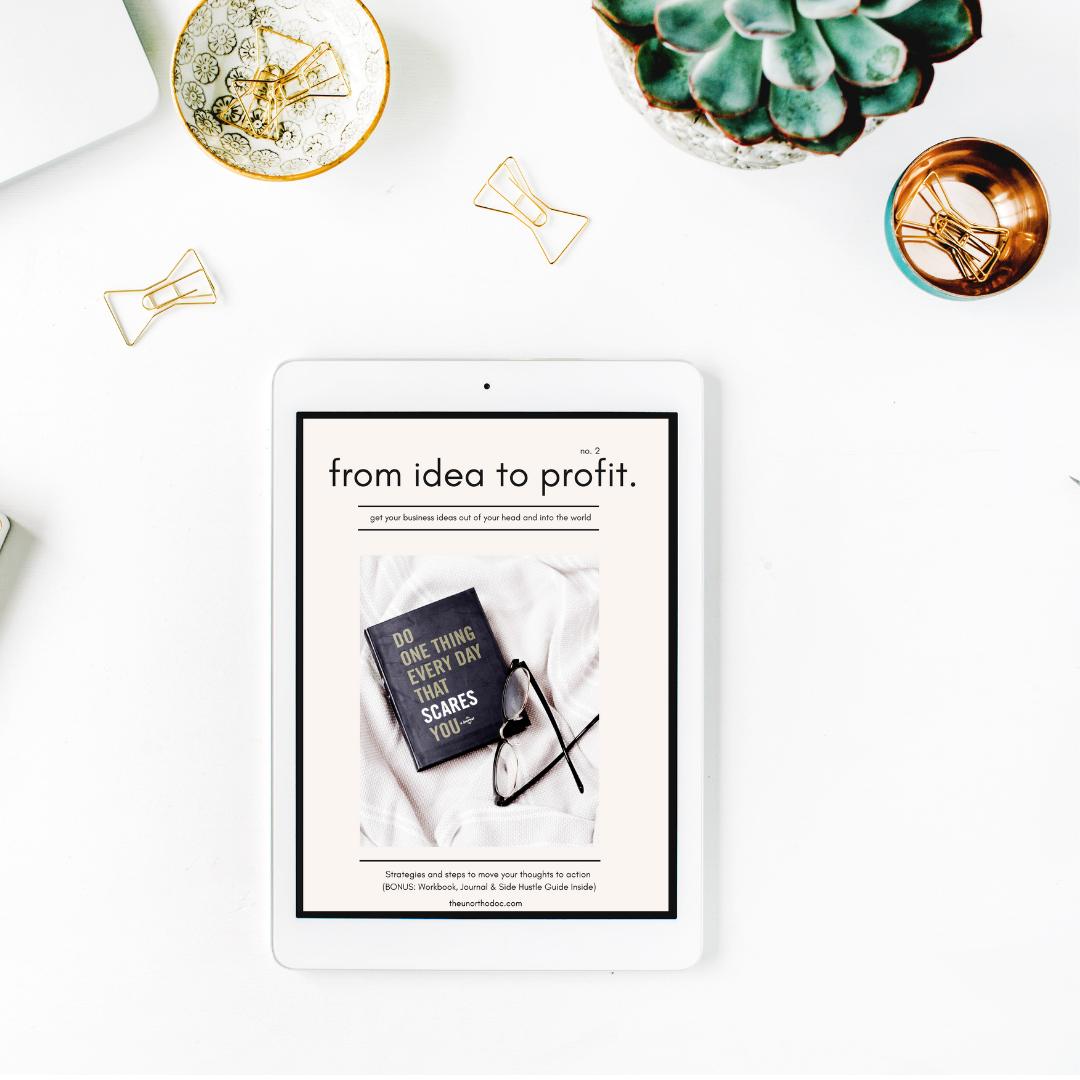
This e-book is written for those who want to get their business ideas out of their heads and into the world. It includes action packed steps to move you from thought to action in as little as 1 week.
Bonus: FREE side hustle guide, side hustle workbook and journal with this purchase





Tips on Financing Your Dental Visits
As a dental professional, I know first hand that dental care can be pricey! However, the neglect from not having dental care could cost you a whole lot more in the long run. My patients often times tell me the reason(s) they haven’t had dental care is because they couldn’t afford it or because they do not have dental insurance. Because this is an everyday conversation in my practice, I figured I would take this conversation here as well.
As a dental professional, I know first hand that dental care can be pricey! However, the neglect from not having dental care could cost you a whole lot more in the long run. My patients often times tell me the reason(s) they haven’t had dental care is because they couldn’t afford it or because they do not have dental insurance. Because this is an everyday conversation in my practice, I figured I would take this conversation here as well.
Options for covering dental expenses:
Dental Insurance
Most medical plans do not include dental and thus dental insurance is sold separately. One important thing to note is that there is a difference between a dental office that takes your insurance vs a dental office that you are in-network with. A dentist may take your insurance even though you are out of network with them. Generally, using an out-of-network dentist means your insurance would cover less and you’d pay more. Being in-network, on the other hand, usually means that your insurance company has pre-negotiated the fees with the dentist and they generally don’t charge more than that.
Payment Plans Offered By Dental Office (In House Financing)
Some dental practices offer in house financing. This occurs when a patient sets up a payment plan with the practice when there’s no insurance or rather than applying for financing. For some, paying a bill on a weekly or monthly basis can be much more manageable than paying it in a lump sum. In these situations, the practice holds the risk for future nonpayment and typically doesn’t charge interest. It is also common for dental practices that use this type of program to offer a cash discount on larger procedures with full payment up front or if the patient agrees to a set schedule of equal payments over a set period of time.
Using a Health Savings Account
A Health Savings Account (HSA) is another potential financing option for your dental work. An HSA gives you the ability to put pre-tax money in each month that you can then use for medical expenses (which may include dental care). This can help lower your overall health care costs because it is pre-taxed money. Since most dental care is an eligible expense, many people decide to use the money in their HSA to help pay for any co-pays or dental procedures they may need.

Dental financing
If you don’t have insurance or can’t afford to pay for necessary dental care all at once, you might consider financing. This could mean borrowing money to pay for your treatment and then making monthly payments until it’s paid off. Financing also typically involves paying fees and interest on the money you borrow.
Here are some options if you need financing for necessary dental work:
Personal loan - A personal loan can be used to pay for a range of personal expenses, which can include dental work and medical treatment. These loans are typically unsecured loans, which mean the lender doesn’t require any collateral to secure the loan. Because of this, the lender will typically consider many factors, including your credit history, to determine whether you’ll be able to repay the loan.
Medical credit cards - Medical credit cards may be available to pay for healthcare treatments, including dental procedures. A medical credit card is very similar to a regular credit card, but you can only use a medical credit card to pay for healthcare — and only within a specific network of providers that accept the card. If you’re approved for a medical credit card, you can use it to pay a qualified provider for your medical or dental care. After that, you’ll owe the credit card issuer and make payments to them. Some medical credit cards may come with a period of deferred interest. If you’re able to pay off the balance within the deferred time period, you can avoid paying interest.
Intro 0% APR credit card - Rather than using a medical credit card, you may consider paying for your healthcare with a regular credit card. There are credit cards that offer an introductory 0% APR for purchases and balance transfers for a set period of time. After the introductory period ends, the card will have an APR based on your credit and other factors. If you’re able to pay off the amount you owe within the established time frame, which is usually somewhere between 12 and 21 months, you could finance your dental care interest-free.
As with a personal loan and a medical credit card, a regular credit card issuer will typically check your credit profile when considering you for a card.
Third Party Financing - Traditional third-party financing is what happens when patients elect to use their existing credit cards to pay for their treatment. While this is not typically thought of as a dental care financing option, it’s commonly used. The dental practice is paid in full within 24–48 hours after processing the credit card. The financing is provided to the consumer (patient) by the credit card’s issuing bank, and the issuing bank assumes the risk for nonpayment. Some popular third-party financing options are CareCredit, Lending Point and iCredit-Works.
Access to affordable dental treatment is an important issue. There are many options for covering dental expenses including dental insurance, in-house financing, Health Savings Accounts, and various loans through third-party lenders. Whichever method you choose, it’s important to do what’s best for your unique needs.

Why building wealth can give you the capacity to do more good.
There is a sentence I came across recently that made me stop and think:
The most philanthropic thing you can do is get rich.
At first, I wasn't sure what to make of it. We tend to think of philanthropy as something that happens after generosity has already been established: you give your time, your money, your resources, or your influence to help someone else. Getting rich, on the other hand, can sound almost antithetical to that idea. It conjures images of accumulation, consumption, and the pursuit of more for the sake of more.
But the more I thought about the statement, the more I understood the argument behind it.