

Tax-Savvy Strategies: Maximizing Deductions for Dental Professionals and Side Hustlers
Whether you're managing your own dental practice or pursuing your passion through a side hustle, understanding the tax write-offs available can significantly impact your financial outlook. Let's delve into some valuable deductions tailored to both dental professionals and individuals with side businesses, empowering you to make impactful financial decisions.
Whether you're managing your own dental practice or pursuing your passion through a side hustle, understanding the tax write-offs available can significantly impact your financial outlook. Let's delve into some valuable deductions tailored to both dental professionals and individuals with side businesses, empowering you to make impactful financial decisions.
Essential Tools and Supplies
For dental professionals, having the right equipment and supplies is paramount for delivering top-notch patient care. The good news is that you can deduct the expenses associated with these essential items. From dental instruments and chairs to sterilization equipment and X-ray machines, keeping a record of your equipment purchases throughout the year is essential. Additionally, remember to account for costs related to supplies like gloves, masks, disposable items, and dental materials.
Investing in Expertise and Growth
In the dynamic landscape of dentistry, staying up-to-date with the latest developments is crucial. The costs you incur for attending dental workshops, seminars, courses, and conferences can be eligible for tax deductions. This encompasses registration fees, travel expenses, accommodation, and study materials. By dedicating resources to your professional development, you enhance your skills and simultaneously reduce your tax obligations.
Home Workspace Benefits
Whether you're a dental professional or a side business enthusiast, working from home might be part of your routine. If you've designated a specific area exclusively for your dental practice or side endeavors, you might qualify for a home office deduction. This deduction enables you to deduct a portion of your home-related expenses, including rent or mortgage, utilities, and related costs. It's important to ensure your home office adheres to IRS guidelines and is solely used for business purposes.

Boosting Visibility Through Marketing
Promoting your dental practice or side business is essential for attracting clients and customers. Fortunately, expenses related to marketing and advertising are generally tax-deductible. This encompasses costs associated with creating and maintaining a professional website, printing business materials, online advertising, social media campaigns, and even sponsoring local events. Maintaining a detailed record of these expenses will substantiate your deductions during tax season.
Networking and Resources
As a dental professional with a side business or blog, staying connected with your industry and accessing valuable resources is invaluable. Membership fees for professional associations, dental societies, and online communities are deductible. Additionally, subscriptions to dental publications, research databases, blogging platforms, and industry-related magazines can also be considered valid deductions. Stay informed, engaged, and enjoy the tax advantages these memberships provide.
While these deductions offer significant advantages, it's advisable to consult with a qualified tax professional or CPA who specializes in dental professionals and small business owners. They can offer personalized guidance based on your unique situation, assisting you in navigating the intricate realm of tax deductions.
Leveraging these tax write-offs allows you to optimize your tax circumstances, alleviate your overall tax responsibilities, and retain more of your hard-earned income. Embrace the advantages that come with being a dental professional and pursuing a side venture, all while making prudent financial decisions.
Here's to your ongoing success in your dental practice and your journey as a side business enthusiast. Keep shining, both in your clinical work and on your digital platform!

Tips on Financing Your Dental Visits
As a dental professional, I know first hand that dental care can be pricey! However, the neglect from not having dental care could cost you a whole lot more in the long run. My patients often times tell me the reason(s) they haven’t had dental care is because they couldn’t afford it or because they do not have dental insurance. Because this is an everyday conversation in my practice, I figured I would take this conversation here as well.
As a dental professional, I know first hand that dental care can be pricey! However, the neglect from not having dental care could cost you a whole lot more in the long run. My patients often times tell me the reason(s) they haven’t had dental care is because they couldn’t afford it or because they do not have dental insurance. Because this is an everyday conversation in my practice, I figured I would take this conversation here as well.
Options for covering dental expenses:
Dental Insurance
Most medical plans do not include dental and thus dental insurance is sold separately. One important thing to note is that there is a difference between a dental office that takes your insurance vs a dental office that you are in-network with. A dentist may take your insurance even though you are out of network with them. Generally, using an out-of-network dentist means your insurance would cover less and you’d pay more. Being in-network, on the other hand, usually means that your insurance company has pre-negotiated the fees with the dentist and they generally don’t charge more than that.
Payment Plans Offered By Dental Office (In House Financing)
Some dental practices offer in house financing. This occurs when a patient sets up a payment plan with the practice when there’s no insurance or rather than applying for financing. For some, paying a bill on a weekly or monthly basis can be much more manageable than paying it in a lump sum. In these situations, the practice holds the risk for future nonpayment and typically doesn’t charge interest. It is also common for dental practices that use this type of program to offer a cash discount on larger procedures with full payment up front or if the patient agrees to a set schedule of equal payments over a set period of time.
Using a Health Savings Account
A Health Savings Account (HSA) is another potential financing option for your dental work. An HSA gives you the ability to put pre-tax money in each month that you can then use for medical expenses (which may include dental care). This can help lower your overall health care costs because it is pre-taxed money. Since most dental care is an eligible expense, many people decide to use the money in their HSA to help pay for any co-pays or dental procedures they may need.

Dental financing
If you don’t have insurance or can’t afford to pay for necessary dental care all at once, you might consider financing. This could mean borrowing money to pay for your treatment and then making monthly payments until it’s paid off. Financing also typically involves paying fees and interest on the money you borrow.
Here are some options if you need financing for necessary dental work:
Personal loan - A personal loan can be used to pay for a range of personal expenses, which can include dental work and medical treatment. These loans are typically unsecured loans, which mean the lender doesn’t require any collateral to secure the loan. Because of this, the lender will typically consider many factors, including your credit history, to determine whether you’ll be able to repay the loan.
Medical credit cards - Medical credit cards may be available to pay for healthcare treatments, including dental procedures. A medical credit card is very similar to a regular credit card, but you can only use a medical credit card to pay for healthcare — and only within a specific network of providers that accept the card. If you’re approved for a medical credit card, you can use it to pay a qualified provider for your medical or dental care. After that, you’ll owe the credit card issuer and make payments to them. Some medical credit cards may come with a period of deferred interest. If you’re able to pay off the balance within the deferred time period, you can avoid paying interest.
Intro 0% APR credit card - Rather than using a medical credit card, you may consider paying for your healthcare with a regular credit card. There are credit cards that offer an introductory 0% APR for purchases and balance transfers for a set period of time. After the introductory period ends, the card will have an APR based on your credit and other factors. If you’re able to pay off the amount you owe within the established time frame, which is usually somewhere between 12 and 21 months, you could finance your dental care interest-free.
As with a personal loan and a medical credit card, a regular credit card issuer will typically check your credit profile when considering you for a card.
Third Party Financing - Traditional third-party financing is what happens when patients elect to use their existing credit cards to pay for their treatment. While this is not typically thought of as a dental care financing option, it’s commonly used. The dental practice is paid in full within 24–48 hours after processing the credit card. The financing is provided to the consumer (patient) by the credit card’s issuing bank, and the issuing bank assumes the risk for nonpayment. Some popular third-party financing options are CareCredit, Lending Point and iCredit-Works.
Access to affordable dental treatment is an important issue. There are many options for covering dental expenses including dental insurance, in-house financing, Health Savings Accounts, and various loans through third-party lenders. Whichever method you choose, it’s important to do what’s best for your unique needs.





How Dentists Can Start Their Own Practice While Repaying Student Loans
The key to successfully starting a dental practice is to plan for it. That means saving up, optimizing your credit score, and making yourself attractive to lenders so that when it comes time to take out a dental practice loan you will easily be approved.
Dental school graduates have among the highest amounts of student loan debt compared to other graduate degree types, most graduating with more than $300,000. While that might seem like a lot, dental grads also have significant earning potential, which means that it's possible for them to repay their loans and still fulfill their dream of opening their own practice.
The key to successfully starting a dental practice is to plan for it. That means saving up, optimizing your credit score, and making yourself attractive to lenders so that when it comes time to take out a dental practice loan you will easily be approved.
Here are some smart steps dentists can take to get their finances in order and work their way toward starting or acquiring a dental practice.

Focus on Earning Steady Income and Improving Your Credit
Before diving in headfirst to start your own practice, it's important to take a step back and consider the benefits of building your experience as a dentist while earning money along the way. "It's hard to start up a dental practice right out of school for a few reasons," said Adam Glassberg, financial counselor with Chicago-based D3 Financial Counselors, who works primarily with young medical professionals. "First, it might be hard to market your services with little or no experience. Second, working as an associate will also put you in a better financial position."
In addition to earning income and developing more experience, the extra time spent working as a dental associate prior to starting your own practice will allow you to focus on building your credit score. According to Glassberg, that means doing things you likely already know you should do, such as making your student loan and credit card payments on time.
But it also means doing some things that you might not realize improve your credit, such as being mindful of keeping your total debt amount low.
"For example, you want to keep your total debt to less than 30% of your credit outstanding," said Glassberg. "If you have a credit card with a $10,000 limit, you want to make sure your balance on the card doesn't exceed $3,000. Any more than that, and your credit score could suffer." He also recommends that you keep your oldest credit accounts open. "Credit companies look at how long you have had access to credit, and so closing old accounts might have a negative impact on your credit score," Glassberg said.
Meet With a Financial Planner
If you're feeling a bit overwhelmed at the prospect of starting a practice and paying your student loans, it would also be beneficial to reach out to someone who can help you create a plan. A financial planner who specializes in working with health professionals is probably your best bet.
Glassberg believes it's critical that you work with a financial planner, since they help you consider things you might not have thought about. For example, he recommends that his clients save money in an emergency fund to cover any unforeseen expenses for up to one year before starting a practice. "It's important to have that emergency safeguard," Glassberg said, "because you can't depend on making money from your practice in that first year." A financial planner will also help you optimize your assets and manage your student loans in order to prepare you for applying for a loan to start or buy a practice.
Find the Best Student Loan Repayment Option
Dentists have several options to manage and repay their student loans, and it's worthwhile to look into each one to determine which is right for your situation. Here are a few options that you can consider for tackling your student debt:
Consider Refinancing Your Student Loans
Because practice loan lenders like to see that the dentists they lend to have more cash on hand, it is often a good idea for dentists to refinance their student loans to lower interest rates with longer terms. This will enable you to lower your monthly payments so you can start saving for your practice.
When you refinance student loans, you're taking out one new loan to replace one or more existing loans often receiving a lower interest rate than what you were previously paying. Private lenders like CommonBond, SoFi, Splash Financial or LendKey offer refinancing options that could save the average dentist thousands over the life of their student loans.
"If you can reduce the interest rate or extend your repayment term, you can lower your payments which would give you more cash flow in order to start your practice," said Glassberg.
Refinancing your student loans enables you to both lower your monthly payments and lower your debt-to-income ratio, which can be helpful when it comes time to apply for a practice loan.
Explore Federal Student Loan Programs for Dentists
Refinancing isn't always the best option for every dentist, however. The federal government offers several programs specifically for dentists that private lenders don't offer. In order to be eligible for most of the government programs, dentists are generally required to work within Health Profession Shortage Areas (HPSA) or a Medically Underserved Area or Population, as defined by the U.S. Department of Health and Human Services.
A few of the government programs available to dentists include:
National Health Service Corps (NHSC) Loan Repayment Program
Under this program, dentists can receive up to $50,000 to repay their dental school loans in exchange for a two-year commitment to work at an approved NHSC site in a high-need, underserved area.
Army Dental Corps Programs
If you serve as a dentist in the U.S. Army, you may be able to get up to $120,000 in student loan repayment assistance, as the Active Duty Health Professions Loan Repayment Program offers $40,000 per year for a maximum of three years.
State-specific options:
In addition to federal government programs, most U.S. states offer student loan repayment assistance or forgiveness for dentists who work in medically underserved communities. These options vary from state to state, so it's worth exploring the options available in your state.
If any of the situations listed above apply to your desired career path, then it would be worthwhile to explore some of the federal and state student loan repayment options available to dentists.
Apply for a Practice Loan
Once you have great credit, strong work experience, a robust emergency fund and have found the best student loan repayment option for your circumstances, you're ready to apply for a loan to start your practice.
According to Glassberg, this is when your hard work to save money will pay off: The more assets you have and especially the more liquid assets you have – the more likely you are to obtain a loan.
Here are some of the top factors to keep in mind when it comes time to apply for a dental practice loan:
Create a business plan
Before giving you a loan, lenders need to understand how you will manage and grow your practice, including how you'll run day-to-day operations and get new patients. Generally, lenders are wary of lending to you until they believe you have a proven business, so having a solid business plan to share with them will help the process significantly. This article in Dental Economics offers useful steps for dentists to take in creating a business plan.
Be prepared to share necessary documents and information with lenders
In addition to a business plan, when applying for a practice loan, you'll need to be able to share further information with lenders. This includes information such as the purpose of your loan, the amount you intend to borrow, debt service coverage, primary collateral, debt-to-worth ratio, management experience, and your credit score.
Get life insurance and disability insurance
It's common practice in the dental lending industry to require these policies to be in place as collateral for the loan in case something happens to the dentist. Insurance is a big factor in mitigating a lender's risk that a dentist would be unable to repay the practice loan due to death or disability.
Determine what type of loan you need and choose the right lender
Once you have all of these other elements in place, you'll be in a good position to apply for your practice loan. At this stage, you should determine the desired term of your loan –generally you can choose between repaying your loan in 7 or 10 years and select the best lender, depending on which offers the best interest rate and terms for your situation. Lenders that offer practice loans include Bank of America, US Bank and Wells Fargo. It may also be worthwhile to explore a website like Fundera, which can connect you with a variety of small business lenders and allow you to choose the best option.
In addition to these considerations, Glassberg recommends that dentists looking to start up their own practice continue working as an associate at another practice as they get their own practices up and running in order to help with cash flow, which certain lenders require. And, in some cases, acquiring an existing practice might be a better bet, according to Glassberg. "Because the practice is already up and running the terms of the loan could be more favorable since it is a lower risk loan," he says.
While paying down your loans and starting your practice might seem daunting – it's entirely doable. With a plan and some hard work, you'll be able to open the doors of your own practice in no time.
This is a sponsored post from Commonbond and may contain affiliate links.


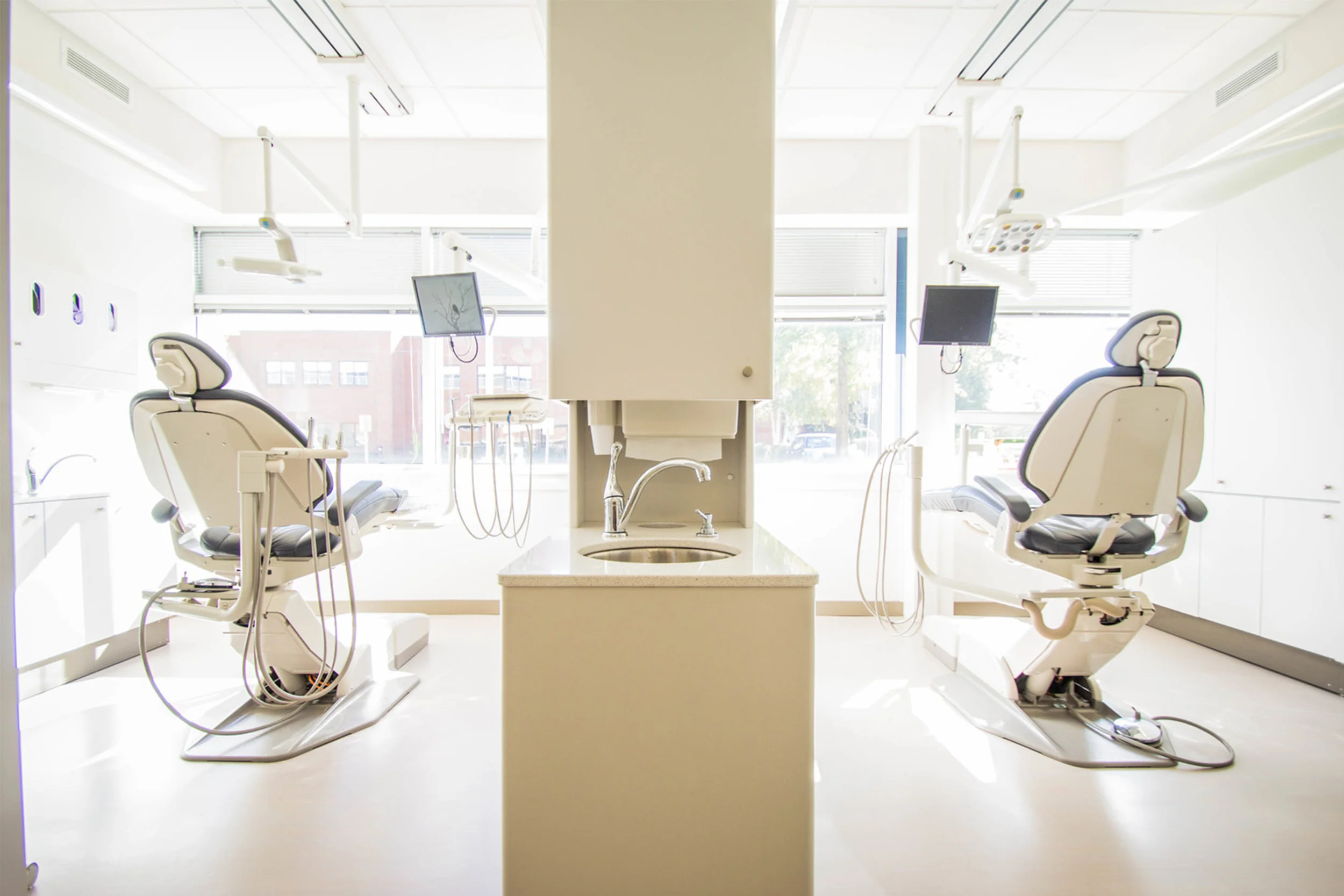
Should You Lease or Buy a Space For Your Start-Up Dental Practice
One of the most common questions among dentists who want to start their own practice is whether to buy or lease a commercial property. Through in-depth analysis, it was concluded that buying commercial property is the better option if you plan on staying in the same location for 7 or more years.
One of the most common questions among dentists who want to start their own practice is whether to buy or lease a commercial property (Practice real Estate). Through in-depth analysis, it was concluded that buying commercial property is the better option if you plan on staying in the same location for 7 or more years. Therefore, considering the growth of your business will be a large decision making factor in choosing whether to lease or buy a space.
On average, over a 15 year occupancy period, leasing commercial real estate costs as much as 86.6% more than buying commercial real estate. In cases where you lease a space for less than 7 years, oftentimes this cost will be less than buying. Therefore, seven years is considered the “breakeven” point in terms of occupancy costs.

When determining whether to buy or lease commercial property for your practice, there are some questions to ask yourself:
Will I outgrow my space, and if so, how many years will it take for me to outgrow my space?
Am I in a position to tie up capital in commercial real estate?
Do I want the flexibility of leasing? Or do I prefer the stability of having a mortgage?
Am I up for the challenge and the hassle of maintaining a property?
What are the local trends in the commercial real estate market?
There are benefits to both leasing and buying a commercial space and by considering the pros and cons of each, you will be able to choose the path right for yourself.
Commercial properties tend to store their value, making them a good investment. Additional benefits to purchasing real estate include, but are not limited to, equity upside, asset appreciation, rental potential and tax benefits. On the other hand, when leasing a commercial space, you have more liquidity, more flexibility, and additional tax benefits you are able to take advantage of.
Overall, it is important to take the time to plan both your short term and long term goals in order to determine whether buying or leasing is the best choice to make. Ultimately, however, it is important to remember not to sacrifice location on the basis of buying or leasing a space for your dental practice. If investment in property is your concern, you always have the option to buy other real estate for investment purposes.
Guest Post by Armincoinc

Steps To Opening Your New Dental Practice
There are many factors involved in opening your own dental office which can be both confusing and overwhelming. Knowing the correct steps to take can help you save a lot of time and money and keep you on track to starting your dream dental practice.
Ever since the thought of becoming a dentist crossed my mind back when I was a teenager, the goal of opening my own practice was right behind it. From my parents who were exemplary business owners to my dentist and mentor who had his own practice, the thought of working for someone else was never an attractive option for me. Fast forward a few years post-residency with a lot of experience in the field of dentistry under my belt, owning my dental practice has become a dream realized.
There are many factors involved in opening your own dental office which can be both confusing and overwhelming. Knowing the correct steps to take can help you save a lot of time and money and keep you on track to starting your dream dental practice.

1.Knowing Your Budget
The average cost to open a start-up dental practice is more than most people think. Depending on your location, most start up practices range from $350k - $450k in total costs. Before looking at spaces, or meeting with equipment companies and other specialists, the focus should be on talking to banks and getting approval for a loan.
2. Finding The Best Location
The location of your practice is first and foremost the best method of exposure for your future office. You want patients and lead sources to find you easily and quickly. An experienced realtor in the dental industry is your best resource when locating a space. They will help you find a location in good proximity of your targeted patient demographic and within your budget.
3.Selecting an Architect and Contractor
Once a potential space is located, it is time to begin dialogue with an architect or contractor who are experts in the dental industry. An experienced architect or contractor will be able to point out any red flags or potential hazards within a space that can affect costs significantly. They can also help provide a preliminary construction proposal to ensure the project stays within your budget.
4. Receiving Equipment, Cabinetry, IT and Computers
Architectural plans take approximately 8- 12 weeks to be completed and approved from the local governing body. Within this time frame is when equipment, cabinetry and IT/computer bids should be selected and received.
5. Planning for Staff
The construction period takes anywhere from 60 to 100 business days depending on the locations and size of the project. During this time you should be finding the right employees for your practice size and making sure you have everyone you need to run your office come opening.
6. Double Checking All Licensing & Legal Needs
It is very important to not push this step back. It can take months before you can accept insurances and in addition, you will need to be licensed in your state, have a national provider identifier number, and register with the DEA. All this needs to be done before construction is finished so you can start practicing right away.
7. Marketing
Planning is key, get the word out any and all ways you can from Social media (Instagram, Facebook, Tik Tok, Snapchat), TV ads, prints ads, online ads, promotional events, etc. Develop your website so that it stands out but also simple enough for patients to schedule.
When planned carefully and properly managed, the process towards opening your new dental practice can be exciting and fulfilling.
In part, a Guest Post by Sasha Hewadpal & Araik Safarian at: Arminocoinc
Why building wealth can give you the capacity to do more good.
There is a sentence I came across recently that made me stop and think:
The most philanthropic thing you can do is get rich.
At first, I wasn't sure what to make of it. We tend to think of philanthropy as something that happens after generosity has already been established: you give your time, your money, your resources, or your influence to help someone else. Getting rich, on the other hand, can sound almost antithetical to that idea. It conjures images of accumulation, consumption, and the pursuit of more for the sake of more.
But the more I thought about the statement, the more I understood the argument behind it.